
Anxiety & Panic Disorder Program: When Your Body Becomes the Enemy You Never Asked For
You wake up. Again.
Not from the alarm. Not from a bad dream. You wake up because your heart is trying to claw its way out of your chest. Your breath comes in shallow gasps like you’ve been running, but you haven’t moved. The room turns even when you are lying motionless. And somewhere in the terror of the feelings, there is a voice murmuring the meanest of lies that anxiety knows: You’re dying. Right now. This is it.
Except you’re not. You were having a panic attack.
Anxiety is like drowning on dry land. If you are reading this at midnight, hands trembling, searching for words. That finally matches what your body is doing; pause for a breath. You are not losing your mind. You are not weak. You are not alone.
You’re one of 42.5 million Americans living with an anxiety disorder. That’s not a statistic. That’s an entire city of people who understand exactly what it feels like when your own body turns into a war zone.
The Lie Your Brain Keeps Telling (And Why You Keep Believing It)
Anxiety disorders are cruel. They hijack the very system designed to keep you safe.
Your fight-or-flight response? That ancient, hardwired alarm system that kept your ancestors alive when they encountered predators? In panic disorder, it goes off when you’re sitting in traffic. Or standing in a grocery store. Or lying in bed at 3 AM trying to sleep.
It has been clinically determined that individuals with panic disorder always breathe in an abnormal mode. They are prone to excessive uptake of oxygen and the excessive release of carbon dioxide, which keeps their nervous system highly alert. Your body thinks it’s saving your life when really, it’s just making you afraid of your own heartbeat.
3 Best Treatments That Can Save You When Everything Feels Hopeless
Let’s talk about what changes things. Not Band-Aids. Not temporary fixes. Real, evidence-based treatment that gives you your life back.
Cognitive Behavioral Therapy
CBT teaches you something radical: your thoughts aren’t facts.
That sensation in your chest? Your anxiety tells you it’s a heart attack. CBT asks, “Is that really true?”
The efficacy of cognitive behavior therapy in treating panic disorder is well-supported. It works because it doesn’t just teach you to feel better. Rather, it teaches you to think differently. To catch the catastrophic thought before it spirals. To recognize the difference between actual danger and anxiety while wearing a disguise.
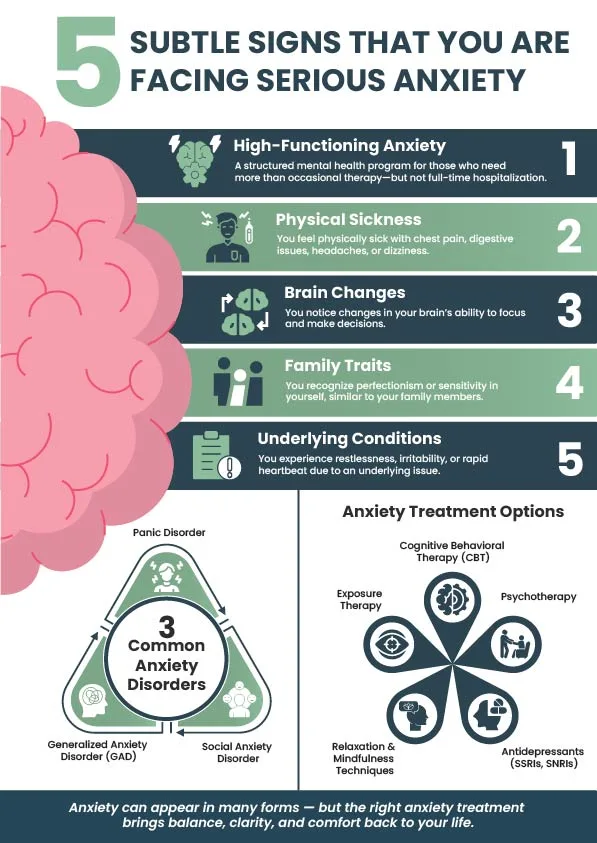
Interoceptive Exposure
What if instead of running from the physical sensations of panic, you deliberately created them? In a safe space. With a therapist. On purpose.
That’s interoceptive exposure. It has been validated as an effective component of cognitive behavioral therapy for the treatment of panic disorder. The therapist might have you hyperventilate. Spin in a chair. Hold your breath. All the things that trigger those terrifying sensations.
Why? Because interoceptive exposure seeks to remove the “fear of fear,” where the attacks happen because of the fear of actually having an attack.
You learn something extraordinary. The sensations cannot really hurt you. They are uncomfortable, yes, but not dangerous. Once that truth settles into your bones, not just your brain, panic loosens its grip. Fear stops announcing the end of everything. Like a cat, you begin to believe in your nine lives. A panic attack is no longer a fatal fall. It is just one moment used, not a life lost.
Exercises like hyperventilation, holding breath, spinning, and chest breathing have significant effects on reducing fears of physical sensations experienced by patients with panic disorder.
Medication: Not a Weakness, A Tool
Sometimes your brain chemistry needs more than therapy. That’s not failure. That’s biology.
SSRIs and SNRIs are preferred over tricyclic antidepressants or benzodiazepines because of a higher risk of adverse effects. The right medication can quiet the alarm system enough for therapy to work. It can give you breathing room to learn the skills that eventually let you breathe on your own.
The math is simple and devastating: Fear creates physical sensations. Physical sensations trigger more fear. More fear creates more sensations. Round and round until you’re avoiding entire parts of your life because what if it happens again?
What a Specialized Program At Clover Behavioral Health Looks Like
A real anxiety and panic disorder program isn’t just weekly therapy sessions where someone nods sympathetically while you talk.
It’s structured. Evidence-based. Targeted.
Programs typically involve four to 15 sessions of CBT, ideally with exposure techniques. You learn evidence-based breathing techniques. Not the useless “just calm down” advice you’ve heard your whole life, but specific skills that reset your nervous system.
You learn to identify your triggers. Not to avoid them, but to understand them. To map the territory of your anxiety. So it stops feeling like an ambush and starts feeling like a place you can move through.
Additionally, your therapist already knows you are not being dramatic when you say it feels like you are dying. You are simply giving words to what your nervous system is screaming.
The Part Nobody Talks About (But Everyone Needs to Hear)
Recovery isn’t linear. You don’t go from panic attacks to perfect peace in a straight line. Some weeks you’ll feel invincible. Others, you’ll have a setback and wonder if anything’s changed at all. Both are part of the process.
CBT seems to be effective in the long term, where trials have lasted between six months and nine years. That doesn’t mean it’s easy. It means it’s possible.
Staying stuck in panic does not mean someone is weaker. Getting through it does not mean someone is braver. The difference is simple and deeply human. One person received the right support and kept showing up, even when it was hard.
Ready To Reclaim Your Life From Anxiety’s Grip?
You know what courage looks like? It’s not the absence of fear. It’s making the call when your hands are shaking. Showing up to your first session when every instinct screams at you to cancel.
Contact Clover Behavioral Health today! The person you were before panic took over? They’re still there. And they’re worth fighting for.