
When Weekly Therapy Isn’t Enough for Depression
Some mornings in Salem feel quiet. The kind of quiet that should be peaceful. Trees lining familiar streets. Coffee shops opening their doors. People heading to work.
Depression does not care about any of that.
It sits heavy in your chest while the world moves normally around you. It turns routine into resistance. Leaving the bed turns into a bargain. Responding to a message is like picking up something that is much heavier than a phone. You begin to wonder how much time one can work on fumes.
Weekly therapy is sufficient to some. Fifty minutes to unwind the week. A few coping tools. A small sense of relief. To others, particularly those with Major Depressive Disorder, the time between appointments feels endless. Six days and twenty-three hours can stretch like a desert.
This is where Clover Behavioral Health’s Depression IOP comes in. It is designed for people who are still trying to function but know that trying alone is no longer working.
What Is an Intensive Outpatient Program, Really?
An Intensive outpatient program is for people who do not need inpatient hospitalization but need more support than in the outpatient therapy. It generally includes spending three to five days a week and a number of hours a day in therapy.
That rhythm changes everything.
As opposed to storing everything until your next appointment, you receive intensive support throughout the week. You are getting skills, practicing them, and then going back to digest what worked and what did not. The feedback loop tightens. Progress stops feeling theoretical and starts becoming visible.
IOP at Clover Behavioral Health incorporates evidence-based solutions like Cognitive Behavioral Therapy and Dialectical Behavior Therapy into a clearly defined plan that aims at not only mitigating symptoms but also making the individual resilient in the long term. They are not abstract concepts. They are practical aids in explaining how thoughts, emotions, and behaviors reinforce one another.
The goal is not to talk about depression endlessly. The goal is to interrupt it.
Why Weekly Therapy Sometimes Isn’t Enough
Imagine you injured your leg. Not broken, but unstable. Would ten minutes of exercise once a week rebuild strength?
Unlikely.
Depression works similarly. When symptoms are moderate to severe, when motivation is low, when negative thinking patterns have become automatic, once weekly therapy can feel like trying to rewire a storm with a flashlight.
Intensive Outpatient treatment provides repetition. And repetition is how the brain changes.
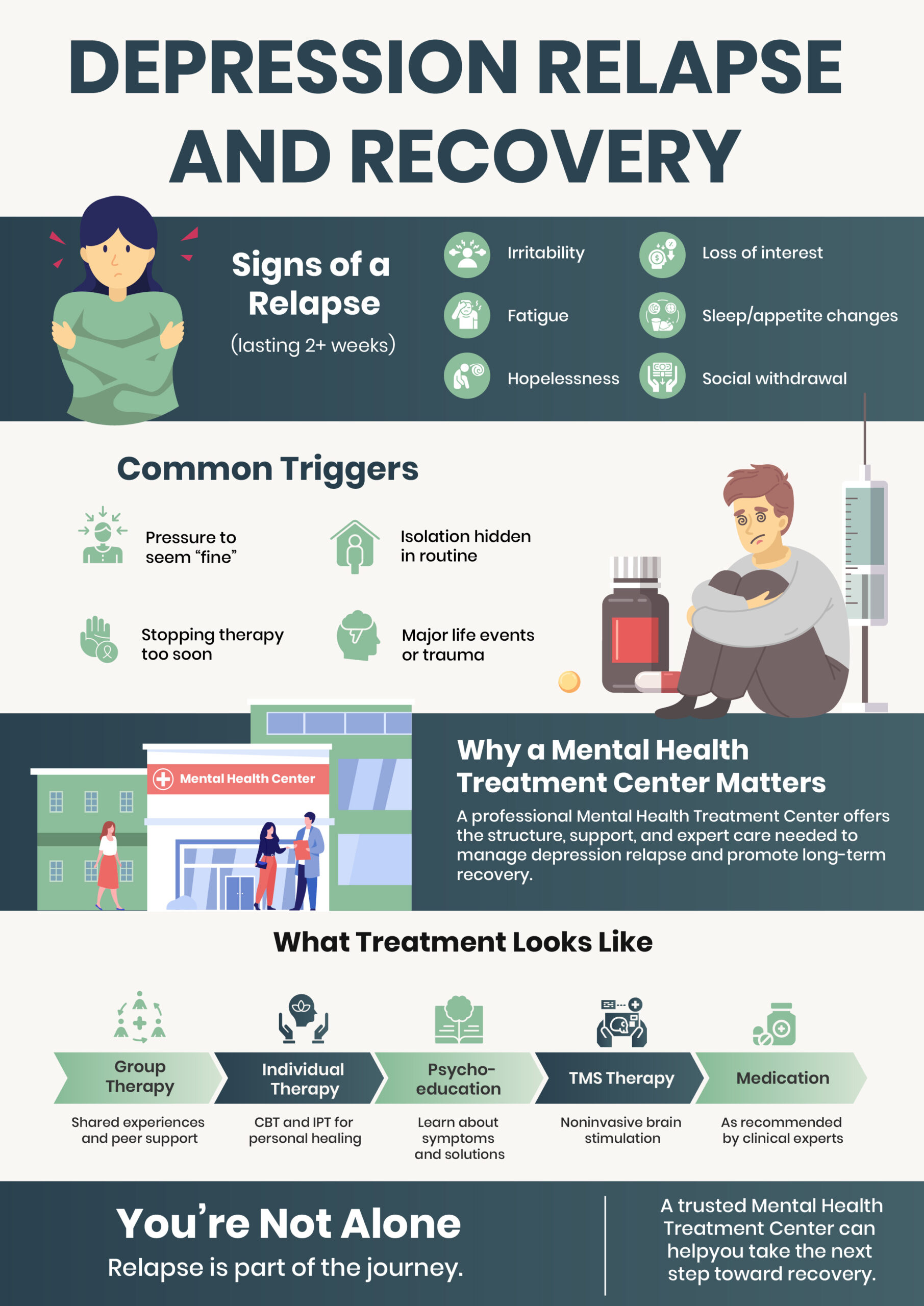
You attend multiple sessions each week. You practice emotional regulation. You challenge distorted thinking. You build routines. You hear from others who are navigating similar darkness. You stop feeling like the only person in Salem who cannot seem to “snap out of it.”
That consistency often becomes the turning point.
What a Depression IOP at Clover Behavioral Health Looks Like
Each day in IOP is purposeful.
Clients attend a number of treatment hours, usually three or five days a week. Treatment involves the use of structured group therapy, skills training, depression psychoeducation, and individual check-ins with a licensed clinician. Pharmaceutical care is also provided when needed, so changes can take place thoughtfully and consistently rather than waiting weeks between sessions.
Group therapy is often the part people fear most. It is also often the part they value most.
There is something disarming about hearing someone else describe the exact heaviness you thought you had to hide. Someone saying they also stare at the ceiling at 2 a.m. Someone admitting they feel numb when they “should” feel grateful. That kind of honesty dissolves shame.
Depression thrives in isolation. IOP gently disrupts that isolation.
Clients return home at the end of each treatment day. You sleep in your own bed. You remain connected to your family, your responsibilities, your real life. Healing happens within the context of your actual world, not removed from it.
That balance matters.
Who Is a Good Fit for IOP?
Not everyone with depression needs intensive care. Some people respond well to weekly therapy and medication. That is valid.
An IOP may be appropriate if you have been in therapy for months with little improvement. If you are functioning on the surface but feel hollow underneath. If your thoughts are getting darker but you are not in immediate crisis. If you sense that something has to change and you cannot keep fighting your way through each week.
Intensive Outpatient treatment can also serve as a step down from inpatient care, offering structure and support during the transition back to daily life. It is not a sign that you failed therapy. It is a sign that your depression requires a stronger dose of support.
How IOP Helps the Brain Heal
Depression is not laziness. It is not weakness. It is a complex interaction of biological, psychological, and environmental factors.
Within Clover Behavioral Health’s IOP, Cognitive Behavioral Therapy helps you identify automatic negative thoughts. The voice that says you are a burden. The belief that nothing will change. Instead of accepting those thoughts as truth, you learn to examine them. To question them. To replace them with more balanced interpretations.
Dialectical Behavior Therapy adds another layer. It teaches distress tolerance. Emotional regulation. Interpersonal effectiveness. Skills that become anchors during intense waves of feeling.
You do not just talk about coping. You practice it repeatedly.
Over time, the brain begins to carve new pathways. The old depressive loops weaken. The new skills strengthen. Progress may not be dramatic at first. It often appears quietly. You notice you got out of bed faster. You answered that message. You cooked a meal instead of skipping dinner.
Small wins accumulate.
Taking the First Step in Salem, NH
In case you are in Salem, NH, or other communities and wondering whether Depression IOP will help, reach out for the initial confidential evaluation at Clover Behavioral Health. Our trained clinician will assess your symptoms and your safety, as well as your present level of functionality, to decide whether Intensive Outpatient care is suitable.
Contacting will not commit you to anything. It simply opens a conversation. And that conversation might be the moment you stop trying to manage everything alone. It simply opens a conversation. And that conversation might be the moment you stop trying to manage everything alone.