
Anxiety Therapy Chelmsford vs. Medication: Which Option Is Right for You?
Anxiety hits differently for everyone.
For some, it can be 3 AM wake-up calls, when your head thinks that it is time to repeat all the awkward moments of your life. To others, it is the tightening of your chest when you need to make a phone call.
Whatever your flavor of anxiety, you’ve probably wondered: Do I need therapy? Medication? Both? Neither?
The internet will give you a thousand different answers. Your friend will swear by what worked for them. Your mom will have opinions. Yet, it is important to understand that anxiety treatment isn’t one-size-fits-all.
At Clover Behavioral Health Center in Chelmsford, we see people wrestling with this choice every day. Some need medication to quiet the noise enough to do the work in therapy. Others find their answers in conversation and coping skills. Many need both.
Let’s break it down without the medical jargon.
When Your Brain Won’t Stop Running
Anxiety is a smoke detector, which rings every time you make toast.
Your brain believes that it is keeping you safe. However, rather than alerting you to real danger, it screams about imaginary catastrophes. The presentation next week will certainly be a humiliation. That text that hasn’t been answered means everyone hates you. The chest pain is definitely a heart attack, not anxiety.
Some brains run this alarm system louder than others. Some have been running it so long, it’s become the background noise of life.
Therapy teaches you how to turn down the volume. Medication can help quiet the alarm while you learn.
What Therapy Does In Practice
Therapy isn’t lying on a couch talking about your childhood. Well, not unless that’s helpful.
Good anxiety therapy is more like learning to speak your brain’s language. It’s figuring out why your alarm system is so sensitive. It’s building tools to handle the noise when it starts.
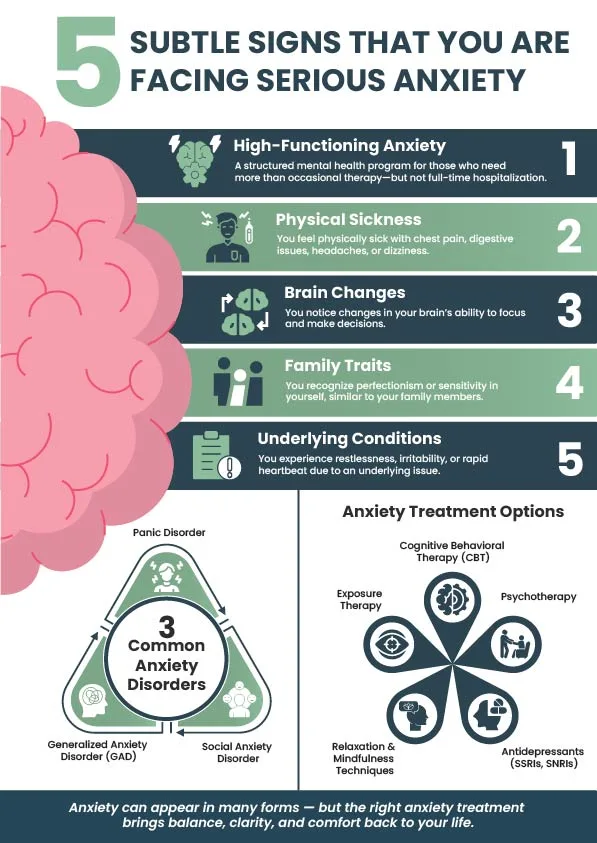
In Chelmsford, we use approaches that work. Cognitive Behavioral Therapy assists you to stop anxious thoughts before they get out of control. Exposure therapy helps your brain to learn that the things you are avoiding are not really dangerous. Mindfulness will help you to ride the waves without drowning.
Therapy equips you with lifelong skills. It is similar to learning how to repair your own smoke detector rather than replacing the batteries.
How Medication Can Help
Medication doesn’t cure anxiety, but it can give you breathing room. Some people need that chemical buffer to do daily life. To go to work. To leave the house. To sleep without their brain running disaster scenarios all night.
Anti-anxiety meds work fast but don’t last long. Antidepressants take weeks to kick in, but can steady things out over time. Each person responds differently. The goal isn’t to be on medication forever. Still, for some people, it’s the bridge they need to get from drowning to swimming.
When Therapy Might Be Your Answer
Therapy works well when you’re ready to do the work. It’s not passive. You don’t just show up and get fixed. You learn skills. You practice them. You apply them to real life. You might lean toward it if your anxiety feels manageable most days. If you can still do the things you need to do, even when they’re hard.
Some people love this approach. They want to understand their anxiety. They want tools they can use anywhere. They want to feel like they’re driving instead of being dragged along.
When Medication Might Make Sense
You might need medication if anxiety is running your life. If you can’t sleep because your brain won’t shut up. If you’re avoiding so many things that your world keeps getting smaller. If panic attacks come out of nowhere and knock you flat.
Medication can be a temporary bridge. It can also be a long-term tool. There’s no shame in either approach. Your brain chemistry isn’t a character flaw. Sometimes it needs chemical support to function the way it’s supposed to.
The Both-And Option
In our Chelmsford office, we most frequently encounter people who require both.
Medication quiets things down enough to do therapy work. Therapy develops skills that will ultimately diminish the necessity of medication. They collaborate rather than compete.
Beginning with both does not imply that you will always need both. However, you might be able to recover more quickly and with less discomfort.
Some people feel like using both is cheating somehow. Like they should be able to tough it out with just therapy. That’s anxiety talking. That’s the part of your brain that thinks you should be able to fix a broken leg by thinking positive thoughts.
What About the Side Effects?
Every medication has side effects. Therapy has side effects too. They’re just different.
Medication side effects are physical. Nausea, headaches, and changes in appetite or sleep. Most are temporary while your body adjusts. Therapy side effects are emotional. You may get worse off first, before you get better. Excavating patterns of anxiety may be unpleasant. Even good change is difficult to bring about.
Both are worth discussing with people who know what they are talking about. Don’t allow internet horror stories to make choices on your behalf.
Final Words
Your anxiety is yours. Your treatment should be too.
Some people thrive with therapy alone. Others need medication to function. Many need both for a while, then transition to one or the other.
There’s no moral victory in suffering longer than necessary. There’s no shame in needing chemical support for a chemical problem. There’s no weakness in wanting to understand your patterns and build better coping skills.
In Chelmsford, we believe the best treatment is the one you’ll actually stick with. The one that fits your life, your goals, and your comfort level.
If anxiety is making your world smaller, it’s time to get help. Call Clover Behavioral Health Center or visit our website. Let’s figure out what combination of support makes sense for your specific situation.
You don’t have to choose perfectly. You just have to choose to start.