

Living Between Episodes: The Treatment Model Built for That Reality
There was once a village that sat between two seasons.
On one side of it, summer. On the other, winter. The village itself existed in a kind of permanent almost. Almost warm, almost cold. The sky never quite committing to either. The people who lived there learned to dress in layers. They learned to read clouds the way other people read clocks. They became very good at predicting weather that never fully arrived.
There was one man in the village who felt both seasons at once.
Not almost warm, almost cold. Fully warm and fully cold at different times in a rotation that followed its own private calendar. Some months, the summer came into him, and he was extraordinary. Awake before the sun, full of plans, generous with his energy, and certain in a way that felt like finally. Other months, the winter moved in without warning, and he was unreachable, even to himself. He functioned. He showed up. He wore the right expression at the right moments. Yet, inside, he was somewhere else entirely, waiting for the thaw.
The hardest part was not the summer or the winter.
It was the in-between. The weeks when neither season had him, and he stood in the middle of his own life feeling almost normal, watching the horizon, waiting to see which was coming next. The village looked at him during those weeks and said: you seem fine. He nodded. He had learned that fine was the easiest thing to be when you couldn’t explain what you were really waiting for.
A lot of people living with bipolar disorder know this man. Some of them are this man. Functional, layered, weathered by a cycle that other people can’t see and wouldn’t know how to name if they could.
This is for them.
What Bipolar Feels Like When Nobody’s Watching
The clinical definition of bipolar disorder involves episodes of mania or hypomania alternating with episodes of depression. That is accurate and almost completely useless for understanding what it actually feels like to live in a body and brain that does this.
The hypomania, for many people, doesn’t feel like an illness. It feels like finally functioning the way you always wished you could. The ideas come faster. The energy is there when you reach for it. You need less sleep and somehow feel more rested. Productivity surges. Confidence settles over everything like good weather. You think, maybe this is just who I am when things are going well.
And then the weather changes. Not always dramatically. The depression comes at times like a wave, not as a wave. You realize that you are going a little slower. Those immediate ideas that you had so effortlessly last week are simply gone, and there is nothing there instead but a flatness that you cannot describe to those who have not experienced it. Getting out of bed isn’t impossible, exactly. It’s just heavier than it has any right to be. You do it anyway because you’ve always done it anyway. Nobody notices because you’ve gotten very good at this.
In between episodes, there is something that should feel like relief. Often it does. However, underneath it, for many people, runs a quiet dread that isn’t quite anxiety and isn’t quite fear. It’s more like vigilance. You watch your own sleep patterns the way a sailor watches the horizon. You track your mood the way someone tracks the weather before a long drive. You are never fully off duty.
This is what high-functioning bipolar disorder looks like from the inside. Not the dramatic story. The vigilant, exhausting, between.
Why Once-a-Week Therapy Often Isn’t Enough
Bipolar disorder is cyclical by nature, and cycles don’t care about appointment schedules. A fifty-minute session once a week is a small window into an enormous amount of brain activity. A good therapist can help you process what happened. They cannot always help you catch what’s coming.
There is also the clinical reality that untreated or undertreated bipolar disorder tends to worsen over time. As episodes become more frequent, more severe, and harder to pull out of. The research on this is consistent enough that it has a name: kindling. Each episode makes the next one slightly easier for the brain to enter. Early, intensive intervention isn’t caution. It’s strategy.
Weekly therapy, even excellent weekly therapy, often cannot provide the medication oversight, the mood monitoring, the skill-building frequency, or the structured accountability that genuine stabilization requires. This is the gap that Intensive Outpatient fills. Not because you’re in crisis. Rather, you need more than a conversation once a week to stay out of one.
What Bipolar-Specific IOP Looks Like
It is not a support group. It is not a place to talk about your feelings for three hours and go home.
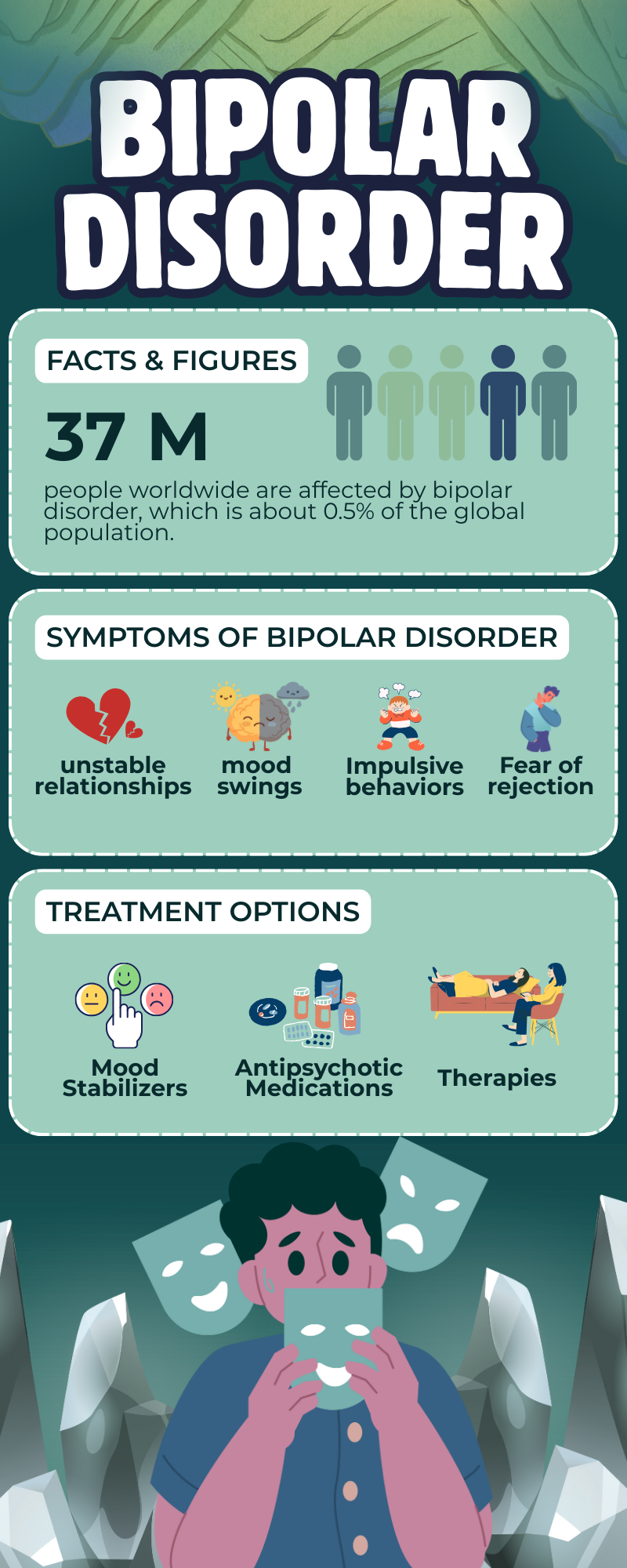
The IOP clinical work on bipolar disorder is specific and structured. Dialectical Behavior Therapy develops the ability to manage emotional changes so that they no longer conquer you. The space between the feeling and the reaction is practiced until it becomes reflex. Cognitive Behavioral Therapy helps you catch the distorted thinking that arrives early in both mania and depression, before it has momentum.
There is also a lesser-known but deeply effective approach called Interpersonal and Social Rhythm Therapy (IPSRT), designed specifically for bipolar disorder. The clinical insight behind it is this: biological rhythms and mood stability are not separate systems. Sleep, eating, exercise, social contact. The regularity of these things has a direct, documented impact on episode frequency. IPSRT works to stabilize daily rhythms not as lifestyle advice but as clinical intervention. Building a life with enough predictability that the brain has less reason to destabilize.
Medication management runs alongside all of this. Not as an afterthought but as an integrated part of the program. Psychiatric oversight, regular monitoring, and adjustments are made in real time rather than at the next available appointment six weeks out.
And then there is the group component, which surprises people more than anything else. Not because it’s uncomfortable, but because of what it feels like to sit in a room with people who understand what it’s like to feel genuinely great for three weeks and then not be able to locate yourself for a month. Who understands the vigilance of the between. Who have also spent years trying to explain something to the people they love that doesn’t translate well into words.
You realize you are not a particularly strange or broken version of a person. You are a person with a particular brain, surrounded by others with similar ones, all of you learning to live with the boulder differently.
Start Your Journey With Clover Behavioral Health
At Clover Behavioral Health in Salem, NH, we work with people living with bipolar disorder who are ready to stop managing episodes after the fact and start building something that makes them less likely. If that’s where you are, we’d like to talk. Not a sales call. A real conversation about what’s actually going on and whether we can help.
Both seasons are still there. And you don’t have to stand between them alone!