
CBT vs. DBT: Which Therapy is Right for You?
When you start looking into therapy, you start feeling overwhelmed pretty soon. You’ll see different acronyms everywhere, and advice can feel contradictory. And before you know it, you’re trying to decide between therapies you’ve never heard of before!
Two of the most common options people come across are CBT (Cognitive Behavioral Therapy) and DBT (Dialectical Behavior Therapy). Both are evidence-based, both are widely used, and both can be incredibly helpful, but in different ways.
At Clover Behavioral Health, one of the most common questions people ask is, “How do I know which therapy is right for me?” This article breaks down CBT vs. DBT in plain language, so you can better understand your options and feel more confident taking the next step.
Why There’s So Much Confusion Around CBT and DBT?
CBT and DBT are often mentioned together because they’re related. DBT actually grew out of CBT; however, over time, each developed a different focus and structure.
From the outside, they can sound similar:
- Both involve learning skills
- Both focus on thoughts, emotions, and behaviors
- Both are structured and goal-oriented
The key difference is what each therapy prioritizes and how it helps people change.
What Is CBT (Cognitive Behavioral Therapy)?
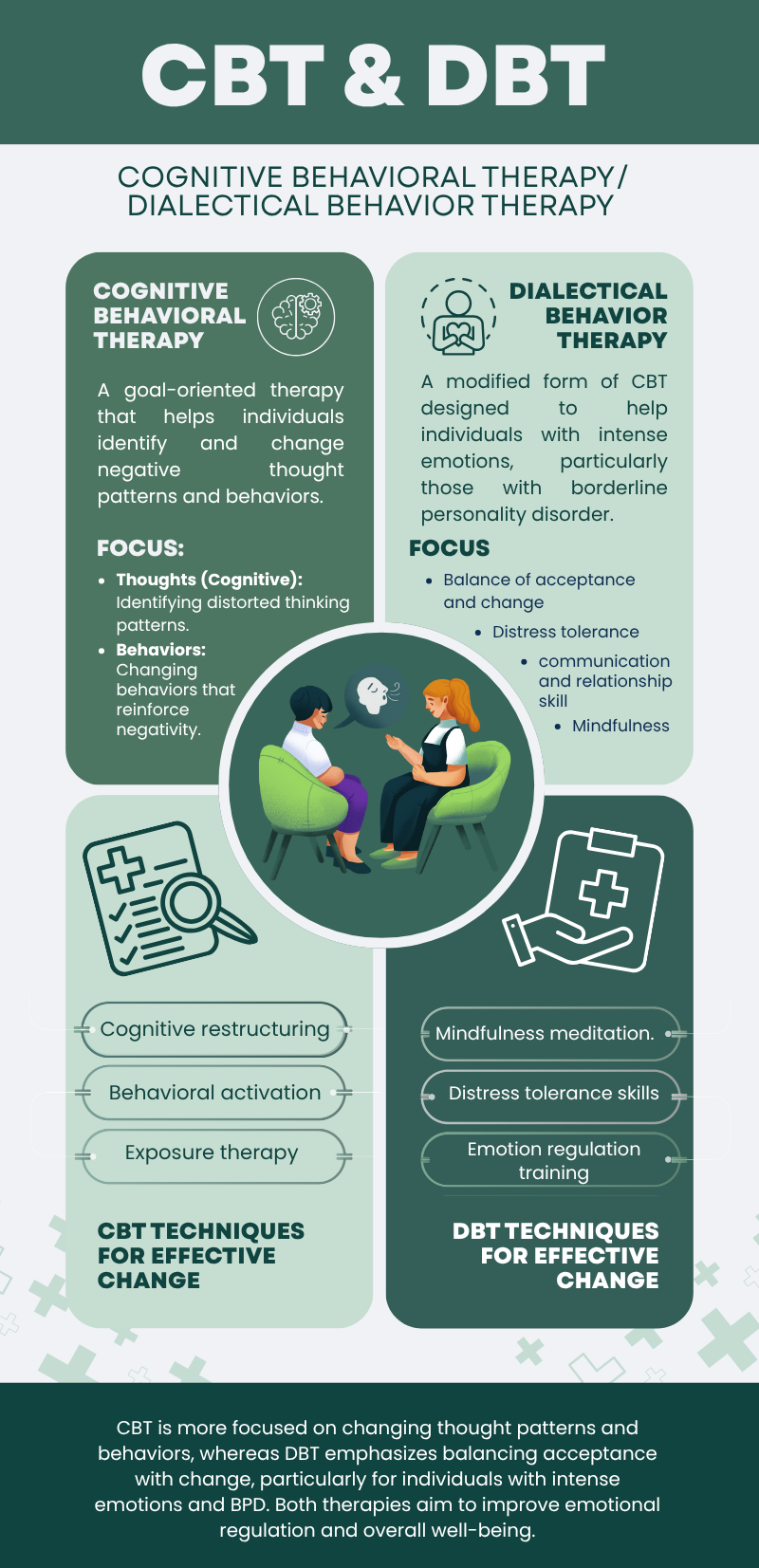
CBT is one of the most widely used therapy approaches today. It’s based on a simple idea: the way we think affects how we feel and what we do.
It focuses on identifying unhelpful thought patterns and replacing them with more realistic, balanced ones.
CBT is commonly used for:
- Anxiety
- Depression
- Stress
- Panic
- Phobias
- Negative self-talk
- Perfectionism
What CBT Sessions Often Look Like
In CBT, you might:
- Identify automatic thoughts that increase stress or sadness
- Learn how to challenge distorted thinking
- Practice reframing situations in healthier ways
- Work on behavior changes outside of sessions
CBT is often structured, practical, and focused on the present rather than the past.
What Is DBT (Dialectical Behavior Therapy)?
DBT was originally developed to help people who experience intense emotions and have difficulty regulating them. While it’s related to CBT, DBT places more emphasis on emotional regulation, distress tolerance, and relationships.
DBT focuses on emotions that feel overwhelming and cannot simply be thought away.
It is commonly used for:
- Emotional dysregulation
- Intense mood swings
- Self-harm behaviors
- Chronic stress or overwhelm
- Relationship difficulties
- Trauma-related symptoms
What DBT Sessions Often Look Like
In DBT, you may work on:
- Learning how to sit with strong emotions without reacting impulsively
- Building distress tolerance skills for crisis moments
- Practicing mindfulness and emotional awareness
- Improving communication and boundaries
DBT emphasizes acceptance and change at the same time, learning to accept where you are while building skills to move forward.
CBT vs. DBT: The Core Differences
| CBT | DBT |
| Focuses on changing unhelpful thought patterns | Focuses on managing intense emotions |
| Best for anxiety, depression, stress, and negative self-talk | Best for emotional overwhelm, mood swings, and relationship struggles |
| Emphasizes logic, perspective, and problem-solving | Emphasizes acceptance, coping skills, and emotional balance |
| Often structured and goal-oriented | Often skills-based with a focus on real-life situations |
In short:
- CBT focuses on changing thoughts to change feelings and behaviors
- DBT focuses on managing emotions and reactions when feelings feel overwhelming
Neither is better; they’re just built for different needs.
How to Know Whether CBT or DBT Might Be Right for You?
Many people find CBT helpful when their emotional responses are tied closely to patterns of thinking they want to understand and change. On the other hand, DBT is especially helpful when emotional reactions feel bigger than logic alone can manage.
Here’s a clear breakdown to understand which one is right for you:
| CBT is the Right Fit | DBT is the Right Fit |
| Your thoughts tend to spiral or jump to worst-case scenarios | Emotions feel intense or hard to control |
| Anxiety or negative thinking drives your stress | You feel overwhelmed quickly and don’t know how to calm down |
| You want a structured, goal-oriented approach | Relationships feel unstable or emotionally draining |
| You’re looking for practical tools to manage day-to-day challenges | You struggle during moments of crisis or high stress |
One important thing to know: choosing CBT or DBT doesn’t mean something is wrong with you.
CBT doesn’t mean your problems are just in your head, and DBT doesn’t mean your emotions are too much.
What If You’re Not Sure Which One You Need?
Most people walk into therapy without knowing exactly what approach will help them most. And you don’t have to figure that out on your own.
At Clover Behavioral Health, therapists look at:
-
- What you’re struggling with day to day
- How you respond to stress and emotions
- Your past experiences with therapy
- What do you want help with right now
From there, therapy can be tailored to you. In some cases, elements of CBT and DBT are both used, depending on your needs.
How Clover Behavioral Health Approaches CBT and DBT?
At Clover Behavioral Health, therapy isn’t treated as a one-size-fits-all process.
Individualized Care
Our licensed therapists take time to understand your experiences before recommending an approach. The goal is to see what fits, not to force a method.
Evidence-Based Therapy
Both CBT and DBT are grounded in research and clinical experience. The sessions focus on skills that can actually be used in real life.
Support That Evolves
Your needs may change over time. Therefore, we change therapy as you grow, heal, and gain confidence.
A Human, Supportive Environment
Therapy at Clover BH is meant to feel collaborative, respectful, and grounded, not clinical or intimidating.
CBT Vs. DBT: Let Us Help You Choose the Right Therapy
If you’re wondering whether CBT or DBT might be right for you, Clover Behavioral Health can help you sort through your options without pressure.
All you need is to schedule a conversation with us today!
You don’t have to know which therapy you need. Just tell us what you’re struggling with, and we will help you choose the right support.