
10 Hidden Signs You May Need Co-Occurring Disorders Treatment in New Salem, NH
Many people think mental health struggles and substance use are separate problems. Anxiety is one thing. Drinking is another. Depression is one issue. Drug use is a different one.
However, the truth is that these challenges overlap and affect each other. And when we only address one issue, it makes recovery harder.
Co-occurring disorders, sometimes called dual diagnosis, refer to when mental health conditions and substance use occur simultaneously. According to the EBPC Department at the University of Maryland, more than 17 million people in the US suffer from mental illness and substance use disorder at the same time.
The tricky part is that this often isn’t obvious. The signs are subtle, easy to explain away, and often misunderstood.
This guide lists 10 hidden signs that indicate the need for co-occurring disorders treatment in New Salem, NH. We also explain why it is important to treat both issues together.
10 Hidden Signs That You Need Co-Occurring Disorders Treatment
1. Using Substances to Manage Anxiety, Stress, or Low Mood
Alcohol or other substances may feel like the fastest way to calm anxiety, lift mood, or take the edge off after a long day. However, things start getting out of hand when they become emotional medication rather than an occasional choice.
2. Mental Health Symptoms Get Worse When You Try to Cut Back
When you reduce drinking or drug use, anxiety spikes, sleep worsens, or your low mood feels heavier. This can make it feel like substances are the only thing keeping emotions manageable.
3. Feeling Emotionally Stuck Despite Therapy or Medication
You may be doing the work, therapy, medication, lifestyle changes, but still feel stuck. Progress can seem weak or short-lived, especially when the discussion does not include substance use.
4. Substance Use Increases During Emotional Stress
Periods of anxiety, depression, or overwhelm lead to more frequent or heavier substance use. The trigger is stress, not social situations.
5. Switching Substances Depending on How You Feel
You may use alcohol to relax, pills to sleep, or other medication to manage anxiety, choosing different substances to handle different emotional states.
6. Relapse Happens After Focusing Only on Sobriety
You may be able to stop using for a period of time, but one emotional slip and you’re eventually pulled back. It feels frustrating, confusing, and discouraging.
7. Routines Feel Difficult to Maintain
Sleep schedules, work responsibilities, parenting, or self-care feel overwhelming. Even small disruptions throw things off more than they used to.
8. Emotions Feel Unmanageable Without Substances
Without alcohol or drugs, emotions feel louder, more intense, or harder to manage. Substances become the main way to regulate how you feel.
9. Staying Present Feels Harder than it Should
You may feel foggy, disconnected, or emotionally distant, even when life looks fine from the outside.
10. Feeling Like You’re Addressing One Issue But Not Getting Better
This is often the biggest sign. You might think, “I’ve worked on my mental health,” or “I’ve tried to stop using,” but nothing seems to fully stick. Something keeps pulling you back into the same cycle.
Why Mental Health and Substance Use Must Be Treated Together?
Mental health symptoms and substance use often form a loop.
Substances can temporarily numb anxiety, depression, or trauma symptoms. On the other hand, untreated mental health symptoms increase cravings, stress, and relapse risk. When only one side is treated, the other continues to drive the cycle.
For example:
- Treating substance use alone may leave anxiety or depression untreated
- Treating mental health alone may ignore how substances are being used to cope
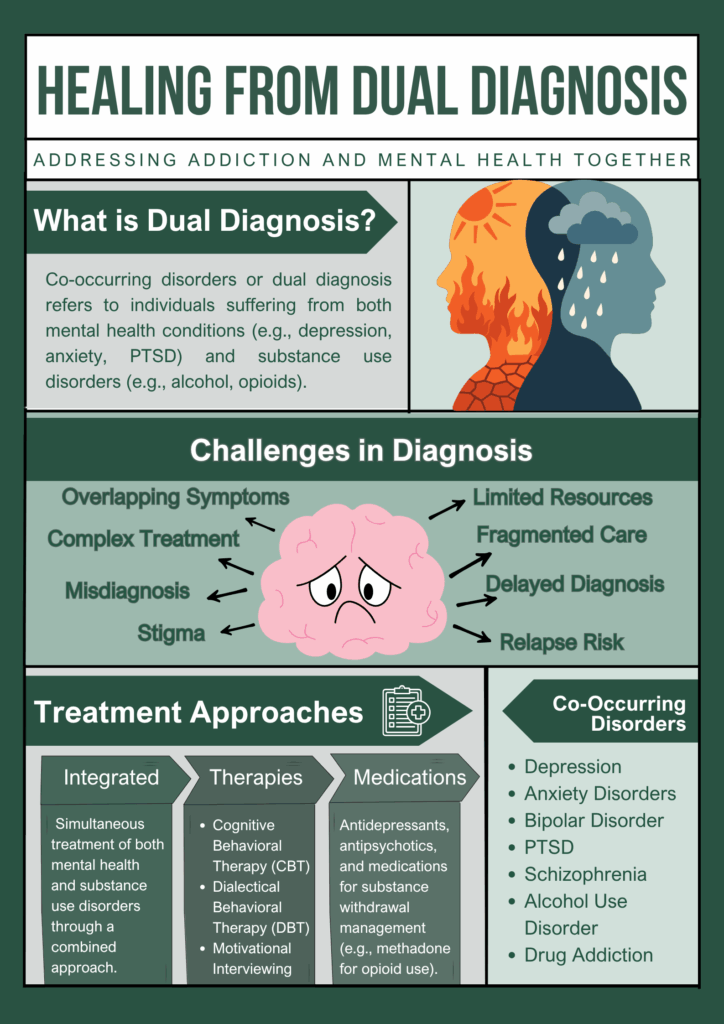
This is why many people feel they’re doing everything right yet still struggle. The treatment isn’t wrong; it’s incomplete.
Co-occurring disorders treatment in New Salem, NH, focuses on both issues at the same time, in a coordinated way. Instead of separating mental health and substance use, the treatment is integrated, so progress supports both sides.
What Changes With Co-Occurring Disorders Treatment?
When mental health and substance use are treated together, recovery feels steadier and more realistic.
People often notice:
- Fewer emotional ups and downs when you cut back on substance use
- Better understanding of triggers and patterns
- More effective coping strategies
- Less shame and self-blame
Integrated treatment doesn’t rush the process. It focuses on understanding why substances became part of coping and how to build healthier alternatives without overwhelming the person.
Co-Occurring Disorders Treatment in New Salem, NH
At Clover Behavioral Health, co-occurring disorders treatment involves addressing mental health symptoms and substance use at the same time, rather than treating them as separate issues.
One Coordinated Plan Instead of Split Care
Our treatment follows one clear approach. This way, clients do not have to deal with multiple providers or receive confusing messages about their recovery.
Understanding the Full Picture
We focus on why substances became a coping tool and how mental health influences use, helping clients better understand their patterns and triggers.
Building Skills That Support Real Life
We help clients learn practical coping strategies that they can use in daily situations, making progress feel more realistic and sustainable in the real world.
Supporting Steady, Long-Term Progress
By treating both mental health and substance use together, Clover Behavioral Health helps clients work toward recovery that feels more stable and less fragile over time.
A Closing Thought
Noticing these signs doesn’t mean something is wrong with you. It means your mind and body are asking for a different kind of support.
When mental health and substance use are treated separately, progress can feel frustrating and incomplete. When they’re treated together, recovery often becomes more stable, more honest, and more sustainable.
If you’re noticing patterns that feel familiar, exploring co-occurring disorders treatment in New Salem, NH, could be the best next step. At Clover Behavioral Health, we offer integrated care designed to support the whole person, not just one part of the problem.
Reach out to us now.
You’re not committing to anything; you’re simply having a conversation that may help things finally start to make sense!