Dual Diagnosis IOP in Salem, New Hampshire: Why Treating One Problem Isn’t Enough
Two storms sharing the same sky, one named chaos, one named why. You’ve been standing in the rain so long, you forgot what it felt like to be dry.
That’s not a metaphor pulled from a greeting card. That’s Tuesday for a lot of people who walk through our doors.
You are handling something that cannot be explained to people who have not experienced it. It’s not just the drinking. It’s not just the anxiety. It is both of them, collectively, making one another sound louder. You drink to quiet the panic. The panic gets worse because you drank. And somewhere in that loop, you stopped being able to tell which came first? The chicken, the egg, or the third drink before noon.
That loop has a name. And more importantly, it has a way out.
At Clover Behavioral Health in Salem, NH, we call it dual diagnosis. And our Intensive Outpatient Program was built specifically for people who are tired of only getting half the help they need.
What Dual Diagnosis Exactly Is
Let’s keep this simple. Dual diagnosis is simply two things occurring concurrently. The problem of substance use and a mental health condition coexisting with each other. They are intertwined and worsening each other.
Think anxiety and alcohol. Depression and opioids. Trauma and anything that makes the noise stop for a few hours. These combinations are more common than most people realize. Way more common. And the tricky part is that treating only one of them almost never works long-term.
Suppose you were to attempt to bail out a sinking boat with a hole in it. You can bail all you want. However, until somebody patches the hole, you’re just exhausted and still sinking. That’s what happens when someone gets addiction treatment without mental health treatment or mental health treatment without addressing the substance use. You get part of the answer. And part of the answer isn’t enough.
Why an IOP And Not Something More Intense?
Good question. An Intensive Outpatient Program sits in a pretty sweet spot. It’s not a residential program where you pack a bag and disappear for thirty days. It’s also not just a therapy appointment once a week that you can cancel when life gets hard, because life always gets hard.
IOP is structured. Multiple sessions a week. Real therapy. Real support. Real accountability. The good part is that you still go home at night. You still pick the kids up. You still keep your job. You stay in your life while actively working on your life, which, honestly, is where most of the real work has to happen anyway.
A lot of people come to us saying they can’t do inpatient. They’ve got a boss, a family, and a dog who refuses to eat unless it’s them filling the bowl. IOP was basically designed for those people. It’s treatment that fits around the reality of being a human with obligations, instead of asking you to pretend those obligations don’t exist.
What Happens in Dual Diagnosis IOP at Clover
When you come to Clover’s Salem location, nobody hands you a laminated pamphlet and calls it a treatment plan.
We start by getting to know you. What’s been going on, and how long it’s been going on.
And how the mental health piece and the substance use piece have been feeding each other.
Then we build something around you specifically.
This is what that looks like in practice.
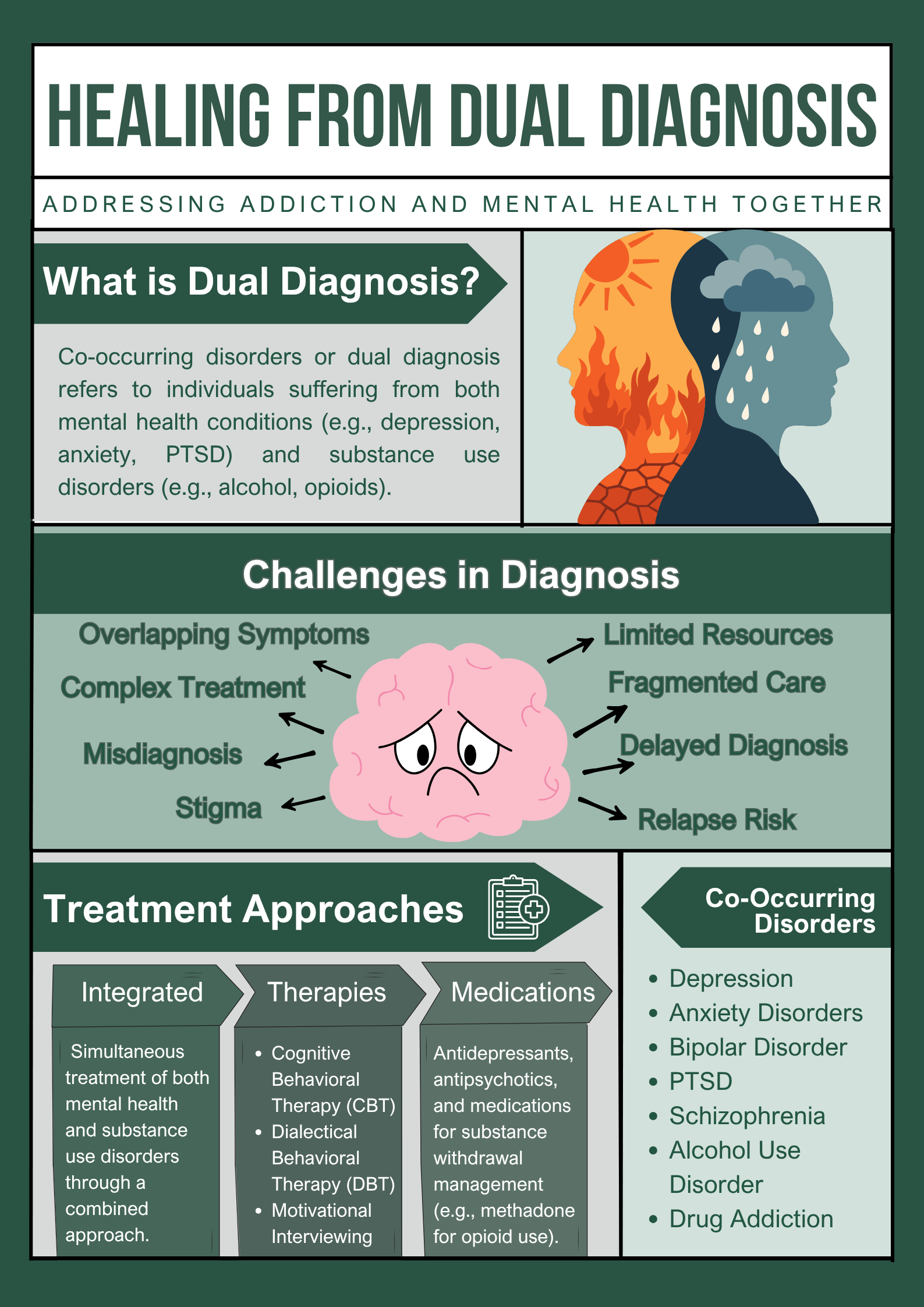
Individual therapy is where a lot of the real, messy, uncomfortable, necessary stuff happens. Just you and your therapist. No performance, no audience. This is the space where you start pulling the threads. Why you reach for what you reach for, what’s underneath the reaching, and what you’ve been carrying that nobody else even knows about. It’s not easy. Yet, it’s the kind of not-easy that actually moves things.
Group therapy surprises people. Almost everyone walks in skeptical and walks out glad they stayed. There’s something about sitting in a room full of people who aren’t going to look at you like you’re broken because they’re in the same room for the same reasons. That does something therapy books can’t fully explain. You stop feeling like you invented suffering.
Psychiatric support and medication management are part of the picture when they need to be. And sometimes they do need to be. Drug use alters the brain over time. And so does living with untreated depression, anxiety, PTSD, or bipolar disorder. It is sometimes necessary to give the brain a bit of clinical assistance before the therapy can actually take hold. No shame in this; it is pure science. This is a joint effort by our team, which means that your drug and your treatment are literally talking to each other, which is more than one can say about many treatment models.
Evidence-based treatment methods, such as CBT, DBT, and trauma-focused therapy, provide you with practical instruments. Not just insight. Not just “so how does that make you feel?” Real, learnable skills for managing the emotions and thought patterns that have been driving things in the wrong direction. DBT especially is built for people who feel everything intensely and need better ways to respond to that intensity than the ones they’ve been using.
Who Is This For, Honestly?
If you’re dealing with addiction alongside any kind of mental health struggle, this program was designed with you in mind. Depression. Anxiety. PTSD. Bipolar disorder. OCD. BPD. We treat all of it alongside the substance use, at the same time, because that’s the only way this actually works.
You don’t need to have hit rock bottom. You don’t need to have tried everything else and failed. You simply have to be in a position where you are willing to explore something that, in fact, is covering a bigger picture rather than only what is being observed.
And if you’re stepping down from inpatient or a higher level of care? IOP is a really natural next step. Enough structure to keep you grounded. Enough flexibility to start rebuilding your regular life.
Final Words
Recovery isn’t one dramatic moment. It isn’t a single decision that fixes everything and rolls credits. It’s a lot of smaller moments, stitched together, over time, until one day you realize the noise is quieter than it used to be.
That’s what we’re working toward at Clover. Not perfection. Just something real and sustainable. Healing that holds.
And remember those four lines from the beginning? Let’s end them:
But storms don’t last forever, love, and neither does this rain. There’s a version of you on the other side that you’ll one day meet again.
You don’t have to stay in the storm. Reach out to Clover Behavioral Health in Salem, NH. Talk to someone. Ask questions. Figure out if this is the right fit without any pressure or judgment. You got this!