

How IOP for Mental Health in Carlisle, MA, Effectively Manages PTSD
Post-traumatic stress disorder (PTSD) sits in your body silently and slowly shows up in how you feel and react. You might think something didn’t impact you much, but you might never feel relaxed after that.
For example, if you survived a serious car accident, your body will still react like you’re in danger when you get into a car. Trauma has such power that fast-moving traffic or even the sound of brakes can trigger panic.
As a result, you might have nightmares about the crash or feel on edge throughout the day. That’s because your nervous system is constantly waiting for something bad to happen, and even though the accident is over, the fear still lives inside you.
Now, if you don’t change it, you’ll spend your whole life with the same worries and might never relax. That’s why therapists recommend letting go of your past burdens and moving ahead with a lighter mind.
But how do you effectively work on your trauma after a serious event? That’s when IOP for mental health in Carlisle, MA, takes the lead. It’s a step up from therapy and keeps you focused on healing.
Let’s understand how IOP manages PTSD!
Some Symptoms of PTSD
Trauma looks different for everybody and shows up at different times. For instance, some people feel normal shortly after an event that shook them to their core, but later experience its impact.
On the other hand, some cannot move on from the said thing and need help to resume their normal functions.
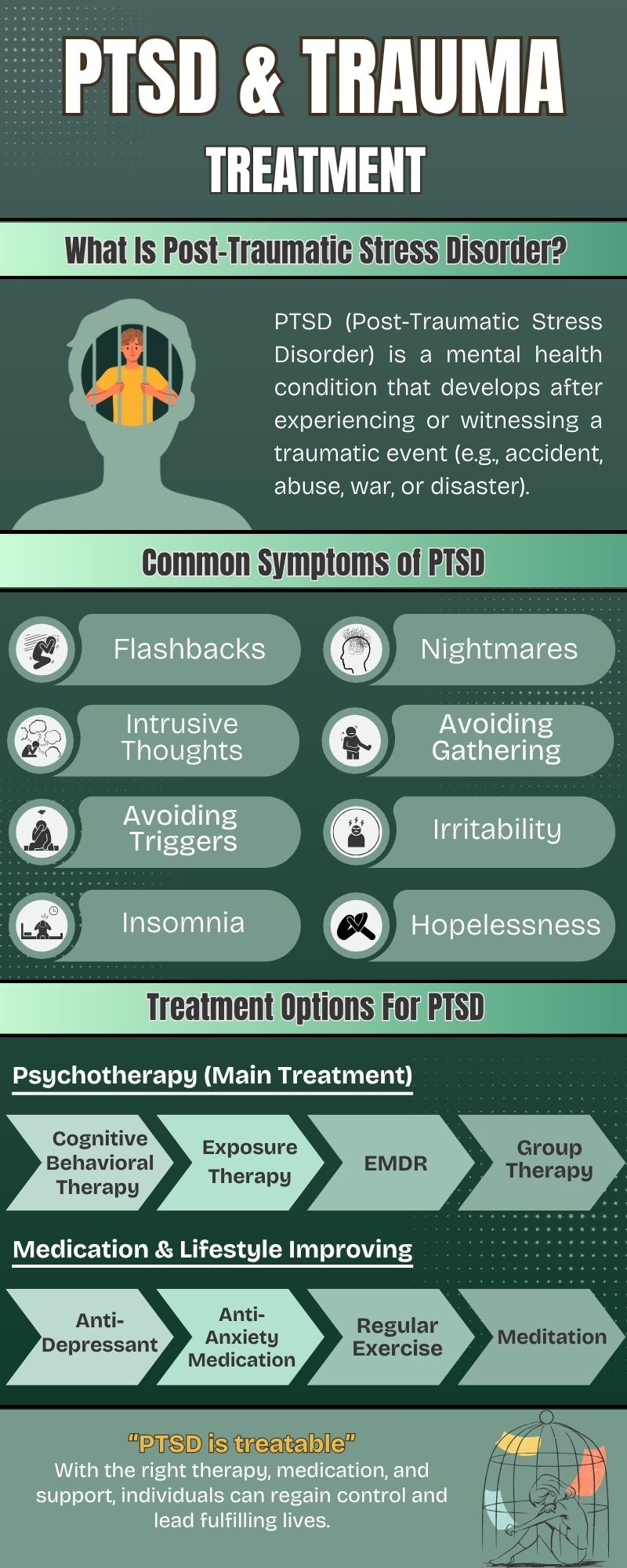
Regardless, here are the symptoms of PTSD you get to heal during IOP for mental health in Carlisle, MA:
- Flashbacks and nightmares
- Avoiding places, people, or things that bring it all back
- Feeling emotionally numb
- Persistent negative thoughts about yourself, others, or the world
- Feeling constantly like something bad could happen
- Startling easily
- Struggling to fall asleep and stay asleep
- Finding it hard to focus or remember things
- Anger that comes out of nowhere, or feeling irritable
How does IOP for Mental Health in Carlisle, MA, Work for Trauma?
Any therapist or counsellor would agree that bringing someone out of their trauma is a lot of work. They might be doing everything alright, but those memories stored in their system may still leak into their behavior and feelings.
That’s the reason occasional therapy doesn’t always work for PTSD, and experts suggest that you take regular help for a while.
Therefore, IOP for mental health in Carlisle, MA, is planned to not let you feel alone, especially for a few weeks after the traumatic event. Here is how IOP works around your pain and trauma:
Constant Guidance
Doing life after a painful experience takes immense courage, and you get it through help. That ‘I can do it alone’ attitude might not be the best thing right now. That’s why IOP for mental health in Carlisle, MA, requires you to visit a treatment center 3-5 times a week. You get 3-hour sessions each day at places like Clover Behavioral Health and work closely with mental health experts.
Your time at the center includes evidence-based therapies, group sessions, and grounding lessons. All of these collectively strengthen your ability to look past your pain and regain control of your life. Also, when you repeat these skills multiple times a week, they become second nature, and you don’t have to force them.
Regular Touchpoints
Even if you’re surrounded by loved ones, you need a place to let your pent-up feelings go after a moment that shook you. That’s where IOP for mental health in Carlisle, MA, shines. You closely work with the experts and share how life is treating you lately.
And the grounding skills you learn during sessions? You get to test them back at home and come back the next day to share how they worked. Such a schedule works wonders when you’re trying to regain your normal self because you aren’t expected to remember too much. Instead, you’re given doable and helpful information each day that you can implement to see how it works.
And if something doesn’t work for your current state, you share it, and the experts adjust things accordingly.
Information overwhelm can be counterintuitive during PTSD, and IOP for mental health in Carlisle, MA, takes special care of that. It follows a plan where you’re gradually taught new things to work around your pain.
A Planned Structure
If your trauma was too severe (like an accident that injured you), your routine gets off track. You either get some time off to heal or don’t feel like resuming your usual duties. Either way, you lack a routine, and that’s not good for your healing. That’s why IOP for mental health in Carlisle, MA, gives you a structure that fits your healing pace.
You attend therapy at set times, so you always know what your day looks like, and there’s comfort in that consistency. Even if you’re working or studying, you show up at the center multiple times a week to talk about what you’ve been feeling and learn coping skills.
Then, you go home to try those skills and return the next day to share what helped and what didn’t. There’s no pressure to figure everything out alone or remember tons of information. Instead, you learn manageable steps every day, and if something isn’t clicking right now, your team adjusts the plan to match where you are emotionally and physically.
You Don’t Have to Carry This Alone
Trauma can make it feel like every day is a battle to get through. But real support that understands what you’ve been through and meets you where you are is a call away. Clover Behavioral Center offers well-planned IOP for mental health in Carlisle, MA, where you won’t be rushed or judged.
You’ll have a safe space to slowly rebuild your sense of comfort in your life. If you’re ready to feel grounded again, reach out. We’re here to hold hope with you: call us at 978-216-7765 and we’ll help you find your way forward.