
When “Fine” Isn’t Fine Anymore: IOP & PHP Programs for Andover and North Andover
You’re standing in your kitchen. The one with the marble countertops you picked out yourself. Your daughter’s acceptance letter to her top-choice college is still on the refrigerator. Your son made varsity. The Tesla’s in the driveway. From the outside, you’re crushing it.
Even then, why can’t you breathe?
Why are you crying in the shower before anyone knows it? Why did you take that second bottle of wine when everybody went to sleep? Again.
You have the type of life that people strive their entire careers to have. The house in Andover. The good schools. The vacation home on the Cape. And somehow, none of it makes you feel less empty. Less anxious. Less like you’re one bad day away from completely falling apart.
Your primary care doctor suggested therapy. You tried it. Once a week. Fifty minutes. It helped a little. Still, you need more. You know you need more. So, what does “more” look like when you can’t exactly check out of your life? When you have a career, a family, responsibilities, and a reputation.
Let’s talk about it. No judgment. No clipboard. Just honest conversation about IOP and PHP programs and why they might be exactly what you didn’t know you needed.
What Nobody Explains: IOP vs. PHP
Let’s cut through the alphabet soup.
Partial Hospitalization Program
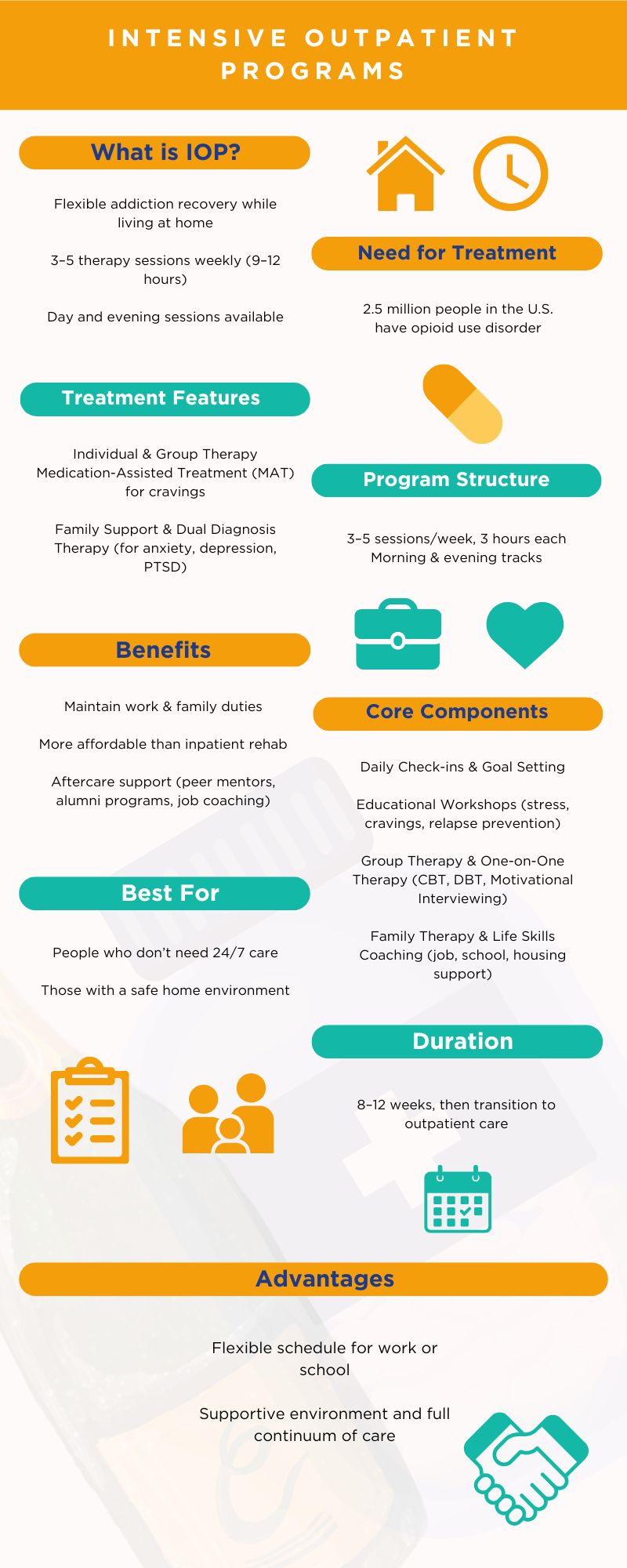
PHP is for when things have gotten serious. When weekly therapy isn’t cutting it and you need intensive support, fast. Five to six days a week, five to six hours per day. Individual therapy. Group therapy. Psychiatric care. Skills training. The whole framework.
In PHP, you might start your morning with individual therapy, working through the specific issues that brought you here. Mid-morning, you’re in a DBT skills group learning how to regulate emotions that feel like they’re going to swallow you whole.
After lunch, there’s a process group where you talk about what’s happening in your life right now, not what happened twenty years ago. Finally, the afternoon brings psychiatric consultation to adjust medications or assess whether you need them at all.
Research shows PHP programs can be just as effective as inpatient treatment for many conditions, but with one crucial difference: you maintain connection to your real life.
Intensive Outpatient Program
IOP is a step down in intensity but still serious support. Three to five days a week, three to four hours each session. It’s for when you’re struggling but not in crisis. When weekly therapy isn’t enough, but you don’t need full-day programming.
Both let you keep your privacy intact. You don’t disappear for 30 days. You don’t have to tell your boss you’re “away.” You can schedule around your life: morning sessions before work, evening sessions after, or day programs if your schedule allows.
And with private insurance? Most of it’s covered. The Mental Health Parity Act requires insurance companies to cover mental health treatment at the same level as physical health treatment. That means your Blue Cross, your Harvard Pilgrim, and your Tufts cover PHP and IOP just like they’d cover cardiac rehabilitation after a heart attack.
Why This Level of Care Works So Effectively
Let’s look at more reasons why PHP and IOP can help you reclaim your life:
You Get Real-Time Support When You Need It.
That panic attack on Thursday night? In weekly therapy, you’d be waiting until Tuesday to process it. However, IOP or PHP lets you process it Friday morning in a group. The fear’s still fresh. You can identify what triggered it while the details are sharp. You learn what to do next time while your nervous system still remembers the sensation.
You Learn Skills While You’re Struggling, Not Just When You’re Calm
Anyone can practice deep breathing on a sunny Saturday afternoon. IOP and PHP teach you to use those tools when your teenager just wrecked the car, your biggest client is threatening to leave, and your mother-in-law is moving in next month.
The technical term is “in vivo learning,” meaning learning in life, not in a lab. Skills practiced during emotional activation are retained better and used more effectively than in calm states. Your brain literally encodes the information differently when you learn it under stress.
You Realize You’re Not Alone
That’s the magic of group therapy with people who get it. The first time you hear someone describe the exact thought you had last week? The one you were too ashamed to say out loud. Everything shifts. Suddenly, you’re not uniquely broken. You’re human. And you’re not the only high-functioning person who’s barely functioning.
You Have Psychiatric Support If You Need It
Sometimes talk therapy isn’t enough. Sometimes your brain chemistry needs medical attention. Having a psychiatrist as part of your treatment team means you’re not trying to manage medication adjustments alone while falling apart.
The Part That Scares You
You’re worried about people finding out. The truth is that your mental health is protected by federal privacy laws. HIPAA exists for a reason. Nobody has to know you’re in treatment unless you choose to tell them.
And here’s the other truth: the people who matter won’t care. The people who care don’t matter. Your real friends want you to be okay more than they want you to be perfect. Your real friends have their own struggles they’re not talking about either.
Final Words
Unable to sleep again? Perhaps it’s time to have the talk you have been evading.
At Clover Behavioral Health, we aim to work with the residents of Andover, North Andover, and the Merrimack Valley. We accept most private insurance plans. Our programs are designed for people who have full lives they can’t abandon but who need more support than traditional therapy provides.
You don’t have to have it all together to get help. You just have to be willing to start.
Call us at 978-216-7765. Visit our website. Have the conversation. You’ve spent years building a life that looks good from the outside. Maybe it’s time to make sure it feels good from the inside too!