
Behavior, Appearance, and Attitude: The Most Misinterpreted Parts of the MSE in Mental Health Evaluation
Someone writes “poor hygiene” in your chart. Another note says “uncooperative attitude.” A third mentions “disheveled appearance.” Just like that, you’re not a person anymore. You’re a checklist. A series of boxes ticked during a fifteen-minute evaluation.
What they don’t write is that you’ve been fighting to get out of bed for three weeks. You’re terrified of doctors because the last one didn’t listen.
The Mental Status Exam isn’t evil. It’s a tool. Yet, in Littleton, and throughout Middlesex County, we see it happen. Clinicians look at behavior, appearance, and attitude and think they’re seeing the whole picture.
They’re not. They’re seeing a moment. One frame of a movie that’s been playing for years.
At Clover Behavioral Health Center, we’ve learned something crucial. The most visible parts of the MSE? Those are the parts that lie the loudest.
What “Poor Hygiene” Actually Means
A clinician notes: “Appears disheveled. Poor grooming. Clothes wrinkled and stained.”
What they mean: This person isn’t taking care of themselves.
It may, in fact, indicate depression so great that taking a shower is like scaling Everest. Sensory issues that make certain fabrics unbearable. A washing machine that died last month.
Research shows that mental health evaluations frequently contain significant bias based on a patient’s appearance and demographic factors. According to Psychiatry Online, about 67% of health providers hold some form of implicit bias against marginalized groups.
We see this constantly throughout Littleton and neighboring communities like Groton and Harvard. Someone’s appearance gets documented as a symptom when it’s actually a circumstance.
It is important to understand that there’s a massive difference between “can’t” and “doesn’t have the resources to.” The MSE doesn’t ask which one it is.
The “Uncooperative” Label That Follows You Forever
“Patient displays uncooperative attitude. Resistant to treatment.”
That line in your chart? It’s poison. It colors every interaction after that.
But let’s talk about what “uncooperative” actually looks like in Littleton mental health clinics.
You inquire regarding the side effects of medication. You tell me that you do not feel comfortable with a diagnosis that you cannot comprehend. You demand another therapist. You are afraid of responding to intrusive questions by a person you met eight minutes ago.
Patients who advocate for themselves during appointments often face negative labeling in clinical documentation. The “difficult patient” label has followed people through the medical system since the 1960s, and once it lands in your chart, it rarely disappears.
The reality about it is that the term Uncooperative frequently implies that the person has limitations or has been harmed by the system in the past.
None of those things are symptoms. They’re survival skills.
When Behavior Under Pressure Gets Mistaken for Baseline
You’re fidgeting during the appointment. Checking your phone. Looking at the door.
The note says, “Restless behavior. Difficulty maintaining attention. Possible anxiety or ADHD.”
The note fails to realize that you are surrounded by a stranger in a small room. You are worried about your child back in the waiting room. It is your lunch break, and you will be written up in case you are late. You are asking yourself whether this individual will be of any assistance.
That’s not a symptom. That’s being human in a stressful situation.
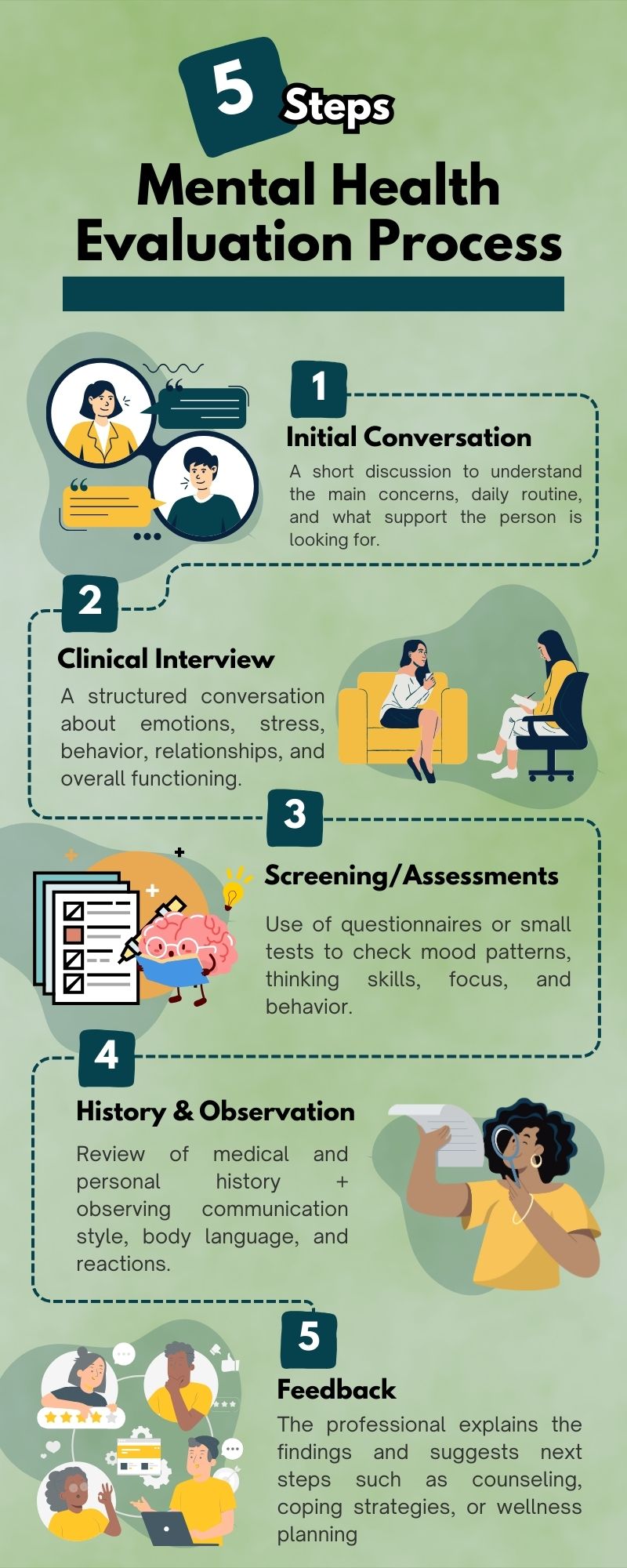
At Clover Behavioral Health Center, we evaluate people over time. We see them in different contexts. We watch how behavior changes when safety increases. When trust builds. People act differently when they’re not scared. Imagine that.
The Appearance Assumptions That Harm The Most
Someone walks in wearing expensive clothes and makeup. The assumption: They’re doing fine. Probably not that depressed. Someone walks in wearing pajama pants. Inexperienced trainees can assume: Severe depression. Poor self-care.
Both assumptions can be incorrect.
You can be suicidal in a designer suit. You can be healing in sweatpants. You can have immaculate grooming and be falling apart inside. You can look like hell and actually be having your best week in months.
Appearance is theater. Sometimes the costume matches what’s happening inside. Often it doesn’t.
We’ve worked with people throughout Littleton who maintain perfect appearances right up until they can’t anymore. The MSE catches them on the day the mask finally cracks. Then it declares that’s who they’ve always been.
When the Mental Health Evaluation Becomes the Trauma
The evaluation itself can be retraumatizing.
You are asked about things you have been striving for years not to think about. You are supposed to be clear when re-experiencing events that shattered you. Then your behavior during that process gets documented as pathology.
“Patient became tearful and unable to continue.” No kidding. You just asked them to describe their assault. “Patient appeared guarded and gave minimal responses.” Maybe because the last clinic didn’t keep their information confidential like they promised.
The MSE doesn’t distinguish between pathology and reasonable responses to an invasive process.
What Littleton, MA Residents Deserve Instead
You deserve clinicians who understand that behavior, appearance, and attitude are languages. They’re trying to tell us something. But you have to listen deeper.
You deserve evaluations that see you as a whole person, not a collection of concerning observations. You deserve providers who know the difference between pathology and poverty. Between symptoms and self-protection. Between mental illness and justified distrust.
At Clover Behavioral Health Center, we document behavior AND context. We note appearance and circumstance. We observe attitude and relationship. We revisit assessments. We update them. We let people be more than their worst day in our office.
Final Words
In Littleton, and throughout our community, people deserve better than being reduced to a paragraph of clinical observations. They deserve assessment that sees context. That honors complexity.
If you’ve been misunderstood by the system, we get it. If previous mental health evaluations felt more like judgment than assessment, we understand.
Call us at 978-216-7765 or visit our website. Let us show you what a comprehensive mental health evaluation actually looks like. You’re not a checklist. You’re a person. And that matters more than anything we write in the chart.