
The Room No One Talks About: Understanding PTSD Treatment Options
There used to be a house with a room that no one ever opened.
It wasn’t locked. There was no padlock, no key hidden somewhere, and no formal decision made about keeping it closed. It had, just, over time, gradually, without anyone quite noticing when it started, become the room that stayed shut. The family lived normally around it. They made meals and had arguments, and celebrated ordinary things. They moved through the hallways, without thinking much about where they’re going. The house functioned. The family functioned.
Yet the room was always there.
And the strange thing was how much space it took up. Not just the square footage behind the door. Something larger than that. The hallways felt slightly narrower than they should. Conversations in the room next to it had a particular quality, a slight thinness, like everyone was unconsciously keeping their voice down. Visitors remarked on the house’s beauty, which was true. Yet, the residents understood that part of every room was silently filled by the one they never opened.
This is what PTSD looks like in a lot of lives. Not the dramatic unraveling. Not the version from films. The flashback in a crowded supermarket: the veteran startled by a car backfiring. Those things happen. More often, it manifests as a room that nobody opens. This room reorganizes the entire floor plan of a life around itself, slowly and silently, until the house feels smaller than it used to be and nobody can quite remember why.
What PTSD Looks Like When It’s Not a Movie
The loudest cultural image of PTSD is a specific one. Combat, explosion, a clear and nameable catastrophe. And for some people, that image is accurate. But it excludes the majority of people living with trauma responses, who don’t have a cinematic event to point to and often spend years wondering if what they experienced was “bad enough” to count.
Trauma is not a ranking system. It is a nervous system response. The brain’s attempt to protect you from something it registered as unsurvivable. It does not calibrate itself to what other people would have found traumatic. It calibrates itself to what you experienced, in your body, at the time it happened. Childhood environments that were never safe. Relationships that rewired how you understand threat. Losses that happened too fast or too young. Medical events. Accidents. Things that were done to you that you have never said out loud to anyone.
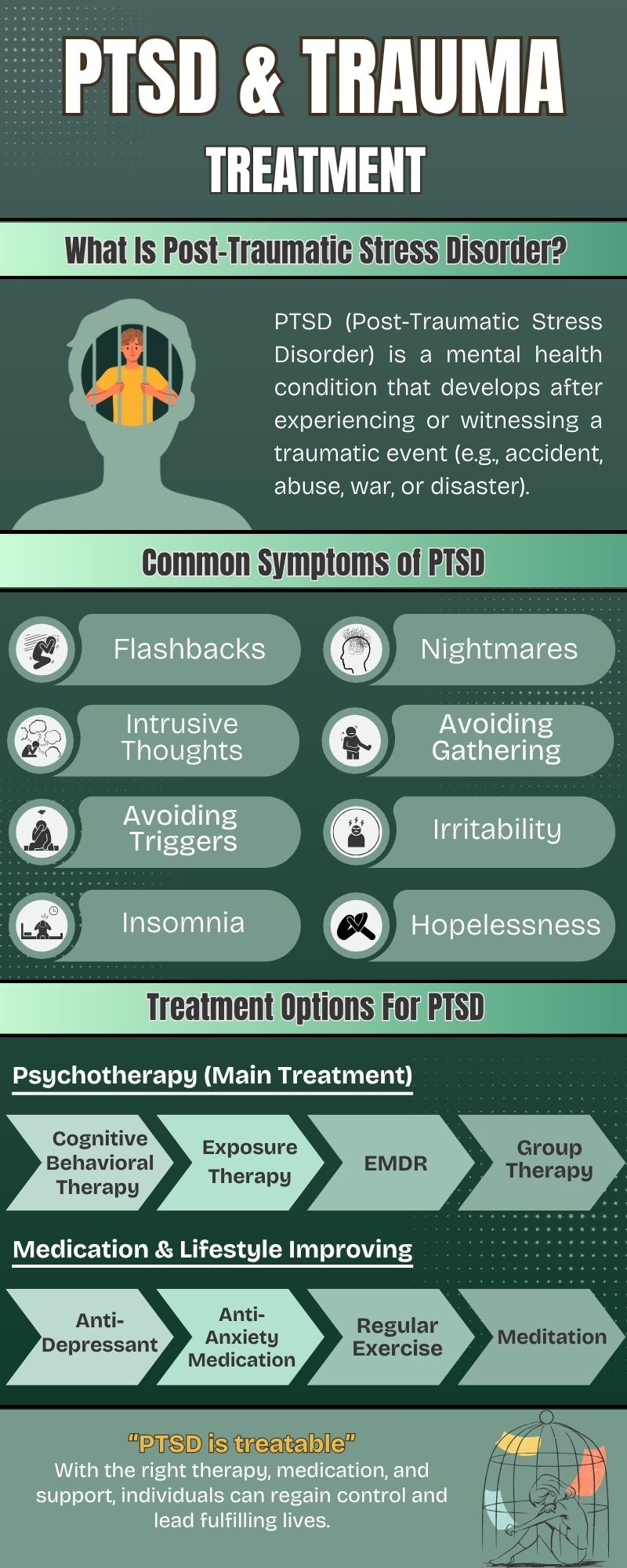
The symptoms arrange themselves around the person’s life so quietly that they often go unrecognized for years. Hypervigilance that reads as being “intense” or “detail-oriented.” Emotional numbness that looks like being calm under pressure, a quality other people admire. Avoidance that presents as being private, independent, or someone who just prefers not to dwell. Sleep disruption that gets attributed to stress. Irritability that gets attributed to personality.
You built a life around the room without knowing you were doing it. That is not weakness. That is survival. Nevertheless, survival and living are not the same thing, and at some point the house starts to feel too small to stay in.
PTSD-Specific IOP Program in Salem, NH
Not a support group. Not a place to describe what happened to you for three hours a week while someone nods sympathetically. Structured, evidence-based, specific clinical work explained like a human being, not a brochure.
Eye Movement Desensitization and Reprocessing
EMDR sounds stranger than it is. The theory behind it is that traumatic memories get stored differently than ordinary memories. Without the context, perspective, and emotional distance that normal memory processing provides.
The method involves bilateral stimulation (guided eye movements, tapping, and tones) when you retain the memory, so your brain can reprocess the memory in the manner that it would have done so had it not been overwhelmed at the moment. The memory doesn’t disappear. It loses the charge. It turns into something that has happened and not something that always, on some level, continues to happen.
Prolonged Exposure
It works differently but toward the same end.
The process happens slowly by systematically working on the trauma memory in a safe, conducive environment until the nervous system learns that it is not the memory that is the danger.
That one can enter the room without bringing down the house.
Cognitive Processing Therapy
CPT addresses what trauma does to belief. It doesn’t just create fear. Rather, it creates conclusions. It was my fault. The world is not safe. I cannot trust anyone. I am permanently damaged.
These conclusions feel like facts because they were formed in the most intense moments of your life. CPT systematically examines them. Not to invalidate your experience, but to separate what really happened from what the trauma decided it meant.
Group Therapy
In a trauma-informed IOP, group therapy accomplishes something that individual work cannot.
There is a particular kind of healing that comes from being witnessed. Not fixed, not advised, not told what you should have done differently. Witnessed. By people who have their own closed rooms and understand, without explanation, what it costs to stand near the door.
The Thing Nobody Mentions: PTSD Rarely Travels Alone
The research on this is consistent enough that it should be said plainly. Roughly 80 percent of people with PTSD have at least one co-occurring diagnosis. Depression, anxiety, substance use disorder, or chronic pain. These are not separate problems that happened to arrive at the same time. They are frequently direct responses to the trauma itself.
The drinking started as a way to quiet the room. The depression that moved in when the room had been closed so long the rest of the house started going dark too.
Weekly outpatient therapy, even excellent weekly therapy, often has to make a choice about which door to open first. IOP’s structure and hours allow everything to be addressed simultaneously and in relation to each other because that is how they actually exist.
The person who has been using alcohol to manage hypervigilance doesn’t need to get sober before they can address the trauma. They need an integrated program that understands the two are inseparable.
Ready to Take The Next Step
At Clover Behavioral Health in Salem, NH, we work with people who are ready to stop organizing their lives around a closed door. Not people who have it all figured out. Not people who have already done the hard part. People who are tired of the house feeling smaller than it should and who are willing to stand near the door with someone beside them.
That’s enough to start. That’s exactly where we start.