
Trauma-Informed Care & PTSD Treatment: A Different Approach to Healing
Many people living with PTSD don’t struggle because they haven’t tried to get better; they struggle because their treatment didn’t fully address how trauma impacts the mind, body, and nervous system.
Some therapies move too fast. Some treatments move too fast into painful memories, while others only treat the surface of what someone is feeling.
At Clover Behavioral Health, our approach to care is trauma-informed right from the start. Our Clover Care model is designed to support individuals dealing with complex trauma, PTSD, and various other challenges.
This article explains what trauma-informed care & PTSD treatment mean, and why this approach can feel different from therapy you may have tried before.
What Trauma-Informed Care Means at Clover Behavioral Health?
Before we begin trauma-informed treatment, we keep in mind that trauma can change how people think about things like feeling safe and forming connections.
At Clover Behavioral Health, we do just that!
The treatment is based on:
- Emotional and physical safety
- Respect for personal boundaries
- Choice and collaboration
- Care that moves at a manageable pace
We don’t ask clients to dive into painful memories as soon as treatment starts. We begin by helping you feel grounded, secure, and confident in trusting, and then we move forward together. For many people with PTSD, this feels unlike anything they’ve tried before.
PTSD Treatment Built for Complex Needs
PTSD doesn’t always come from a single event. Many people live with:
- Long-term or repeated trauma
- Childhood or relational trauma
- Trauma combined with anxiety, depression, or dissociation
- Trauma layered with life stress, grief, or burnout
Clover Care is designed for people whose needs don’t fit into a single plan. We don’t stick to a strict schedule or a one-size-fits-all approach.
Why Trauma-Informed Care Matters for PTSD?
PTSD affects more than memory. It impacts:
- The nervous system
- Emotional regulation
- Trust and relationships
- Sense of control and safety
When people don’t get trauma-informed care & PTSD treatment, they may feel:
- Overwhelmed or shut down in sessions
- Pressured to talk about trauma before they’re ready
- Blamed for symptoms they can’t control
- Re-triggered instead of supported
Trauma-informed care helps lower these risks by going at a pace that works for each individual, rather than pushing them into situations they aren’t prepared for.
What Trauma-Informed Care & PTSD Treatment Includes?
At Clover Behavioral Health, trauma-informed care & PTSD treatment are shaped according to the needs of each individual.
Individual Therapy
We provide one-on-one therapy with our licensed therapists. These sessions help you feel more secure, learn how trauma impacts you, and build useful skills to manage difficult emotions.
Skill-Building and Stabilization
As the treatment starts, we pay more attention to grounding techniques, managing emotions, and soothing the nervous system. This helps individuals feel more balanced and less worried in their everyday lives.
Trauma-Informed Psychiatric Support (When Needed)
We also use medication as part of our treatment, but only for those who can’t control their symptoms through therapy alone. We handle this with care and only use medication when it’s truly necessary.
Coordinated Care Through Clover Care
The therapists and psychiatrists team up, which helps make the treatment feel more coordinated.
What a Typical Day or Week of Care Can Look Like?
There is no single right way PTSD treatment should look like. However, at Clover Behavioral Health, trauma-informed care typically takes a supportive approach,
A typical experience may include:
- Therapy sessions that are designed to focus on safety and helping individuals manage their emotions.
- Time spent learning and practicing grounding techniques
- Gradual exploration of trauma-related patterns, not forced retelling
- Ongoing check-ins about pace, comfort, and readiness
There will be lighter days and tougher ones. Instead of pushing through pain, we center our treatment on building resilience gently, without it being too overwhelming.
How Trauma-Informed Care & PTSD Treatment Feels Different?
Many people seeking PTSD treatment at Clover Behavioral Health have tried therapy before.
Trauma-informed care often feels different because:
- We don’t pressure the clients to share details before they’re ready
- Emotional shutdown or avoidance is understood, not judged
- Progress is measured by stability, not intensity
- Clients have real input into how treatment unfolds
Medication as Part of Trauma-Informed PTSD Treatment
Medication isn’t typically part of trauma-informed care, but in certain situations, it can be really helpful.
When we include medication as part of treatment:
- We discuss it openly, including benefits and concerns
- Our goal is stability, not shutting emotions down.
- We monitor it closely and make adjustments
Who Is Trauma-Informed PTSD Treatment For?
Trauma-informed care & PTSD treatment are especially helpful if you:
Feel Overwhelmed or Shut Down Easily
If intense emotions make you shut down, disconnect, or feel numb, trauma-informed care begins with grounding and emotional safety.
Have Tried Therapy That Moved Too Fast
For some, past therapy meant being pushed into painful experiences before they felt safe. Trauma-informed care focuses on taking things slowly and building trust first.
Struggle with Trust or Emotional Safety
People suffering from PTSD find it difficult to trust others. This approach builds trust through steady care, personal choice, and working together over time.
Experience Layered Mental Health Challenges
PTSD often overlaps with anxiety, depression, or emotional regulation difficulties. Trauma-informed care supports these experiences together.
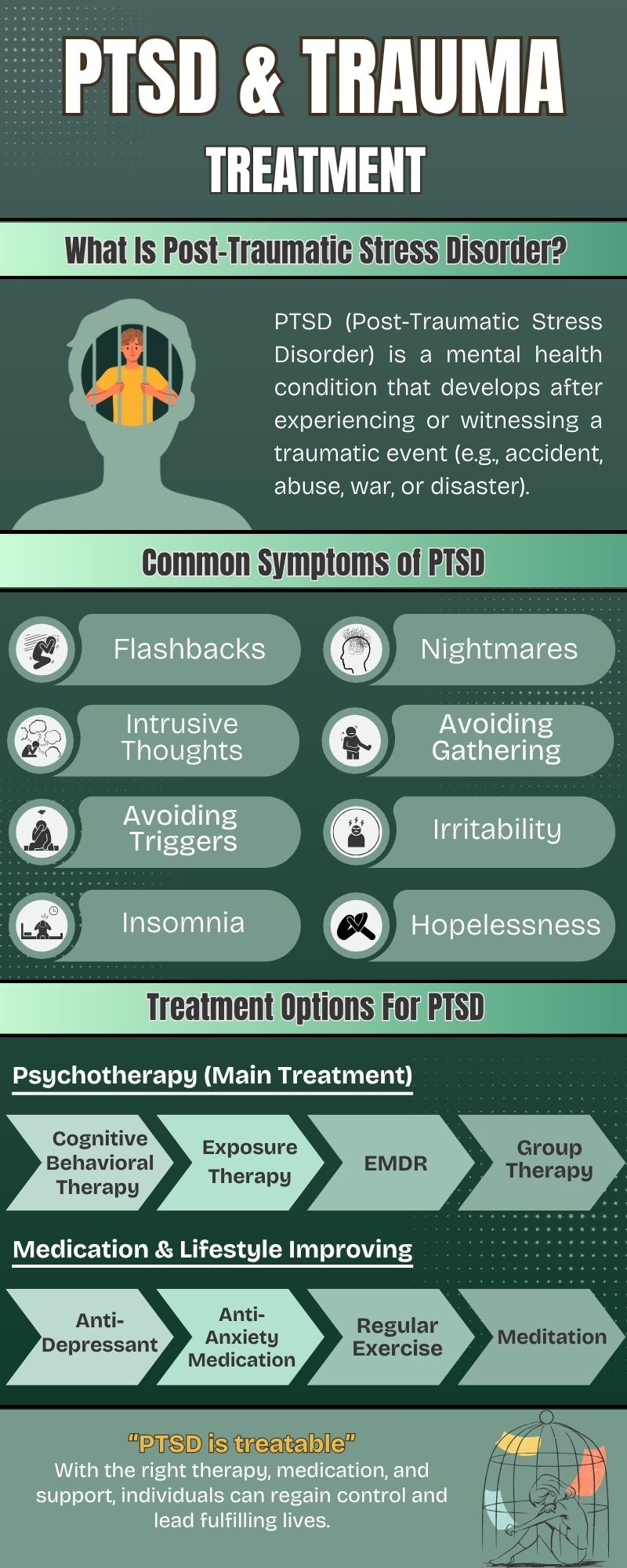
Trauma-informed care & PTSD treatment isn’t about forcing the past into the present. The main aim is to build a feeling of safety so that the healing process can be smooth and effective.
Healing at a Pace That Respects You
Healing from trauma doesn’t have to be uncomfortable. Many people notice progress through:
- Better sleep
- Fewer emotional spikes
- Improved relationships
- More space between triggers and reactions
Trauma-Informed Care & PTSD Treatment at Clover Behavioral Health
Clover Behavioral Health offers trauma-informed treatment for PTSD that’s safe, reliable, and adaptable. We prioritize lasting recovery over temporary solutions, and our Clover Care model is built to support this approach.
So, if you want to know more about our Clover Care model or simply begin a conversation about trauma-informed care, just give us a call. We will take it from there!