
Trauma & PTSD Treatment in Massachusetts
Trauma is a physiological response to something that overwhelms the brain’s ability to process information. And even after that certain event is over, your brain triggers a “fight, flight, or freeze” response if you feel threatened.
Eventually, the nervous system remains stuck in this high-alert state because the brain fails to move the memory from short-term processing to long-term storage. So instead of that bad becoming a past event, its trauma stays active. As a result, your body continues to secrete stress hormones like cortisol and adrenaline as if the threat is still around.
Since that happening can change how your brain perceives daily life, you need a solid trauma and PTSD treatment in Massachusetts to regulate your nervous system. This article explains how trauma affects you and how a treatment works to uproot it. Keep reading.
How Does Trauma Affect You
Trauma is a subjective experience whose impact depends on what the event is, its frequency, and other details, including the support you receive. That’s the reason everyone processes it differently, and trauma therapy in MA works accordingly.
That said, here is how post-traumatic stress disorder impacts you:
Reliving the Trauma Through Flashbacks
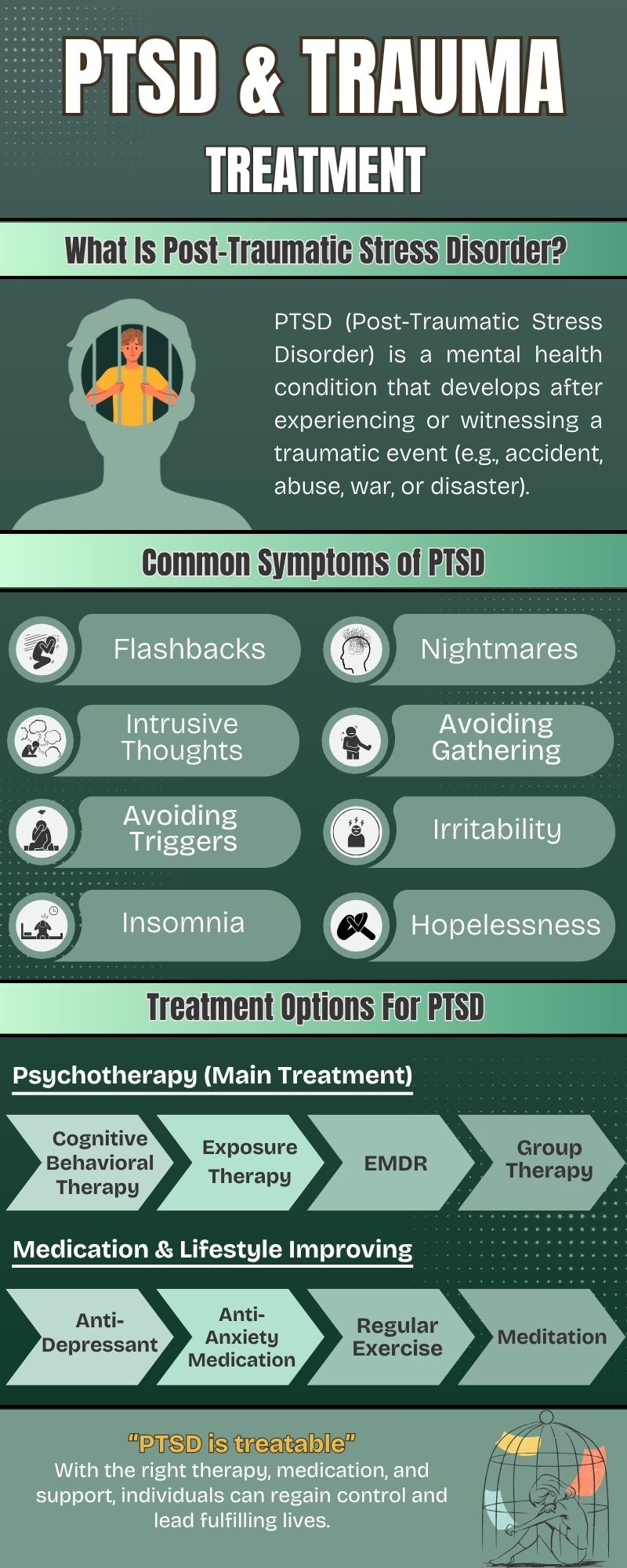
After a traumatic event, your brain might force you to relive it via flashbacks. During these painful flashbacks, your nervous system loses its connection to the present moment, and you feel as if that certain thing is happening right now.
It’s because the amygdala triggers a physical stress response, which releases adrenaline and increases your heart rate. As a result, your mind cannot decide if it’s a past memory you’re living or something happening in that moment. For instance, if you experience a certain sight, sound, or feeling relevant to the said trauma, you’ll likely get strong flashbacks as a response.
Feeling Constantly on Edge
As explained earlier, the nervous system takes a hit after a trauma and stays stuck in a fight or flight mode. Post-traumatic stress disorder can have you constantly scanning your surroundings for potential threats, even if things are safe. You learn during trauma and PTSD treatment in Massachusetts that this is not a conscious choice; it’s a biological survival mechanism.
And when your body stays flooded with stress hormones, you experience symptoms including a rapid heart rate, shallow breathing, and muscle tension. Also, it’s not uncommon to feel jumpy or have difficulty sleeping because trauma can have you feeling all those disturbing things.
Avoiding Anything that Reminds You of it
Avoidance is another common coping mechanism after something bad happens because the brain tries to protect itself from further distress. For instance, some people, places, or activities can give you intense pain. You may try to stay away from anything related to the memory to prevent the nervous system.
Even though doing so provides short-term relief, chronic avoidance keeps the brain in a cycle of fear. Sure, you can avoid processing the trauma, but the mind never learns that the current environment is safe.
How Can Trauma & PTSD Treatment in Massachusetts Help You Overcome
Trauma doesn’t always come from big happenings, and not everything bad gives you PTSD. That’s why trauma and PTSD treatment in Massachusetts helps your cause from the ground up. The experts evaluate the source of your trauma to fix the patterns that have been hampered. Here are some ways you can expect a PTSD treatment near me to work:
Trauma-Focused Talk Therapy
Trauma-focused talk therapy is an integral part of trauma and PTSD treatment in Massachusetts. Its focus is to give you a safe environment where you can process difficult memories. Since the brain often stores the memory as a current threat rather than a past event, this trauma therapy in Massachusetts helps you organize those fragmented thoughts to believe that the said thing is now over.
When you talk through that experience with a professional, they help teach your nervous system that the danger is over. As a result, the earlier intense physical reactions are more in control, which usually happen when you remember the event.
EMDR to Process Painful Memories
Eye Movement Desensitization and Reprocessing (EMDR) is another trauma therapy in Massachusetts to help your brain digest painful memories. Mostly trauma keeps a memory raw, which means you can’t heal well, but EMDR uses guided eye movements to jumpstart the brain’s natural healing process.
This technique then helps move the memory from the emotional part of the brain to the logical part. With this shift, the event begins to feel like a distant memory and not a current threat.
Exposure Therapy to Face Fears
Your brain often links things, places, and people to that painful event that happened to you in the past. But when you receive good trauma and PTSD treatment in Massachusetts, it helps you slowly and safely face those reminders under a professional’s guidance.
This therapy’s goal is to show your nervous system that these feelings don’t mean an imminent threat. Once you stop avoiding what scares you, you can calm down, and your brain learns that you are actually safe.
Medicine to Calm the Mind
Medication used during trauma and PTSD treatment in Massachusetts helps balance your brain chemistry. Being in survival mode means your body is constantly pumping out stress hormones, which keep you feeling those heavy things. Luckily, medicines, such as SSRIs, help regulate these chemical signals to lower your overall stress levels.
It’s worth mentioning that these meds don’t erase your memories, but they do reduce the intense physical panic they cause. Calming your nervous system with approved medicines makes it easier to focus on therapy and daily life. You get the mental space needed to work through deep-seated trauma without being overwhelmed.
It’s Time to Get Over the Past
Traumatic events can alter your whole life, but this thing can be fixed with proper treatment. Clover Behavioral Health makes healing a reality rather than a distant idea. So don’t let the doom and gloom situation linger any longer. Call us at 978-216-7765 and step towards a brighter future.