

Depression Screening Through Mental Health Evaluation in Andover MA: How Psychometric Scales Improve Diagnostic Accuracy
Around 65% of major depressive patients are misdiagnosed during the first visit. Think about that. More than half walk out with the wrong answer. Not because their physicians are incompetent, but because the nature of depression is a disguise.
In the Hours, there comes a scene in which Virginia Woolf is attempting to justify to her husband the reasons why she needs to return to London. No, she is not breaking down, she says. She’s fine. In the meantime, the viewers can observe that she is totally drowning. The difference between her words and the reality would swallow an individual down the drain.
That is the reason why we do not merely inquire, “Are you depressed? and call it a day. This is why there are psychometric scales. Not to substitute human judgment but to sharpen it.
The Issue of Just Talking About It
During the normal check-up, the physician poses a question: “How do you feel?” You say, “Fine, just tired.” They check your thyroid. Send you home. After six months, you are still not feeling good, and you cannot even recall when you last felt like doing something of any value.
Depression does not declare its presence. It whispers. It mimics other conditions. Chronic fatigue. Insomnia. Pain that won’t quit. Even when people finally decide to visit a mental health professional, they pretend to be okay, regardless of feeling terrible for months.
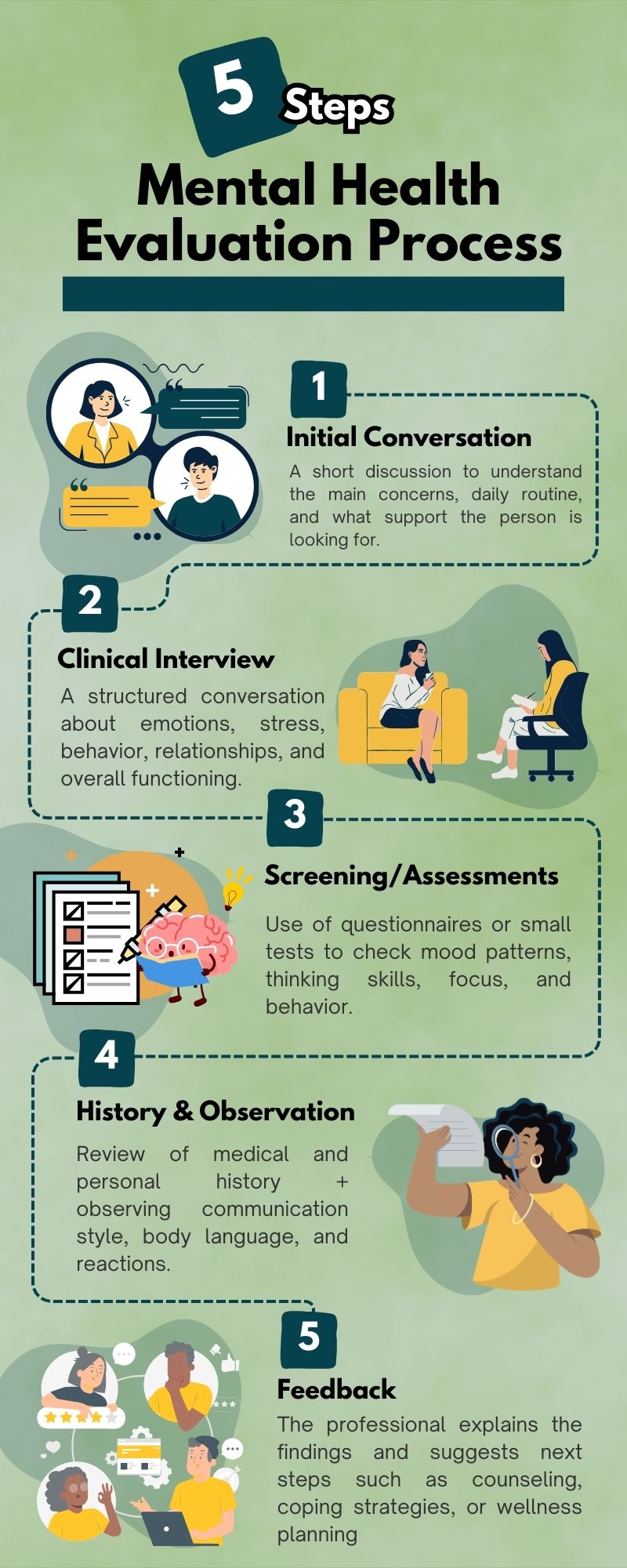
This is where psychometric scales become essential. Psychologists ask specific questions you might not think to mention. They create structure for the chaos. They measure what’s measurable and give us a baseline to work from.
PHQ-9: The Gold Standard That Fits on One Page
The Patient Health Questionnaire-9. Nine questions. Takes three minutes to complete. Sounds too simple to matter.
Except it’s been validated in thousands of studies across millions of patients. Each question maps to a specific symptom criterion from the DSM-5. Loss of interest. Sleep problems. Fatigue. Concentration difficulties. Feelings of worthlessness. Suicidal thoughts.
A clinician can look at your PHQ-9 and see exactly where you’re struggling. Maybe your score is moderate, but question nine (the one about thoughts of self-harm) is elevated. That changes everything.
At Clover Behavioral Health in Andover, we use the PHQ-9 at intake and then regularly throughout treatment. Because it tracks change. Three months in, your score drops from nineteen to eleven? The treatment’s working. Stays the same? Time to adjust.
Beck Depression Inventory: When You Need More Depth
The BDI-II goes deeper. Twenty-one questions instead of nine. Takes about ten minutes.
It measures not just whether symptoms exist but also their intensity. Question about sadness doesn’t just ask if you’re sad. It gives you four options ranging from “I do not feel sad” to “I am so sad or unhappy that I can’t stand it.”
That granularity matters. Two people can both score as “moderately depressed” on the PHQ-9, but their actual experiences might be vastly different. The BDI-II catches those differences.
It’s particularly good at distinguishing between types of depression. Someone with melancholic features (nothing brings pleasure, everything is worse in the morning, weight loss) shows up differently than someone with atypical features (oversleeping, overeating, extreme rejection sensitivity).
The fact that treatment varies makes this important. Melancholic depression often responds better to certain medications. Atypical depression might need a different approach entirely.
Hamilton Depression Rating Scale: The Clinician-Administered Version
The HAM-D isn’t something you fill out yourself. A trained clinician administers it. Asks the questions. Rates your responses.
Why bother? Well, there are moments when the difference between what people talk about and what actually takes place requires a trained eye to notice. Professionals evaluate psychomotor retardation, such as the slowing down of movements and speech. You may not even realize that you are doing it. Yet, a doctor who is observing you to have difficulty with words can easily pick it up.
The HAM-D is the gold standard of clinical trials in depression interventions. Its scores are used when researchers require information as to whether a new medication is effective. It’s that reliable.
How Scores Translate to Treatment Decisions
This is where psychometric scales earn their keep. They don’t just diagnose. They guide treatment.
PHQ-9 score between five and nine? We might start with therapy alone. Cognitive-behavioral therapy. Interpersonal therapy.
Score between ten and fourteen? Now we’re talking combination treatment. Therapy plus medication is more effective than either alone for moderate depression.
Fifteen or higher? Medication becomes essential. Not optional. The research is clear on this. Severe depression doesn’t typically respond to therapy alone initially.
Yet, what really matters is regular monitoring. We retest. Four weeks in. Eight weeks in. Twelve weeks. If your PHQ-9 score hasn’t dropped by at least fifty percent within eight to twelve weeks, something’s wrong. Either the medication dose is too low, or it’s the wrong medication, or there’s something else we missed.
Without the scale, you’re relying on subjective impressions. “How are you feeling?” “Better, I guess?” That’s not good enough. The scale tells us objectively whether the intervention is working.
Final Words
In Andover and throughout the United States, about one in six adults experiences depression each year. And the average time between symptom onset and proper diagnosis? Twelve years.
Twelve years of suffering. Of trying to push through. Of thinking, maybe this is just who you are now. Psychometric scales change that equation. They make depression screening routine. Quick. Standardized. A PHQ-9 takes three minutes and catches what might otherwise be missed for years.
If you’re reading this because someone suggested you get screened, they’re probably right. Depression isn’t something you earn the right to treat by suffering long enough. You don’t need to hit some arbitrary threshold of misery before you deserve help.
At Clover Behavioral Health in Andover, we’ve screened hundreds of people who thought they were fine. The scales told a different story. And that different story led to treatment and recovery.
Call us at 978-216-7765. Bring your exhaustion, your confusion, your “I don’t know if this counts as depression.” We’ll figure it out together. With precision. With compassion. With tools that work.