

Anxiety Treatment Near Me in Salem, NH: What to Expect
Have you ever felt anxious even when nothing seems particularly wrong, or found yourself lying awake at night worrying about things you cannot control? Anxiety can affect much more than your mood. It may disrupt your sleep, make it harder to concentrate at work, strain relationships, and leave you exhausted by the end of the day. According to the cited KFF mental health and substance use data, roughly 30% of adults in New England experience an active anxiety disorder.
If anxiety has started taking over your routine, getting help can feel like another challenge to deal with. You may be unsure what treatment involves, how much time it requires, or whether you will feel comfortable talking to someone about your experiences.
At Clover Behavioral Health in Salem, New Hampshire, treatment starts with understanding what you are going through and determining what support could help. Our Partial Hospitalization Program (PHP) and Intensive Outpatient Program (IOP) offer structured daytime care, giving you the chance to work on your mental health while continuing to live at home.
Here is what you can expect when you begin anxiety treatment with our team.
Step 1: Your First Visit and Initial Assessment
Making that first appointment can be difficult, especially if anxiety makes unfamiliar situations uncomfortable. You might worry about what the clinician will ask, whether you will have to discuss painful experiences immediately, or how others will respond to what you share.
You do not need to have everything figured out before you arrive. Your first visit is an opportunity to talk about what has been happening and ask questions about the treatment process. Our team at the Salem facility aims to create a welcoming environment where you can speak openly without feeling judged.
There is no expectation that you will explain everything perfectly or know exactly what kind of help you need. Some people come in after months of struggling with anxiety on their own, while others seek support when symptoms begin affecting their work, relationships, or ability to manage daily responsibilities.
The goal is to understand your situation and help you work out the next steps, rather than rush you into a treatment plan that may not suit your needs.
Step 2: Finding a Treatment Plan That Fits Your Life
Anxiety treatment does not look the same for everyone. Some people need several therapy sessions each week, while others benefit from a more structured program with support throughout much of the day. At Clover Behavioral Health, the clinical team considers your symptoms, daily responsibilities, and treatment goals when determining which option may be appropriate.
Anxiety treatment needs to fit the level of support you need and the responsibilities you have outside the clinic.
With an Intensive Outpatient Program (IOP), you attend scheduled therapy sessions during the week while keeping time for work, studies, or family commitments.
A Partial Hospitalization Program (PHP) involves a fuller daytime schedule and may be a better fit when anxiety makes it difficult to manage everyday tasks without more regular clinical support.
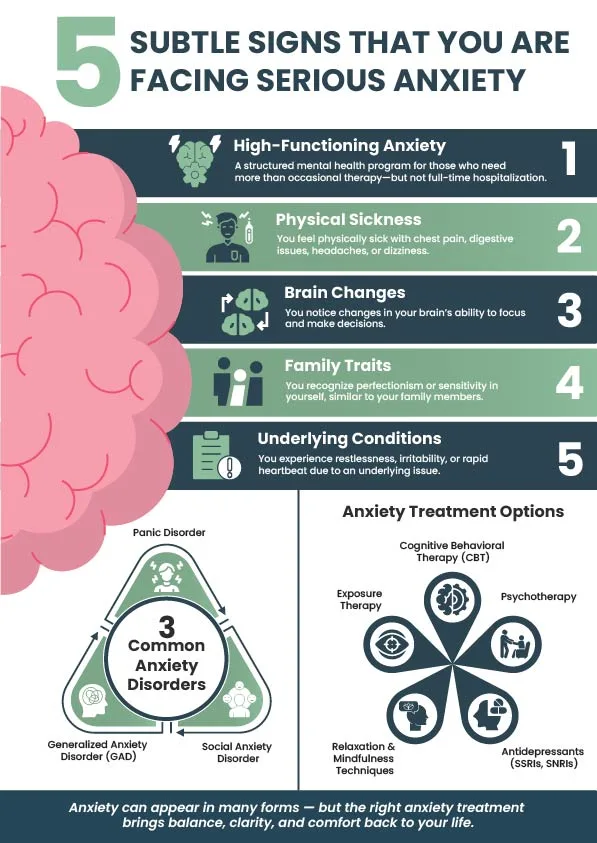
Both programs let you return home after treatment, but the time spent in care and the intensity of support differ. As you work with your therapist, you can also start applying what you learn to situations that usually make you anxious, whether that means handling a difficult conversation at work or finding a way to settle your thoughts after a stressful day.
These everyday experiences can become useful topics to bring back to your clinician, helping you work through challenges as they arise.
Step 3: Working Through Anxiety With Evidence-Based Treatment
Cognitive Behavioral Therapy (CBT): Understanding Anxious Thoughts
Anxiety can make an uncertain situation feel like a disaster waiting to happen. Cognitive Behavioral Therapy (CBT) helps you recognize these patterns and examine how your thoughts, feelings, and actions influence one another.
During CBT, your therapist may help you identify the assumptions behind your worries and consider whether the evidence supports them. You can then work on responding to difficult situations in a more balanced way instead of automatically accepting the worst-case scenario as fact.
For example, if you become anxious before a meeting, you might usually imagine everything that could go wrong and spend hours preparing for it. CBT can help you identify that pattern, evaluate the likelihood of those outcomes, and develop a more manageable response.
Dialectical Behavior Therapy (DBT): Managing Strong Emotions
For some people, anxiety builds so quickly that it becomes difficult to think clearly or decide what to do next. A racing heart, overwhelming thoughts, or an urgent need to escape a stressful situation can make it hard to use coping strategies in the moment.
Dialectical Behavior Therapy (DBT) teaches practical skills for handling intense emotions and responding to distress without making the situation harder.
Depending on your treatment plan, you may learn mindfulness, distress tolerance, and emotional regulation techniques. These can help you pause before reacting, pay attention to what is happening in the present, and choose a response that supports your well-being.
Grounding exercises may also help when anxiety makes you feel disconnected from your surroundings or caught up in frightening thoughts. For instance, you might focus on the objects around you, notice your feet against the floor, or slow your breathing while reminding yourself that you can take the situation one step at a time.
These techniques do not make every stressful experience disappear. Instead, they give you options for managing difficult moments without feeling that anxiety has to dictate your next move.
Step 4: Planning for Continued Support After Treatment
Transitioning to Outpatient Care
Finishing PHP or IOP doesn’t mean you have to manage anxiety on your own. Before you complete the program, your treatment team can help arrange follow-up therapy, psychiatric care if needed, and a plan for handling situations that tend to trigger your symptoms.
Maintaining Your Progress
Work stress, family responsibilities, and unexpected changes can still bring anxiety back. Regular therapy gives you a chance to address these challenges, revisit coping techniques, and adjust your approach when needed. If symptoms become difficult to manage again, reaching out for support early can help you stay on track.
Take the First Step Toward Anxiety Treatment in New Hampshire
When anxiety starts affecting your sleep, relationships, or ability to get through the day, you do not have to keep trying to manage everything on your own. The right level of support can help you understand your symptoms, develop practical coping skills, and work toward changes that matter in your everyday life.
At Clover Behavioral Health in Salem, New Hampshire, our team can help you explore whether an Intensive Outpatient Program or Partial Hospitalization Program is appropriate for your needs. The process starts with a conversation about what you are experiencing and what kind of support you may need.
If anxiety is affecting your daily life, Clover Behavioral Health can help you explore the right treatment options. Call 978-216-7765 to speak with our team about getting started and verifying your insurance coverageYou can also visit cloverbehavioralhealth.com for details about our programs.