

321 Billerica Road, Suite 206 Chelmsford MA 01824

7 Stiles Rd. Suite 101, Salem, NH 03079

Intensive Outpatient Program (IOP) in Massachusetts

Intensive Outpatient Program (IOP) in Massachusetts IOP Massachusetts: What You’ll Do, How Long It Lasts, and Why It Works

IOP Massachusetts: What You’ll Do, How Long It Lasts, and Why It Works

“Most people do not need 24/7 hospital care, but they still need more structure than weekly therapy.”
If that feels like your situation, an Intensive Outpatient Program MA (often discussed as intensive outpatient program MA and outpatient rehab MA) may be the right next step. According to SAMHSA, millions receive help each year through non‑residential programs. 

At Clover Behavioral Health, our Intensive Outpatient Program (IOP) in Massachusetts offers structured therapy while you remain at home, balancing treatment with everyday life. 

In this article, you will learn what IOP is, who it helps, how it works, and how to decide if our program is the right next step for you.

Intensive Outpatient Program MA 

An Intensive Outpatient Program MA gives focused treatment while you live at home. You attend sessions for a set number of hours each week, and your schedule is designed to protect work, school, and family time. This is why many people choose an intensive outpatient program in MA as a practical option.

Think of outpatient rehab MA as structured care with room to breathe. You still get group therapy, skill practice, and clinical support, but you are not stuck in a facility all day. If you want help that feels steady and supportive, an intensive outpatient program MA can help.

How An IOP Works In Massachusetts

An Intensive Outpatient Program MA usually includes groups, individual therapy, and sometimes family sessions. You also may receive medication management when clinically needed. In many programs, the treatment is built around goals, so progress is clear and measurable.

Also, an IOP is designed for people who do not require detox or constant supervision. For many participants, it becomes a bridge—stepping down from higher levels of care or stepping up from standard outpatient support. This is a key reason outpatient rehab MA is used so often.

What Is An IOP And Why Is It Used?

An IOP is an evidence-based level of care that delivers more support than standard outpatient visits. It is often used when symptoms are moderate to severe, but you can still safely manage daily life outside the program. In these cases, intensive outpatient program MA helps stabilize mood, reduce risk, and build real coping skills.

A major goal is continuity of care while you stay connected to your home environment. Programs also offer the chance to practice newly learned skills in real situations, not only inside a group room. That practical timing is a big part of why outpatient rehab MA can be so effective.

The Meaning Of Intensive Outpatient

The phrase “intensive outpatient” means the program is structured and frequent, but you do not live at the facility. Sessions often happen multiple days per week, and they may last several hours each day. That schedule is intended to support consistent treatment without removing you from your life.

So when people search for outpatient rehab MA, they are often looking for this exact balance. They want focused care that still allows responsibilities like commuting, caring for children, or keeping a job. An Intensive Outpatient Program MA can provide that balance.

Intensive Outpatient Program MA Vs Other Levels

It helps to know where an Intensive Outpatient Program MA fits in the broader treatment path. In general, it is more structured than weekly therapy, but less demanding than full-day programs.

Here is a simple guide:

Level Of Care

Typical Schedule Pattern

Best For

Standard Outpatient

Weekly or less frequent visits

Lower symptom impact or stable recovery maintenance

Intensive Outpatient Program MA

Several hours per day, multiple days per week

Moderate needs, step-down from higher care, or structured support at home

Partial Hospitalization (PHP)

Longer full-day treatment hours, commonly 5 days

Higher intensity needs but still not 24/7 inpatient

Inpatient

24/7 residential care

Crisis stabilization, detox, or constant supervision needs

➡️ Discover how same-day rehab admissions work in New Hampshire – just like our Intensive Outpatient Program MA keeps treatment accessible when you need it most. Read “Same-Day Rehab Admissions in New Hampshire” to see why immediate care changes everything.

Benefits Of An Intensive Outpatient Program
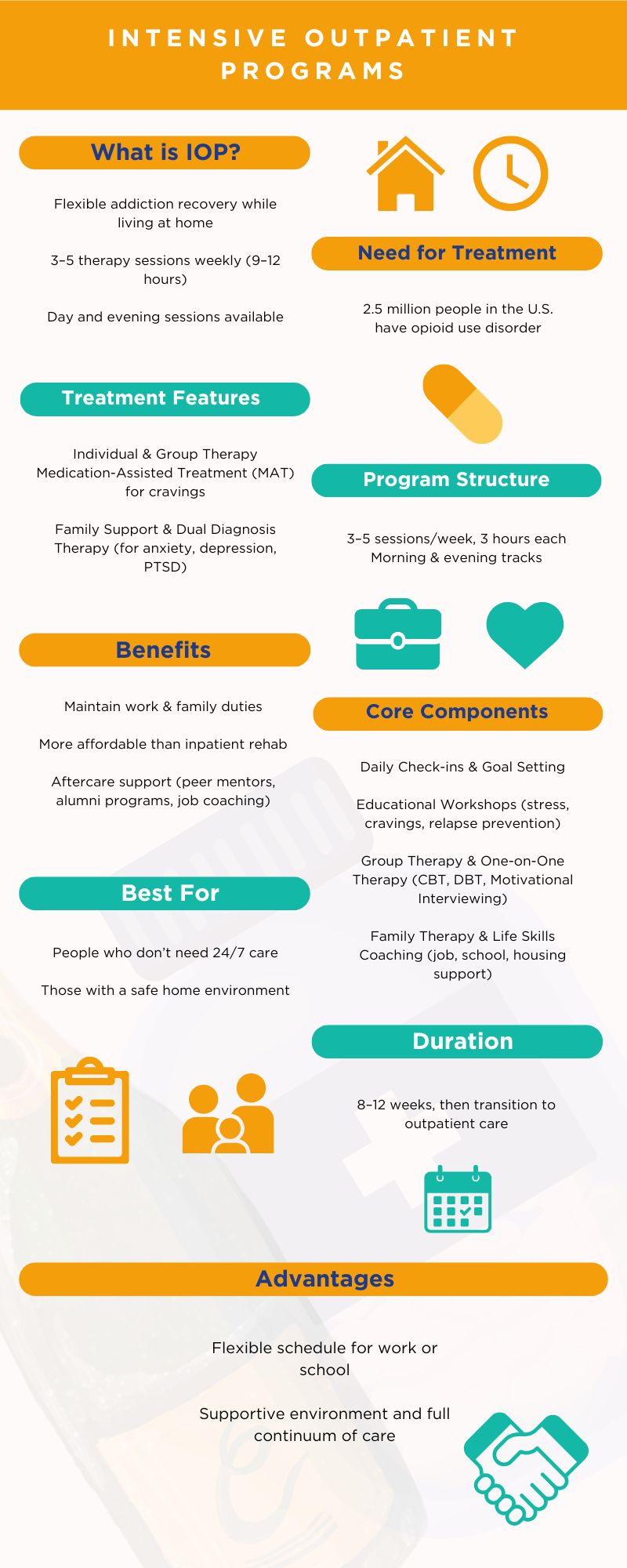
An Intensive Outpatient Program MA can help you feel supported without feeling trapped. Most people benefit from consistent structure, trained clinical guidance, and peer connection. Over time, you build coping skills that you can use during real triggers at home and in your community.

In addition, an IOP can reduce setbacks by giving you a steady treatment routine instead of relying on “once-a-week and hope for the best” care. Many participants also like the idea that they can keep family roles while receiving help. These benefits are a big reason intensive outpatient program MA is often recommended.

Key Benefits People Notice Fast

  • Flexibility That Still Feels Structured
  • Therapy Support You Can Attend Consistently
  • Group Learning From Others Who Understand
  • Skill Practice In Real Life
  • A Clear Plan For Next Steps After IOP
IOP for addiction iop for mental health

These are practical outcomes people tend to report when outpatient rehab MA is a good fit.

What You Do In Outpatient Rehab MA

In outpatient rehab MA, your day typically includes a mix of group therapy and clinical services. Many programs include group sessions that teach coping tools, support relapse prevention, and help people process stress and triggers. Individual sessions help you address your own goals.

You may also join educational sessions, skill-based groups, or family meetings, depending on the program track. As a result, the intensive outpatient program MA is not just “talk therapy.” It is organized care designed to build stability.

Therapies You May Expect In An IOP

Most Intensive Outpatient Program MA programs use a mix of therapy types so treatment fits your needs. Group therapy is often central, because it builds community and teaches people how others cope. Individual therapy supports deeper focus on personal goals and symptom patterns.

Many programs also include evidence-based approaches. For example, behavioral therapy styles may be used to help change unhelpful thinking patterns and strengthen healthier responses. Some programs include family therapy to improve home support and communication.

Typical Duration Of Intensive Outpatient Program MA

Most intensive outpatient programs in MA stay long enough to support real change. Many programs fall within a common range, such as 6 to 12 weeks, though some plans may last longer based on progress and clinical needs. Your care team helps decide the timeline with you.

Also, duration often depends on whether you are stepping down from a higher level of care or building stability from a different starting point. If symptoms need more time to stabilize, your schedule may adjust to reflect that.

Who Is A Good Candidate For IOP

You may be a good candidate for Intensive Outpatient Program MA if your symptoms interfere with daily life, but you do not require 24-hour supervision. For many people, it is used when standard outpatient care is not enough and higher care is not required.

It can also work well for people who need structured support after discharge. In those cases, outpatient rehab MA helps you adjust to daily routines while still receiving consistent treatment.

Common Signs IOP May Help

  • Weekly therapy is not reducing symptoms enough
  • Symptoms are affecting work, school, or home life
  • You recently stepped down from inpatient care
  • You need more structure than standard outpatient visits
  • You want support, but can safely live at home

Admission Process In Massachusetts

A good program starts with a clear assessment. When you contact an intensive outpatient program MA provider like Clover Behavioral Health, they typically review your history, symptoms, and current safety needs. Then they match you to a schedule and services that fit your level of care.

After that, you may complete paperwork, insurance verification, and intake questions. Many programs also set goals for what you want to improve during treatment. That way, your outpatient rehab MA experience is not random, and progress is easier to track.

Scheduling And Daily Routine

One reason people search for an intensive outpatient program MA is schedule fit. Many IOP schedules are built around morning or afternoon sessions, and they can be planned around work and responsibilities. Some people also prefer telehealth options when they are available.

Because the routine is consistent, it helps your mind settle into a treatment rhythm. Over time, that routine can reduce stress and make coping skills feel more automatic.

Example Weekly Structure

  • Group therapy sessions several days per week
  • Individual therapy for your personal goals
  • Skills or psychoeducation groups
  • Family sessions when needed
  • Aftercare planning toward the end of the program

Exact hours vary by clinic and plan.

Insurance, Costs, And Financial Options

Many families worry about cost first, and that is completely understandable. Outpatient rehab MA programs may accept major insurance plans, depending on the provider. Some centers also offer guidance on benefits and documentation.

Before starting, you should confirm coverage for IOP services, copays, and any required referrals. This helps you avoid surprises and helps your plan stay on track.

Case of Sarah Recovering from Postpartum Depression

Sarah, a 34-year-old teacher from Massachusetts, faced severe postpartum depression after her second child. Panic attacks and insomnia disrupted her life, despite family support. She joined Lion Heart Behavioral Health’s Intensive Outpatient Program MA, attending three mornings weekly. 

With CBT groups, family sessions, and medication adjustments, she regained balance—home for her kids after school, teaching by day. Now thriving, her story shows IOP’s power for real recovery without upending life. (Lion Heart Behavioral Health success stories, 2025)

How To Choose The Right IOP In MA

Choosing the best Intensive Outpatient Program MA is not only about location. It is also about fit, structure, and the right services for your needs. Start by confirming the program offers the level of care you are seeking.

Then, review the therapy mix. Look for group therapy options, individualized planning, and medication management if clinically needed. Also, check whether the program can support co-occurring issues.

Questions To Ask During Your Call

  • What services are included in the IOP schedule?
  • How do you assess and place people into the right track?
  • Do you offer family therapy or caregiver support?
  • Is medication management available when needed?
  • What happens after the program ends?
  • Do you accept my insurance, and what costs are expected?

These questions help you choose confidently.

IOP For Dual-Diagnosis And Co-Occurring Conditions

When mental health symptoms and substance use concerns happen together, care must address both. Many outpatient rehab MA programs are designed to support dual-diagnosis treatment, which means they integrate mental health and recovery services instead of treating them separately.

This matters because the symptoms often affect each other. When treatment is coordinated, you can work on coping tools for anxiety, depression, trauma, or mood instability while also strengthening recovery skills.

Family Role In Intensive Outpatient Program MA

Family support can make a big difference during recovery. In many IOP settings, family sessions help loved ones learn how to support recovery in healthy ways. These sessions also help improve communication and reduce misunderstandings.

When families understand what recovery needs look like, home becomes safer and more supportive. That support can reinforce everything you learn during your intensive outpatient program MA sessions.

FAQs

What is an IOP and why is it used?

An IOP is an intensive treatment program delivered while you live at home. It is used when you need more structure than weekly therapy, but you do not need 24-hour supervision. Many people use intensive outpatient program MA to stabilize symptoms and build coping tools.

What is the meaning of Intensive Outpatient?

Intensive outpatient means frequent, structured care with scheduled sessions over multiple days per week. You receive clinical support outside a residential setting, so you can keep home responsibilities. This is why outpatient rehab MA is a popular option.

What are the benefits of an Intensive Outpatient Program?

The benefits include consistent support, therapy practice in real life, and peer connection. Many people also find it easier to stay engaged because their schedule fits around work and family. In addition, an intensive outpatient program MA often helps people step down safely from higher care.

What does the acronym IOP mean?

IOP stands for Intensive Outpatient Program. It is a level of care designed for structured treatment without residential living. When people search for intensive outpatient program MA, they are looking for this specific kind of structured outpatient support.

Next Steps: Starting With Confidence

If you are considering an Intensive Outpatient Program MA, the best next step is to contact Clover Behavioral Health for an assessment. A quality clinic will ask questions about your symptoms, safety needs, and goals, and then recommend the right schedule.

If you want support that feels structured, compassionate, and realistic for your day-to-day life, outpatient rehab MA at Clover Behavioral Health is going to be the turning point you need. So, stop waiting for the right time and start moving towards a bright and confident future with us today.

Medically Reviewed By:

Jennifer Mclean LMHC

How Much Does Rehab Cost in Massachusetts? How Much Does Rehab Cost in Massachusetts? The Real Numbers Explained
Mental Health
Clover Behavioral Health

How Much Does Rehab Cost in Massachusetts?

How Much Does Rehab Cost in Massachusetts? The Real Numbers Explained There is a kind of math we do not teach in school. It is not the math of numbers, exactly. It is the math of worth. The invisible calculation we run when something we need carries a price tag

Read More »
Verify Insurance for Rehab in Massachusetts Verify Insurance for Rehab in Massachusetts: What Coverage Really Means
Mental Health
Clover Behavioral Health

Verify Insurance for Rehab in Massachusetts

Verify Insurance for Rehab in Massachusetts: What Coverage Really Means In 2000, Massachusetts did something most states hadn’t. While Congress was still debating the edges of a narrow federal parity law, one that equalized annual and lifetime dollar limits but left everything else untouched, Massachusetts passed its own law, An

Read More »
verify insurance now

Get Personalized Help Now

Let Us Call You!

Confidential Assessment

Provide your best contact number and our treatment team will reach out to you!