
The 167-Hour Problem: Why Therapy Might Not Be Enough
New Hampshire is famous for its “Live Free or Die” ethos. It is a fiercely independent spirit that values self-reliance and mental toughness above almost everything else. While this spirit serves well for many aspects of life, it often becomes a double-edged sword regarding healthcare. It frequently convinces highly capable people that they can simply “tough out” a severe mental health crisis, or that fitting in a single hour of therapy a week is enough to fix profound, systemic burnout.
We have excellent private therapists in our community. Yet, more than 40% percent of adults in New Hampshire who report unmet mental health needs often find themselves stuck in a frustrating holding pattern. They attend standard weekly sessions but are entirely unable to stop the downward spiral of anxiety, depression, or silent substance use.
Clover Behavioral Health offers a warm, intensive alternative. If you feel like you are white-knuckling your way through every single week, here are the top signs you need more than standard outpatient therapy in Salem, NH, and exactly how our Safe Harbor can help you regain control. Read on to find out how.
The 167-Hour Problem
Standard outpatient therapy is a fantastic tool for maintaining mental wellness, processing daily stress, and navigating minor life transitions. However, when you are dealing with a severe clinical crisis, the math simply does not work in your favor.
The Limits of Weekly Therapy
There are 168 hours in a single week. If you are spending one hour sitting in a quiet, supportive therapist’s office, you are spending the other 167 hours navigating the chaos of the real world entirely on your own.
We must deeply validate the intense frustration of making profound emotional breakthroughs during a 50-minute therapy session, only to have your coping skills completely collapse the moment you hit traffic on your commute home.
When your nervous system is highly dysregulated, one hour of support is simply not enough clinical padding to protect you from the intense demands of your job, your relationships, and your internal triggers.
You spend the entire week waiting for your next therapy appointment just to vent about how hard the previous six days were, leaving absolutely no time or energy to do the actual work of healing. You are caught in a holding pattern of simply managing symptoms rather than resolving them.
Identifying the Tipping Point
When you notice undeniable signs that standard therapy is not working, you need to sign up for more specific programs. Signs and symptoms of reaching a tipping point include:
- Visible decline in daily functioning
- Inability to maintain basic hygiene
- Neglecting household responsibilities
- Complete withdrawal from social obligations.
When Safety and Stability are Compromised
Living in a state of chronic mental health distress is incredibly damaging to the physical body. It takes a monumental amount of biological energy to suppress severe anxiety and depression while trying to maintain a normal public facade.
The “White-Knuckling” Reality
Many high-achieving individuals in Southern New Hampshire are trapped in the “white-knuckling” reality. You are gripping the steering wheel of your life so tightly that your knuckles are turning white, desperately trying not to veer off the road.
Your entire focus narrows down to just making it to bedtime without having a complete emotional breakdown in front of your family or colleagues.
This is not living. It is merely existing in a state of perpetual survival mode.
When you are forcing your body to operate on pure adrenaline and cortisol for months on end, your adrenal system eventually collapses entirely.
If your daily goal is simply to survive until you can go back to sleep, a much higher level of care is required to intervene, manually reset your exhausted nervous system, and restore your baseline stability.
Addressing Co-Occurring Crises
Standard weekly therapy also frequently struggles to handle layered, complex clinical presentations. We explain how a single weekly session often fails to simultaneously manage acute mental health distress and emerging substance use dependencies.
If you are drinking heavily to cope with severe trauma, a weekly therapist might only have the time to address the alcohol use, completely ignoring the trauma that drives it. Alternatively, they might focus purely on the trauma while the physical addiction silently worsens in the background.
You need an integrated clinical team that has the bandwidth, the resources, and the expertise to tackle both crises at the exact same time, treating the whole person rather than just isolated symptoms.
Stepping Up to the Safe Harbor
Recognizing that you need more help does not mean you have failed. It simply means you need a stronger set of clinical tools and a more robust support system to weather the current storm safely.
Bridging the Gap with IOP and PHP
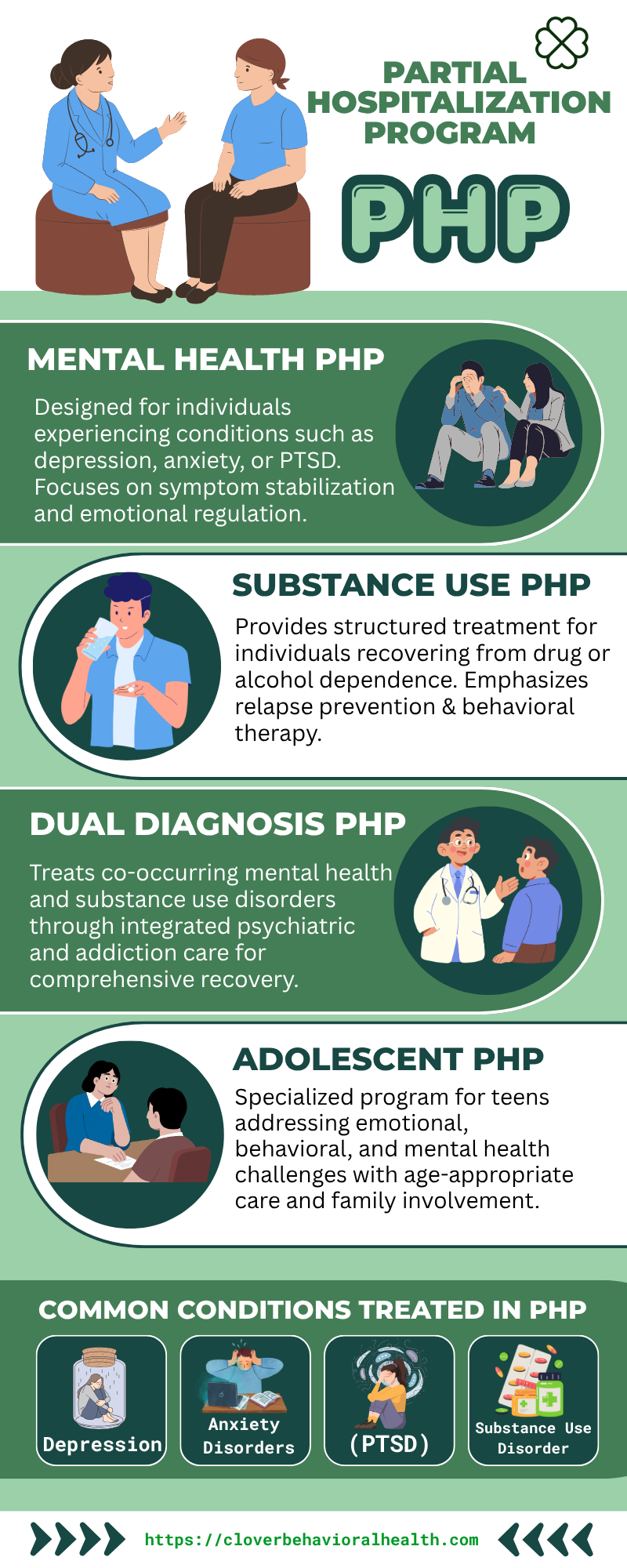
For decades, families assumed the only alternative to weekly therapy was locking themselves away in a highly restrictive residential inpatient ward. We are proud to introduce Intensive Outpatient Programs (IOP) and Partial Hospitalization Programs (PHP) as the critical, highly flexible midpoint.
These intensive programs bridge the massive gap in the behavioral health system. They provide the deep, immersive clinical rigor of a hospital setting while preserving your dignity and your vital connection to your community.
Our PHP offers a full day of intensive stabilization, while our IOP provides targeted support several days a week. Both options allow you to return to the comfort of your own home in Rockingham County every single night, ensuring that your recovery remains connected to your real life.
Immersive Skill-Building
The true value of stepping up your level of care is the transition from passive listening to active skill building. In our intensive programs, we do not just talk about theoretical coping skills. We actively practice them. We heavily utilize Dialectical Behavior Therapy (DBT) to teach highly effective distress tolerance and emotional regulation.
In our safe, daily group settings, you learn exactly how to lower your heart rate, ground your physical body, and manage intense emotional pain without reacting destructively.
Because you are attending programming multiple times a week, you build essential “muscle memory” for these skills. You have the time and the guided practice necessary to turn these clinical concepts into automatic, real-world habits that will protect you during moments of high stress.
Secure Your Safety Net Today
You do not have to wait for a complete crisis or a total physical collapse to escalate your level of care. Seeking intensive support is a proactive, strategic decision to protect your health, your family, and your future in the Granite State.
Do not let the fear of the unknown keep you stuck in a painful holding pattern. Reach out to our compassionate Salem team today for a completely judgment-free assessment. We will carefully listen to your story, evaluate your current clinical needs, and help you determine if stepping up to a Partial Hospitalization or Intensive Outpatient program is the exact right move for your recovery.
We also believe that elite, intensive care should not create a massive financial burden. We make high-level treatment highly accessible by working diligently with major regional carriers, including Blue Cross Blue Shield, Harvard Pilgrim, Tufts, Cigna, Aetna, and more. Our dedicated financial advocates handle the logistics and authorizations so you can focus entirely on rebuilding your foundation.
Visit cloverbehavioralhealth.com or call our local New Hampshire admissions team at (603) 207-8696. Let us help you break the cycle and find your safe harbor today.