
Mental Health Treatment After Hospitalization in Salem, NH
Leaving an inpatient psychiatric unit brings massive relief mixed with a terrifying realization. The constant safety net of the hospital has suddenly vanished. In 2026, data shows that over 20% of psychiatric patients in New Hampshire experience a severe relapse or hospital readmission within thirty days of discharge.
This critical first month carries the highest statistical risk for relapse because patients return directly to the exact environmental stressors that triggered their initial crisis. A hospital stay stabilizes the immediate emergency but does not cure the underlying condition.
Located in Salem, Clover Behavioral Health provides specialized step-down outpatient care. We act as a highly structured bridge, so you never have to navigate the fragile transition back to real life alone.
The Illusion of Being Cured vs. Being Stabilized
We must deconstruct the dangerous myth of the hospital cure. Inpatient psychiatric care is strictly designed for acute medical triage rather than long-term healing. The primary goal of a hospital is keeping the individual physically safe while administering emergency psychiatric medication.
This intervention serves as a necessary and temporary pause. It is never a permanent resolution to a complex behavioral health disorder. Surviving a crisis means your central nervous system just endured a massive flood of stress hormones like cortisol.
Your prefrontal cortex becomes severely impaired during this period of extreme psychological distress. This crucial brain region governs logical decision-making and healthy emotional regulation. When it shuts down, your amygdala takes complete control, forcing your body into pure survival mode.
Once the acute crisis passes, the actual work of neurobiological rewiring must immediately begin. The brain requires sustained clinical repetition to physically rebuild its damaged neural pathways. You must actively build genuine distress tolerance and process the underlying trauma that caused the collapse.
Without structured follow-up care, your brain remains highly susceptible to old behavioral patterns. The amygdala stays hyperactive and constantly searches the environment for new threats. This leaves the individual entirely vulnerable to falling right back into destructive coping mechanisms.
Why Going Straight Home is Often a Recipe for Relapse
Going straight from a locked ward to an empty house is incredibly destabilizing. The psychological shock of losing institutional structure can immediately trigger a secondary panic response. You are transitioning from an environment where every hour is strictly monitored to a reality with zero clinical accountability.
A fragile nervous system simply cannot handle this abrupt shift in external boundaries. The sudden lack of support forces the exhausted brain to process everyday stressors entirely on its own. Returning to a demanding job or stressful family dynamic in New Hampshire often feels completely paralyzing.
The mundane realities of paying bills or managing household chores suddenly feel like insurmountable obstacles. This abrupt transition significantly elevates the risk for a severe dual diagnosis relapse. Many individuals hospitalized for severe anxiety or clinical depression also struggle with co-occurring substance use.
Returning home without ongoing clinical support often leads to immediate self-medication. The brain desperately seeks a chemical buffer to cope with the overwhelming sensory overload of normal life. Alcohol or illicit substances provide a fast and artificial escape from the anxiety of the discharge transition.
This biological reaction perfectly illustrates why clinical step-down care is an absolute necessity. Attempting to white-knuckle your way through the first thirty days at home usually ends in disaster. You need a highly controlled environment to practice your new emotional regulation skills safely.
The Step-Down Solution: How PHP and IOP Protect Your Recovery
Partial Hospitalization Programs and Intensive Outpatient Programs act as the perfect clinical bridge. These sophisticated step-down models provide the robust clinical density of a standard hospital ward. You receive hours of daily therapy and medical oversight without sacrificing your personal autonomy.
This creates a powerful therapeutic container that holds the weight of your emotional distress while you stabilize. This outpatient structure allows you to sleep in your own bed in Rockingham County every night. Protecting your natural circadian rhythm is biologically vital for neurological recovery.
You get to maintain your connection to your family while receiving elite psychiatric stabilization during the day. Post-discharge is a highly volatile time for all psychiatric medications. The human body requires weeks to fully adjust to new dosages outside the controlled hospital environment.
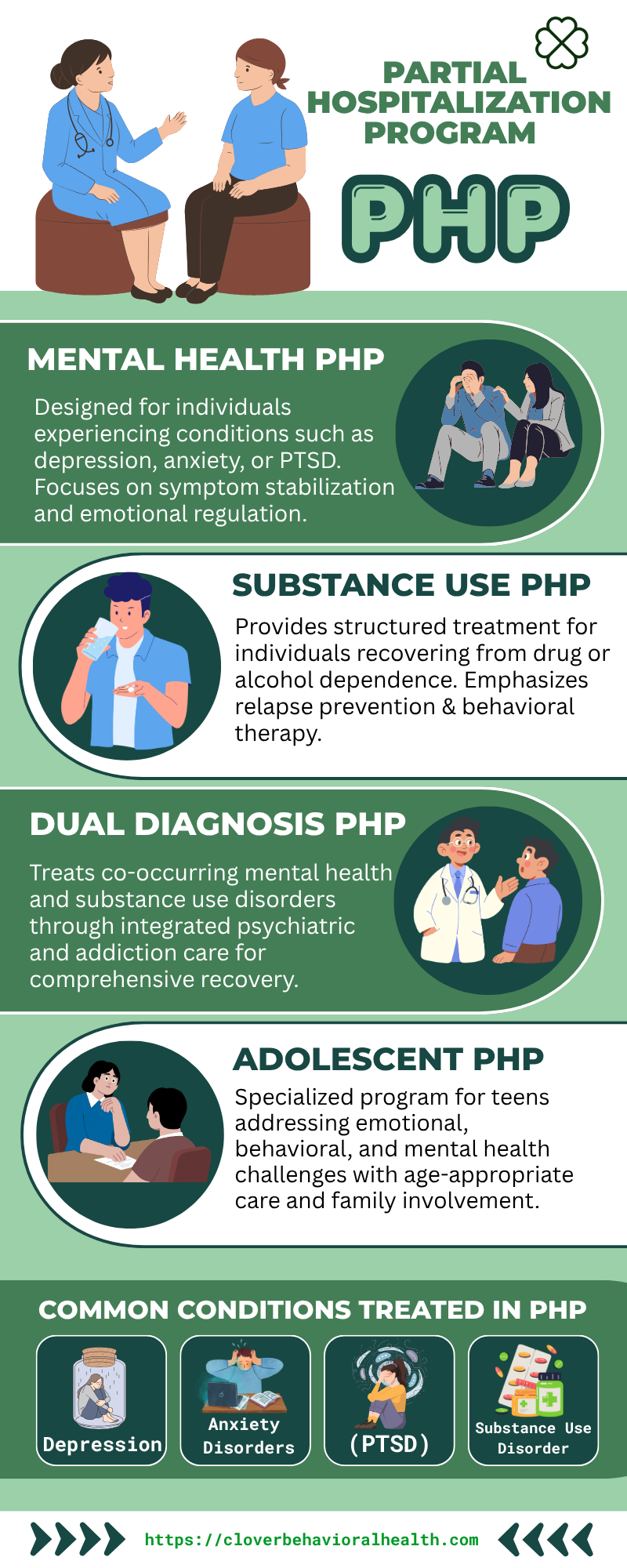
Stepped-up care provides continuous daily access to master-level clinicians. Our psychiatric team can closely monitor your subtle symptom shifts and adjust your prescriptions immediately. This real-time medical oversight prevents severe side effects from triggering a secondary psychological crisis.
Balancing your neurochemistry correctly ensures your brain has the energy required to engage in deep trauma therapy. We provide the exact level of clinical oversight needed to intercept a medication failure before it requires another hospital admission.
Compassionate, Specialized Care at Clover BH in Salem
True psychological healing requires a physical setting where the nervous system feels entirely safe and respected. Our Stiles Road facility provides a warm and deeply welcoming outpatient environment. We intentionally contrast our modern sanctuary with the cold and sterile atmosphere of a locked hospital ward.
Through a biological process called neuroception, your brain constantly scans your physical environment for potential threats. A clinical environment that feels chaotic will automatically keep your central nervous system locked in a state of high alert. Our boutique setting naturally calms the vagus nerve and signals to your body that you are finally safe.
Our master-level clinicians utilize proven modalities like Cognitive Behavioral Therapy to help you actively rebuild your life. You learn how to identify and dismantle the catastrophic thought patterns that led to your initial hospitalization. We seamlessly integrate Dialectical Behavior Therapy to teach advanced emotional regulation and distress tolerance.
These practical skills allow clients to directly apply new coping mechanisms to their daily lives immediately. You get to practice managing family conflict or return-to-work anxiety in real time while fully supported by our staff. Bringing real-world stressors back to your therapist the next morning allows for rapid clinical adjustments.
Secure Your Transition and Prevent Readmission
Step-down care is the ultimate investment in protecting the hard-won stability you achieved during hospitalization. You must take proactive control of your discharge plan to prevent a devastating readmission.
We encourage you to reach out to our compassionate admissions team immediately, ideally before your actual discharge date. We coordinate directly with hospital discharge planners to map out a completely seamless transition of care. Our team will also rapidly verify your insurance benefits to eliminate any unnecessary delays.
Contact Clover Behavioral Health by calling 978-216-7765 or visiting cloverbehavioralhealth.com.