

When Weekly Therapy Isn’t Enough: Next Steps in NH
Committing to therapy takes immense effort when juggling family life and long Granite State commutes. Recent 2026 data reveals that over 28% of adults in New England receiving standard outpatient care still report severe unmet behavioral health needs.
Hitting a therapy plateau is a deeply frustrating reality. You might feel temporary relief walking out of a session on Tuesday, only to have severe anxiety completely hijack your nervous system by Wednesday morning.
Realizing that weekly therapy is no longer holding the line is never a failure. It is a clear clinical signal demanding a higher level of care. Located in Salem, Clover Behavioral Health provides structured Intensive Outpatient Programs to deeply stabilize your mental health without abandoning your life.
Why Once a Week Falls Short for Severe Distress
When an individual operates in a state of acute emotional distress, a standard forty-five-minute session becomes entirely consumed by crisis management. You spend the entire appointment simply catching the therapist up on the panic attacks or depressive episodes of the past week. This reactionary dynamic leaves absolutely no time for deep neurobiological healing or active trauma processing.
The human brain requires sustained clinical repetition to physically rewire its damaged neural pathways. Attempting to unpack complex psychological wounds during a brief weekly window often leaves the nervous system entirely exposed. You are essentially opening up deep emotional pain and then immediately driving back into a stressful corporate or family environment.
This rapid transition forces your amygdala to stay locked in a state of high alert for the remaining one hundred and sixty-seven hours of the week. In New Hampshire, the reality of long winters and rural isolation can heavily exacerbate these mental health struggles. White-knuckling your way between weekly appointments actively pushes your exhausted mind toward profound executive burnout.
The lack of continuous clinical support allows the brain to easily fall back into deeply entrenched loops of hopelessness. The sheer exhaustion of masking your symptoms at work drains your remaining cognitive bandwidth. By the time you reach your next therapy appointment, your central nervous system is completely depleted.
Living with this constantly elevated cortisol severely impairs your prefrontal cortex over time. This region of the brain is responsible for logical decision-making and healthy emotional regulation. When it fatigues, you become highly reactive to minor inconveniences and deeply vulnerable to a full clinical relapse.
Identifying the Gap Between Outpatient and Inpatient Care
A common misconception keeps countless individuals stuck in a cycle of completely inadequate care. Many people falsely assume their only alternative to weekly therapy is checking into a locked psychiatric ward. They fear they must travel out of state for a disruptive residential rehab program just to find relief.
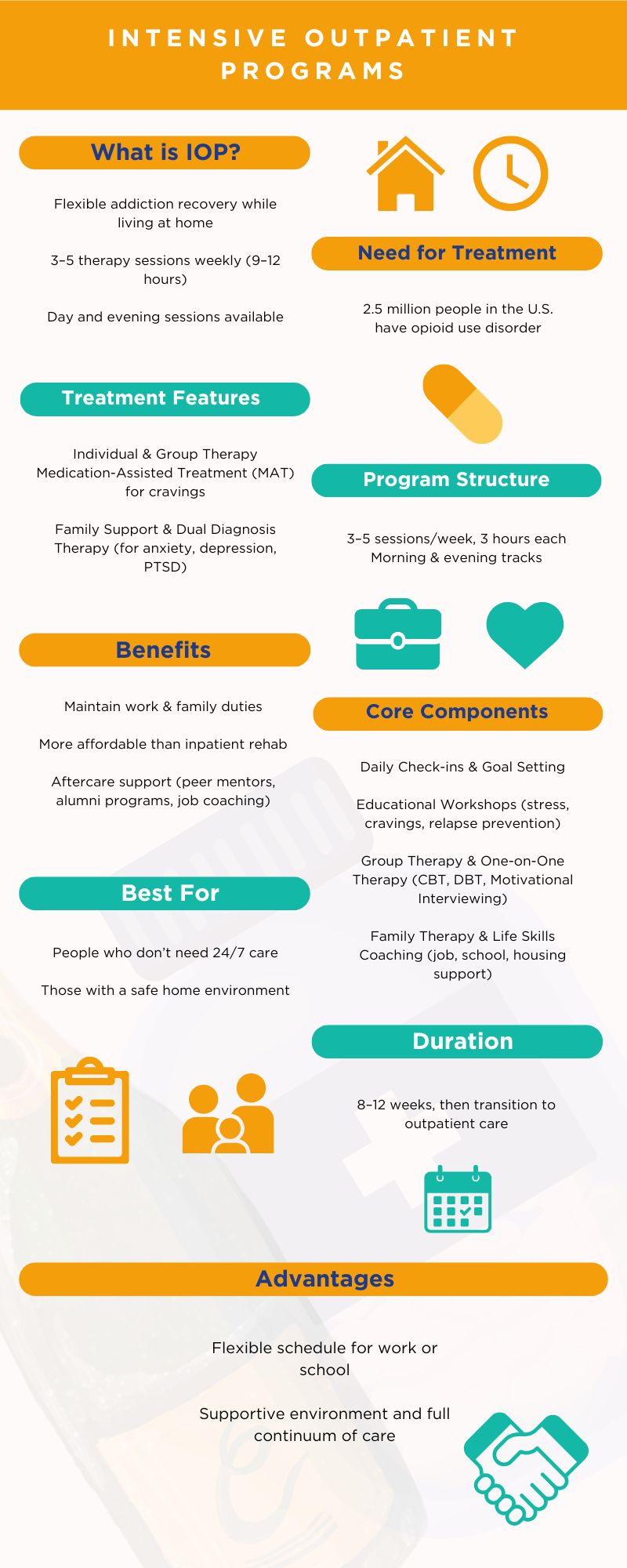
This extreme black-and-white thinking ignores the highly effective clinical middle ground available right in your own community. We must introduce the sophisticated models of Intensive Outpatient Programs and Partial Hospitalization Programs. Stepped-up care provides the exact clinical density required to actively interrupt severe behavioral loops.
Intensive programs create a powerful therapeutic container that holds the weight of your emotional distress while you stabilize. This structured environment actively interrupts the production of excess stress hormones like adrenaline. By lowering these cortisol levels consistently over several days, your brain regains its natural ability to process complex emotions logically.
Engaging in therapy multiple days a week builds the critical neuroplasticity needed to actually change how your brain processes psychological threats. You receive this high-tier clinical support during the day while maintaining your normal evening routines. Sleeping in your own bed at night protects your natural circadian rhythm, which is absolutely vital for neurological recovery.
Clear Signs You Need to Escalate Your Treatment
Recognizing the need for a higher level of care requires honest reflection on your current behavioral patterns. A major emotional shift is frequently wanting to cancel your weekly therapy sessions because you feel simply too overwhelmed to talk. Avoiding your therapist indicates that the clinical container is no longer strong enough to hold your psychological pain.
You might also feel like you are constantly operating in pure crisis management mode without making any genuine long-term progress. If every week feels like an exhausting exercise in mere survival, your current coping skills are actively failing. Your physical body is literally demanding a more robust intervention to reset its hyperactive alarm system.
The physical toll of this untreated distress often manifests as severe somatic symptoms. You might experience chronic muscle tension, debilitating migraines, or unexplained gastrointestinal pain that standard doctors cannot diagnose. Your physical body essentially keeps a rigid biological score of the emotional wounds you are failing to process in standard therapy.
The presence of a dual diagnosis is a glaring red flag that standard therapy is no longer sufficient. You might find yourself beginning to use heavy amounts of alcohol or cannabis to manage the lingering anxiety that your therapy sessions cannot fully resolve. Relying on unprescribed medications to artificially force sleep is a dangerous biological adaptation.
This chemical self-medication artificially suppresses your central nervous system and rapidly damages your natural reward circuitry. It serves as an immediate clinical indicator that a highly structured and integrated psychiatric approach is absolutely required. You must treat the chemical dependency and the mood disorder simultaneously to achieve any sustainable relief.
The Clover Behavioral Health Next-Step Approach in Salem
Finding genuine psychological safety requires a physical environment that actively promotes healing and comfort. We proudly offer a warm and deeply welcoming community-focused environment at our Stiles Road facility in Salem. This modern outpatient center stands in stark contrast to the cold and chaotic feel of massive New England hospital systems.
Stepping up to an Intensive Outpatient Program at Clover means moving far beyond traditional talk therapy. Our master-level clinicians utilize robust and evidence-based tools designed to actively reshape your emotional responses. We rely heavily on Cognitive Behavioral Therapy to help you dismantle the catastrophic thought loops that drive your panic.
We seamlessly integrate Dialectical Behavior Therapy to teach advanced emotional regulation and real-time distress tolerance. This clinical curriculum is paired with active medication management to properly balance your neurochemistry. These practical skills teach your brain how to navigate daily stress without relying on a chemical escape hatch.
Our comprehensive dual diagnosis approach ensures we treat the entire person rather than just isolated symptoms. We actively explore the root psychological drivers fueling your need to self-medicate or withdraw socially. This deep analytical work is mandatory for achieving long-lasting mental wellness and authentic resilience.
Our accessible location offers immense logistical convenience for adults across Rockingham County and the wider Merrimack Valley. Residents from Windham, Derry, Pelham, and surrounding towns can easily receive premium daytime support without a massive commute. You get to prioritize your neurological health and seamlessly return to your family by the evening.
Take the Next Step Toward Comprehensive Healing
Advocating fiercely for your own mental health is a profound sign of genuine self-awareness. Upgrading to an Intensive Outpatient Program can be a highly effective and truly life-saving transition. Recognizing that you need more support is never a failure, but rather the crucial next step toward comprehensive healing.
We will gladly help determine the exact level of stepped-up care required and rapidly verify your insurance benefits to get you the immediate support you deserve. Contact Clover Behavioral Health by calling 978-216-7765 or visiting cloverbehavioralhealth.com.