

IOP Program Near Haverhill, MA, for Mental Health
Starting mental health treatment can sound like a huge and difficult commitment, especially if you live a busy life. If you’re a busy parent, have work, or have school, it definitely isn’t easy to step away for treatment. But luckily, modern-day treatment programs doesn’t expect that kind of commitment. Instead, they meet you in the middle and allow you to balance a normal life while working on your mental well-being on the side.
If you also want to work on your mental health but don’t want to stay in a clinic or hospital, look into an intensive outpatient program near you. It will offer enough clinical hours to improve your mental health while letting you maintain a life outside it. Not sure if an IOP program near Haverhill, MA, for mental health will suit your situation? We got you. Read on and understand why IOP is a trusted choice for those dreaming of a better future.
Reasons that the IOP Program Near Haverhill, MA, for Mental Health Works
The word ‘intensive’ could confuse someone aiming for flexible treatment, but it shouldn’t. An IOP program near Haverhill, MA, for mental health is a structured approach that doesn’t bind you to a facility.
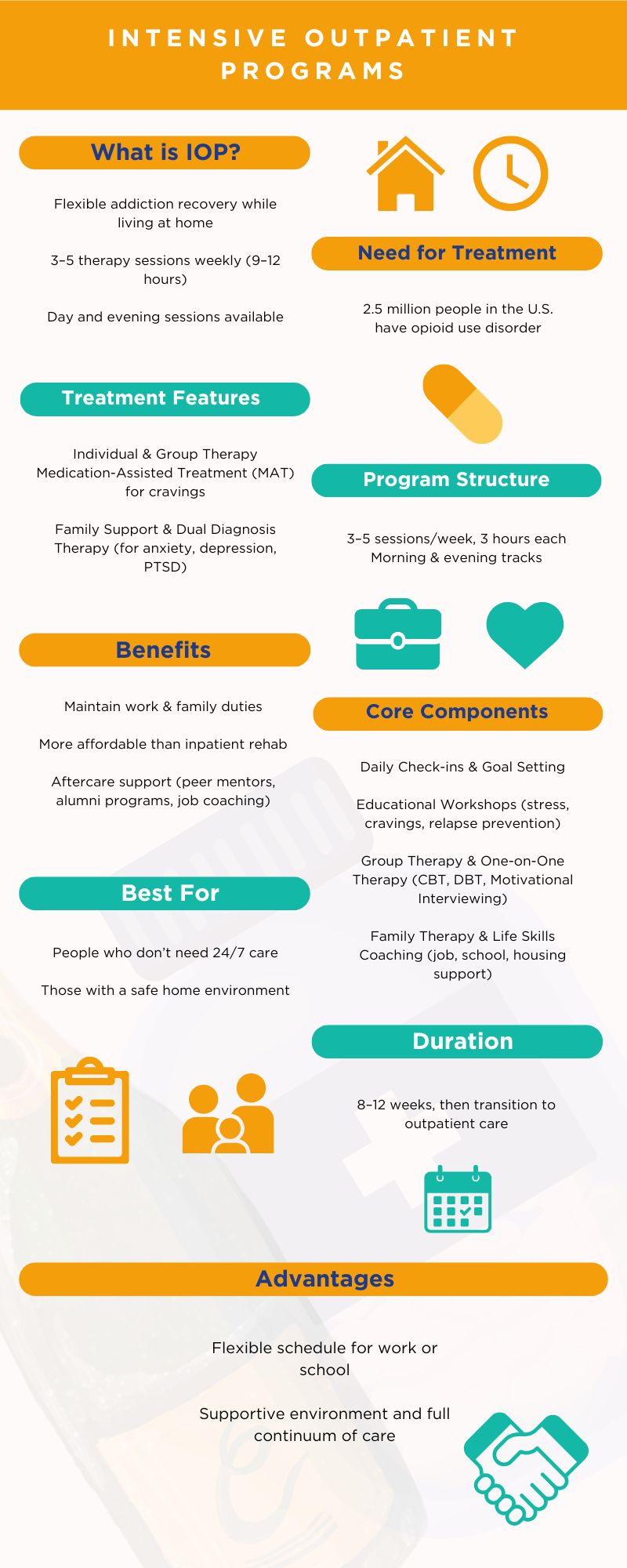
Here is how a standard intensive outpatient program goes:
You’re scheduled for 3-5 weekly sessions that are typically 3 hours long. During these repeated visits, your therapist or psychiatrist will work closely with you to address and fix what’s bothering you. They’ll use proven therapies to bring out your inner worries and confusions so you can put them into words.
For instance, if you’re affected by trauma, discussing it with a trusted professional in a secure environment will help you see how it’s still damaging you. Also, since you meet the expert multiple times a week, you can overcome the issues faster and implement the learned skills to keep your thoughts and emotions on the right track. And the best part is that you’ll return home after this hands-on treatment and not feel isolated.
That said, here are some proven reasons that people trust an IOP program near Haverhill, MA, for mental health:
Real Clinical Hours
It’s a common concept that you have to check into a mental health facility to see real results, but IOP changes that. It gives you 9 to 15 hours of actual clinical care per week. That scheduled time includes therapy, group sessions, and psychiatric support. All in all, all the time spent during an IOP program near Haverhill, MA, for mental health is structured and consistent.
At the end of it all, you go home and don’t have to pause your life for treatment. So when not surrendering your responsibilities just because you want to treat your depression, PTSD, or anxiety is the goal, IOP is the way.
Practice Coping in Real Life, Not a Bubble
Most treatment programs remove you from real life entirely. And while it feels safe, it’s not practical because ultimately you’ll have to face the triggers, stress, or hard conversations of real life, which can then tick you off. That’s why an IOP program near Haverhill, MA, for mental health keeps you in your life.
Once you learn skills to rewire your thoughts and control your emotions, you can test them right that evening when at home. As a result, you keep altering things as you go and aren’t faced with any shocks from the outside world (which is not unheard of after an inpatient rehab).
Convenient Appointments
A general reason people delay treatment is the logistics. Your work might now give you enough leverage to get admitted, or you might have too many home responsibilities that cannot be delegated.
Whatever your particular situation is, an IOP program near Haverhill, MA, for mental health can accommodate that. With IOP, you don’t have to rearrange your entire life to get help: instead, you add structure to it and don’t let small problems become bigger.
Less Isolation, More Shared Experience
Mental health struggles have a way of making you feel like the only person facing them, and eventually, you might stop talking about them. However, an IOP program challenges that because you sit with people dealing with similar things and relate to them. And when you hear someone else put words to what you’ve been feeling, it surely gives you clarity. That shared experience could even improve your confidence and help you spot patterns that you might not have known were damaging you earlier.
For instance, if your natural response after an argument is always shutting down, group therapy might help you see how damaging that could be. Slowly, with shared efforts and discussions, you can do more self-reflection and change things.
Smooth Transition after Inpatient Treatment
If you have been in an inpatient rehab, leaving it will bring a new kind of pressure. Even though you did a lot of hard work inside and feel all better now, suddenly transitioning to your previous life won’t be easy.
When there is no structure to hold things, you can feel more triggered and agitated. Therefore, mental health experts prefer you slowly transition into normal life. Instead of going from 24/7 supervision to none at all, you attend a few scheduled weekly sessions for a few months and gradually stop when everything feels under control. Put simply, your brain does not have to white-knuckle the jump from round-the-clock care to mostly on your own.
Never Put Your Treatment on the Backburner
It’s easy to ignore your mental health struggles when caught up in life’s chaos, but it only worsens things. If you’ve been facing certain changes or challenges with how you think, feel, and behave, don’t delay discussing them with experts at Clover Behavioral Health. We’ll surely build a help plan meant just for your current situation, so you don’t sacrifice anything to get better!