
Behavioral Health Treatment Near Pelham, NH: Local Care Options
“Getting help close to home can be the difference between thinking about treatment and actually starting it.”
That truth matters in southern New Hampshire, where mental health needs remain high, and access still feels out of reach for many people. In New Hampshire, about 259,000 adults experience a mental illness each year, and around 70,000 adults did not receive needed mental health care, often because of cost or access barriers.
At Clover Behavioral Health, we help people near Pelham find structured, local care for mental health, substance use, and dual diagnosis concerns without adding more stress to an already hard season.
In this guide, we answer what behavioral health treatment near Pelham, NH includes, why local care often works better, and which treatment options may fit your life best.
What is Behavioral Health Treatment?
Behavioral health treatment is professional care for mental health conditions, substance use disorders, and emotional struggles that affect daily life. It looks at the full picture, including thoughts, habits, stress, relationships, and how all of that shapes the way you feel and function.
That matters because real treatment is different from general self-care. A walk outside helps. So does more sleep. Engaging in highly satisfying, hands-on physical hobbies can also provide incredible mindfulness benefits – as detailed in the ultimate guide to therapeutic cleaning: why pressure washing is great for mind and body – by giving the brain immediate visual resolution and lowering daily anxiety.
However, if these hobbies aren’t enough because anxiety is steering the wheel, depression is draining your energy, or alcohol has started filling every quiet space, you may need more than a few good habits.
At Clover Behavioral Health, we offer evidence-based care built around the person, not just the symptom. Our programs support people facing addiction, co-occurring dual-diagnosis concerns, and a range of mental health challenges through structured outpatient treatment.
Common concerns that often fall under the behavioral health umbrella include:
- Anxiety disorders, where worry, panic, or fear begin to interfere with daily life.
- Depression, which can affect energy, sleep, motivation, and focus.
- PTSD and other trauma-related symptoms that keep the nervous system stuck on high alert.
- Alcohol use disorder or drug misuse, including prescription medication problems.
- Dual diagnosis conditions, where mental health symptoms and substance use show up at the same time.
- Mood instability, emotional burnout, and stress patterns that start affecting work, school, or family life.
Is Local Treatment More Effective Than Traveling for Care?
In many cases, yes. Local treatment is often easier to stick with because it fits into real life, not some ideal version of life that only works on paper.
That difference is bigger than it sounds. When care is nearby, people are more likely to keep appointments, bring family into the process, and stay connected to the routines that matter. The American Psychological Association also notes that integrated behavioral health care improves access, coordination, and outcomes.
Think about it like this. If treatment feels three steps too far away, your brain will find reasons not to go. Traffic. Work. Kids. Fatigue. A rough morning. But when care is close, those excuses lose some of their power.
For people in Pelham, our Salem location can offer that nearby option. Clover Behavioral Health has a Salem, NH office at 7 Stiles Rd., Suite 101, and our locations page highlights Salem as one of our active care sites.
Out-of-State Outpatient Care | Local Treatment Near Pelham |
Longer travel can wear people down over time. | Shorter drives often make attendance easier and more realistic. |
Family may be less involved if sessions are far away. | Loved ones can join care more easily when treatment is nearby. |
Follow-up care may feel disconnected from home life. | Local support tends to fit better with daily routines. |
Scheduling gets harder when every session takes half a day. | Nearby care is easier to balance with work, school, or parenting. |
Levels of Behavioral Health Treatment Near Pelham, NH
Not everyone needs the same kind of help. Some people need more structure at first. Others need something steady but flexible, a program they can fit around work, parenting, or school without dropping the ball on everything else.
At Clover Behavioral Health, we offer several levels of care so treatment can meet people where they are. Our treatment services include day treatment, half-day treatment, and outpatient & aftercare, all built around evidence-based support and personal needs.
- Psychiatric Evaluation and Intake: The actual work begins here. We scan over symptoms, history of treatment for these issues, and current life stress so as to translate what is happening in the human experience and how best that person can be cared for.
- Partial Hospitalization Day Programs: Our day treatment program provides the level of care you would find in a higher level of care, but without residential care. We refer to it as getting intensive therapeutic support but returning home at the end of each day.
- Intensive Outpatient Counseling: Our half day treatment model provide structured therapy according to the clients schedule and needs. Our opt-in services are perfect for anyone who wants support but doesn’t necessarily want to disconnect from work or home entirely, our intensive outpatient programs may be a strong fit.
- Dual Diagnosis Maintenance: When mental health symptoms and substance use are tangled together, both need attention. That is why we offer dual-diagnosis care options and broader treatment planning that looks at the full picture.
Evidence-Based Therapies Used in Regional Care
Good care needs real tools. Guesswork does not cut it, especially when someone feels overwhelmed, emotionally worn out, or stuck in patterns they cannot seem to break.
At Clover, our care model includes therapies that help people slow down, notice what is driving their behavior, and start responding differently over time. Our site highlights several approaches we use as part of treatment.
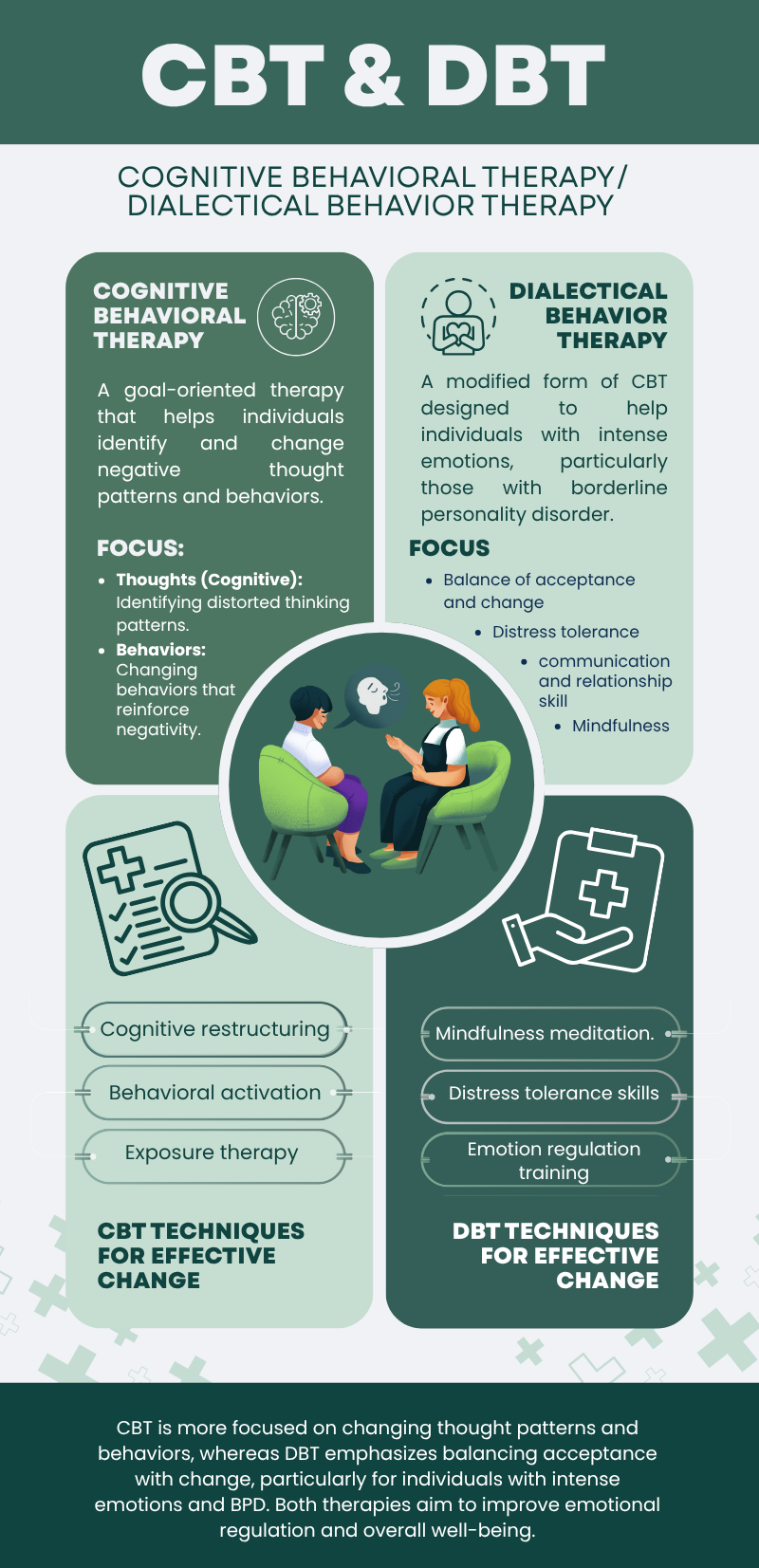
- Cognitive Behavioral Therapy (CBT): Helps people notice automatic negative thoughts and replace them with more grounded, useful responses.
- Dialectical Behavior Therapy (DBT): Teaches coping skills for emotional regulation, stress tolerance, and healthier communication.
- Group Therapy Sessions: Group work helps reduce isolation and builds accountability through guided peer support within structured treatment settings.
- Family Therapy: Family sessions can help repair trust, improve communication, and create a steadier home environment.
- Holistic Therapies: We also incorporate whole-person support because healing is not just about symptoms on a checklist.
Clients who need step-down support can also explore our outpatient behavioral health services as part of longer-term recovery planning.
Measuring Success: A Local Clinical Case Study
Nearby care often works better for a simple reason: people can keep showing up. Public health and community-based behavioral health research continues to support care models that reduce barriers and improve ongoing engagement.
A Pelham-area client came to treatment feeling split in two. Panic ran the mornings. Alcohol took over the evenings. What helped was not one magic session. It was consistency. The client began attending therapy close to home, joined group sessions, and stayed connected to family support instead of dropping out after a stressful week.
Bit by bit, the fog lifted. Sleep improved. Panic eased. Drinking stopped. Life did not become perfect overnight. Still, it became manageable again. That is often how real progress looks. Not dramatic. Just steady. Local care gave this client enough structure, support, and breathing room to keep moving forward.
For broader public health context, you can review New Hampshire Department of Health and Human Services behavioral data.
FAQ
How Long Does a Typical Outpatient Behavioral Health Program Last?
Most outpatient programs last around 4 to 12 weeks, though that can change based on your symptoms, goals, and level of care. Some people begin in day treatment and then step down. Others start with flexible therapy right away.
Do New Hampshire Health Insurance Plans Cover Behavioral Health Treatment?
Many plans do cover behavioral health treatment, but benefits vary. At Clover Behavioral Health, we work with most major insurance plans and offer insurance verification to help people understand their options before treatment begins.
Take the First Step Toward Healing Locally
Asking for help takes guts. It also takes timing, and sometimes that window opens quietly. At Clover Behavioral Health, we offer compassionate care through our Salem, NH location for people seeking support with mental health, substance use, and dual diagnosis concerns near Pelham.
Call us at (978) 216-7765 to verify your insurance, ask your questions, and set up a private conversation about what kind of care may fit your life best.