
Morning Session Schedule | Evening Session Schedule |
9:00 AM – 9:20 AM: Check-in and goal review | 6:00 PM – 6:20 PM: Check-in and stress review |
9:20 AM – 10:20 AM: Group therapy | 6:20 PM – 7:20 PM: Group therapy |
10:20 AM – 10:35 AM: Short break | 7:20 PM – 7:35 PM: Short break |
10:35 AM – 11:20 AM: Skills workshop | 7:35 PM – 8:20 PM: Skills workshop |
11:20 AM – 12:00 PM: Individual planning and wrap-up | 8:20 PM – 9:00 PM: Individual planning and wrap-up |
Schedules vary by client needs, treatment track, and current program availability.
Daily Schedule Breakdown Of a Salem Intensive Outpatient Program
The hardest part for many people is not treatment itself. It is the fear of the unknown. Once you know what the day looks like, the whole thing feels less intimidating and a lot more doable.
At Clover Behavioral Health, we use evidence-based treatment and flexible programming so clients can get support in a way that feels structured, clear, and manageable. Our site highlights Cognitive Behavioral Therapy, Dialectical Behavior Therapy, family therapy, and holistic therapies as part of our care approach.
- Check-In And Accountability Review: You start by meeting with staff and settling into the room. This part usually covers current stress, cravings, mood changes, recent triggers, and what you want to work on that day. It is simple, but it matters. A quick, honest check-in can catch small problems before they grow legs.
- First Therapeutic Group Session: Next comes a guided group session. This is where clients talk through patterns, reactions, and challenges with support from a licensed clinician. Some days the focus may be emotional regulation. Other days it may be relapse patterns, boundaries, anxiety, or how to stop carrying stress home like a backpack full of bricks.
- Structured Break And Peer Interaction: Then there is usually a short break. That pause is not filler. It gives people a minute to breathe, reset, grab water, and talk casually with others in the program. Those small moments can help reduce isolation, which is often a quiet part of both addiction and mental health struggles.
- Skill-Building Workshop: The second half of the session often turns practical. Clients may work on refusal skills, thought reframing, urge management, communication tools, or daily planning. This is where treatment starts to feel useful in real life, not just thoughtful on paper.
 For more support close to home, read our latest blog, “Behavioral Health Treatment Near Pelham, NH: Local Care Options” to explore nearby care choices for mental health, substance use, and dual-diagnosis needs.
Clinical Modalities Used Throughout the Day
These therapy tools are part of what makes intensive outpatient treatment more than just talk. They give clients skills they can use when life gets messy, which it usually does.
They also help us treat more than one issue at a time. That matters because mental health symptoms and substance use often overlap and feed each other.
- Cognitive Behavioral Therapy (CBT): Helps clients spot thought patterns that fuel cravings, panic, shame, or self-sabotage, then replace them with healthier actions.
- Dialectical Behavior Therapy (DBT): Teaches mindfulness, distress tolerance, and emotional control so hard feelings do not immediately turn into harmful choices.
- Dual-Diagnosis Care: Supports clients dealing with both emotional and substance-related struggles through integrated care, including our dual-diagnosis treatment programs.
- Group Therapy: Builds accountability, shared learning, and connection, which can be a lifeline when someone feels stuck in their own head.
If you need a flexible path after a higher level of care, our outpatient rehab program can help support that next step. If you need more weekly structure, our intensive outpatient treatment track may be the better fit.
FAQ
Can I Keep Working While Attending an IOP Program in Salem, NH?
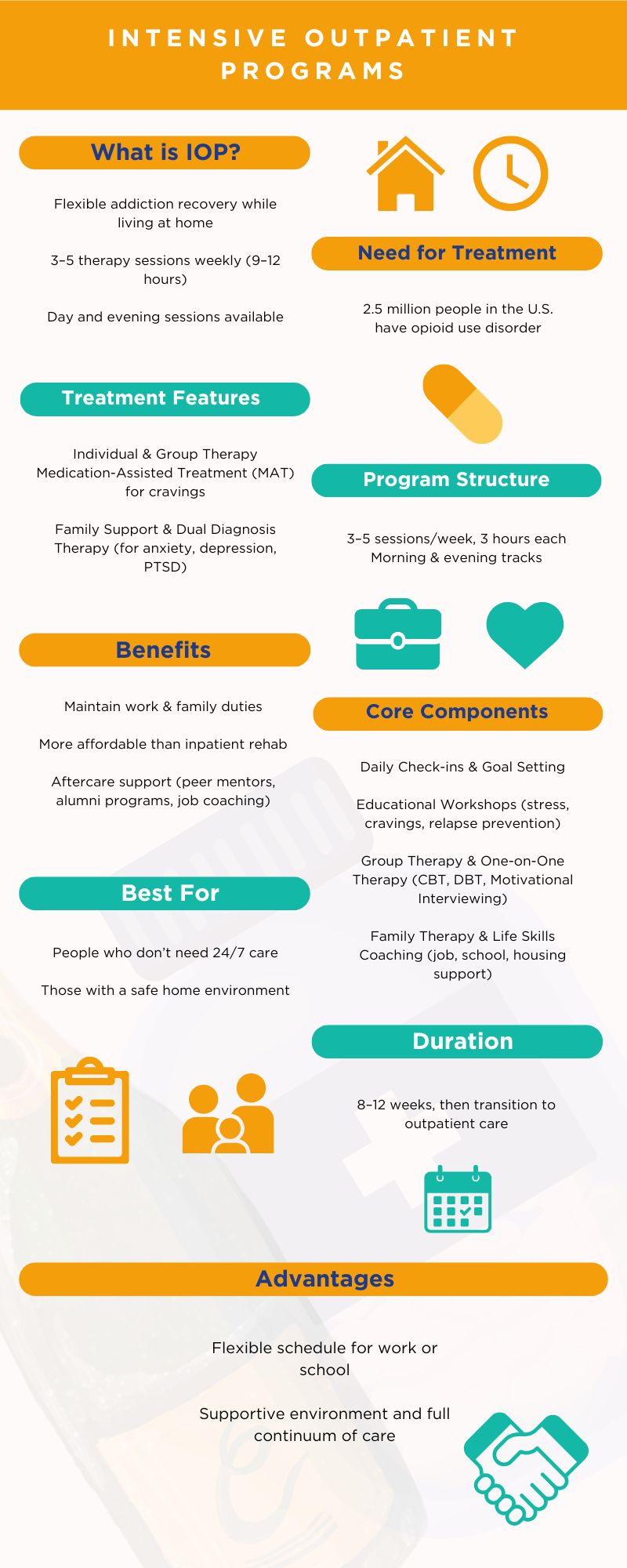
Yes, often you can. This is one of the primary reasons why people opt for IOP. Based on personal schedules and treatment needs, our half-day treatment model can make it much easier to fit in care alongside work, school, or family life.
What Is the Difference Between PHP and IOP?
A day treatment or PHP-type schedule often lasts longer each day and provides greater structure. IOP is less lengthy, and the attention can be shifted around more, so this often works out better for people who require some support but do not need a full day program.
Does Health Insurance Cover Intensive Outpatient Programs in New Hampshire?
Coverage depends on your plan. Clover Behavioral Health works with most major insurance plans, and our team can provide a quick verification of your insurance benefits to help clients know before they start what are their coverage options.
How Many Weeks Does the Program Usually Last?
Many people stay in IOP for several weeks, often around 8 to 12, depending on progress, goals, and clinical needs. Some step down into outpatient care as they build stronger coping skills and need fewer weekly hours.
Begin Your Recovery Journey Close to Home
Getting help should fit into your life, not blow it apart.
At Clover Behavioral Health, we offer local care through our Salem location and provide flexible treatment options for people dealing with mental health, substance use, and dual diagnosis concerns.
If you are ready to ask questions, verify insurance, or check current program availability, reach out to our team today and schedule a private, confidential evaluation. Sometimes one clear plan is enough to help the next step feel possible.