

Assessment to Intervention: Linking Mental Health Evaluation to Early CBT Plans in Concord, MA
You’re sitting in the waiting room, palms sweating, rehearsing what you’ll say. “I’m not sleeping.” “I can’t focus.” “Everything feels… heavy.” You’ve finally made the call. Scheduled the appointment. Walked through the door. But now what?
Will they simply give you a diagnosis and send you off? Not everyone realizes that the point of the initial session is not simply to tell your story. It’s about building a map. An accurate, customized roadmap between where you are and where you are going.
At Clover Behavioral Health Center, that map is everything.
Why Most Assessments Lead Nowhere
Walk into ten therapy offices in Concord, and you’ll get ten different first sessions.
Some therapists will spend an hour excavating your childhood before you ever talk about what brought you in today. Others dive straight into techniques before they understand what you’re fighting. A few hand you a stack of questionnaires and call it a mental health evaluation.
The problem? The assessment without a definite connection to the treatment is like an MRI without a treatment plan. In some cases, the patient may take weeks to think about whether the therapy is working or whether they have selected the right therapist. At Clover, we bridge that divide in the first session.
From “I’m Struggling” to “Here’s What We Do”
Your first appointment isn’t about checking boxes. It’s about understanding the architecture of your struggle. Not just what you’re feeling, but why it’s showing up now. The thoughts that fuel it. The situations that trigger it. The patterns that keep it alive.
Identifying Problems That Actually Matter
“I just want to feel better.”
That’s how most people start. And it makes sense. When you’re drowning, you don’t care about water depth. You just want air. However, “feeling better” isn’t a target you can hit. It’s a direction.
Your therapist assists you in transforming your ambiguous distress into definite issues. Not that I am anxious, but I do not even check my bank account for weeks whenever I am terrified. Not that I feel depressed, but I have stopped replying to the text messages because I believe that no one wants to hear from me.
These aren’t just details. They’re the difference between generic treatment and treatment that actually changes your life.
Then come goals that matter to you. Instead of “reduce anxiety by 40%” on some clinical scale. Concord residents need concrete, meaningful changes: “I want to walk into a party without spending twenty minutes in the car first.” “I want to make it through my daughter’s recital without my mind spinning with what-ifs.”
Your therapist doesn’t decide these goals for you. They help you discover what you’re actually fighting for.
Tailoring Treatment to Your Specific Brain
CBT works. Consistently. Across thousands of studies. Yet, not every CBT technique works for every person.
Some people’s anxiety lives in their thoughts. Catastrophic predictions. Mental what-if spirals. Imagined disasters that never happen. For them, learning to catch and challenge anxious thoughts becomes everything.
Others feel anxiety in their bodies first. Racing heart. Tight chest. Nausea that comes from nowhere. Their thoughts are fine until their nervous system sounds the alarm. They need breathing techniques. Somatic work. Ways to calm the body before the mind spirals.
Still others avoid. They’ve built entire lives around not feeling uncomfortable. For them, gradual exposure becomes the path forward.
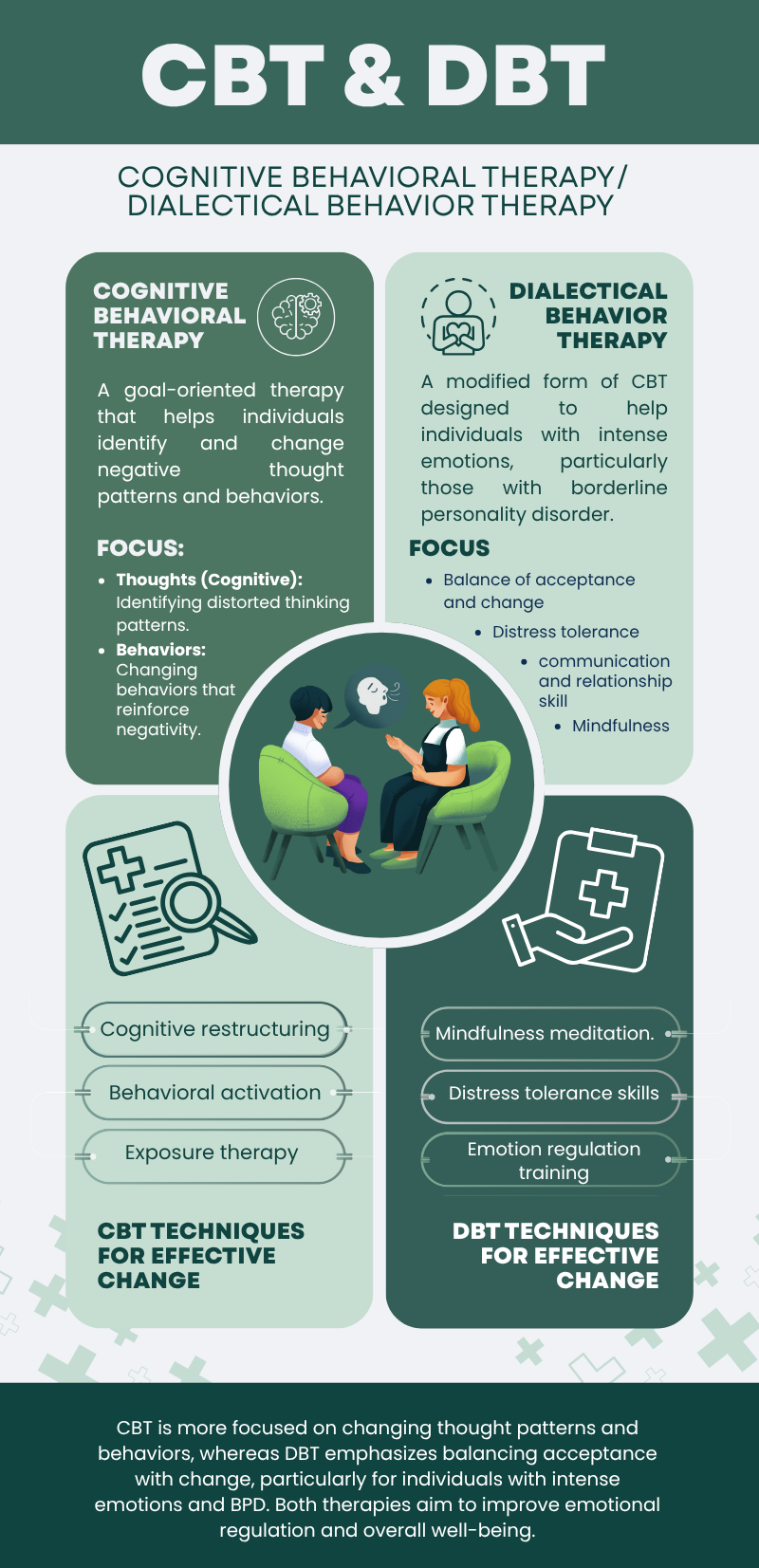
Your assessment reveals which pattern is yours. At Clover, our therapists don’t use cookie-cutter protocols. They match interventions to your specific cognitive and behavioral patterns.
Determining How Much Support You Need
Not everyone needs the same amount of therapy.
Some people are in crisis. Suicidal thoughts. Panic attacks that won’t stop. Depression so heavy they can barely function. They need intensive support. Twice-weekly sessions, safety planning, maybe medication collaboration.
Others are functioning but suffering. Working. Parenting. Showing up to life while quietly falling apart inside. Weekly therapy plus homework between sessions might be enough. Still others are dealing with something specific. Social anxiety around presentations. Panic on planes. They might benefit from shorter, focused treatment.
Your assessment determines not just what treatment you need, but how much and how often.
This isn’t about insurance coverage or therapist availability. It’s about matching intensity to severity. In case your evaluation shows that you require something more than the regular weekly therapy, your therapist will inform you.
The goal isn’t to keep you in therapy forever. It’s to give you exactly the level of care you need to get unstuck.
Monitoring Progress: Proof Over Hope
Without clear markers, you’re left guessing. Wondering if therapy is helping or if you’re just having a good month. CBT mental health evaluation solves this by establishing baseline measurements.
Before treatment starts, your therapist identifies specific indicators tied to your goals. How many social events you attend. How many days do you get out of bed before 10 AM? How intense intrusive thoughts feel on a scale of 1-10.
Then you track. Not obsessively. Every few weeks, you revisit those measurements together. Not to judge you. But to see what’s working and what needs adjustment. If panic attacks dropped from daily to twice a week, that’s data showing the techniques are landing. If social avoidance hasn’t budged, that’s information you need a different approach.
This ongoing assessment isn’t separate from treatment. It is treatment. Knowing you’re making progress, having proof, not just hope, becomes fuel when therapy gets hard.
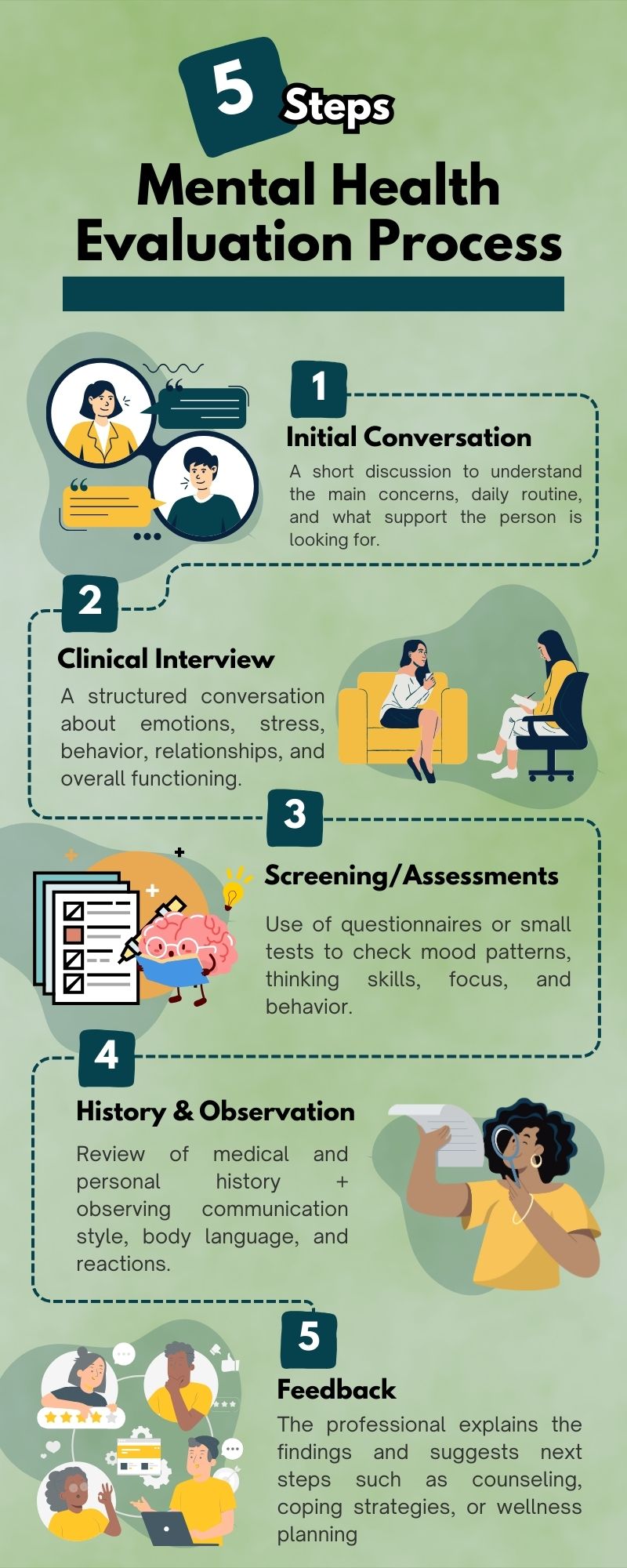
What Happens When You Walk Through the Door in Concord, MA
You sit down. You tell your story. The edited version first, then the real one as safety builds.
Your therapist listens and notices. The thoughts you repeat. The situations you avoid. The beliefs about yourself that show up in how you describe your struggles. By the end of treatment, you have skills that outlast therapy. Tools you can use long after sessions end. A map you can return to whenever you need to find your way.
That’s the difference between assessment as paperwork and assessment as foundation.
Your struggle is specific. Your treatment should be too.
Ready to move from “I am struggling” to saying “I am getting better? Call Clover Behavioral Health Center and find out how personalized CBT assessment is the missing link in the transition between mental health evaluation and real, measurable change.