
Meth Drug Rehab Program Massachusetts: Key Steps in Overcoming Addiction
He once thought that those little crystals made him unstoppable. At first, it felt like the world finally slowed down and he could keep up. He talked more, worked longer, and felt sharper than ever. But it did not stay that way. Sleep disappeared. Food no longer mattered. Conversations turned into rambling that scared the people around him. What started as a way to feel alive left him twitching through nights that never seemed to end. He didn’t realize how deep the ditch was until he looked up and saw there was no easy way out. Only then did he understand how far he had fallen.
That is how meth works. It promises you control and then quietly strips it away. You lose days. You lose people. You lose yourself. If you are here, you already know how ugly that cycle can be. What matters now is what comes next.
Clover Behavioral Health in Massachusetts offers a full path forward. Detox, inpatient rehab, day treatment, outpatient programs, family therapy, and aftercare are all part of the process. You do not have to keep sinking. You can start moving back toward a life that feels real.
7 Key Steps in Overcoming Meth Addiction
Recovery is not one leap. It is a series of brutal but necessary steps. Each step matters. Each step is a fight. Below are the stages that can help you find your way back.
1. Reaching Out—Facing the Truth
The first step is the hardest one to take. It is looking at yourself and saying out loud that meth has taken control. Most people avoid that moment for as long as they can because admitting it feels like giving up. The truth is the opposite. It is the first real sign of strength.
Reaching out to Clover Behavioral Health can feel terrifying. Maybe you pick up the phone, or maybe you type into the live chat when speaking feels impossible. Your hands might shake. You might stop and start again. But the moment you reach out is the moment you stop being alone with it.
2. Detox—First Break in the Cycle
“Detox” means letting your body shake out the poison while professionals keep watch. Meth cravings will feel louder than ever. The crash will be heavy, with exhaustion and mood swings that make you want to quit before you even begin.
At Clover, detox is handled with medical care, so you do not face it alone. It is about stabilizing your body enough so that you can stand up again. Without this, the rest of the recovery is almost impossible.
3. Residential Care—Finding Shelter Before You Collapse
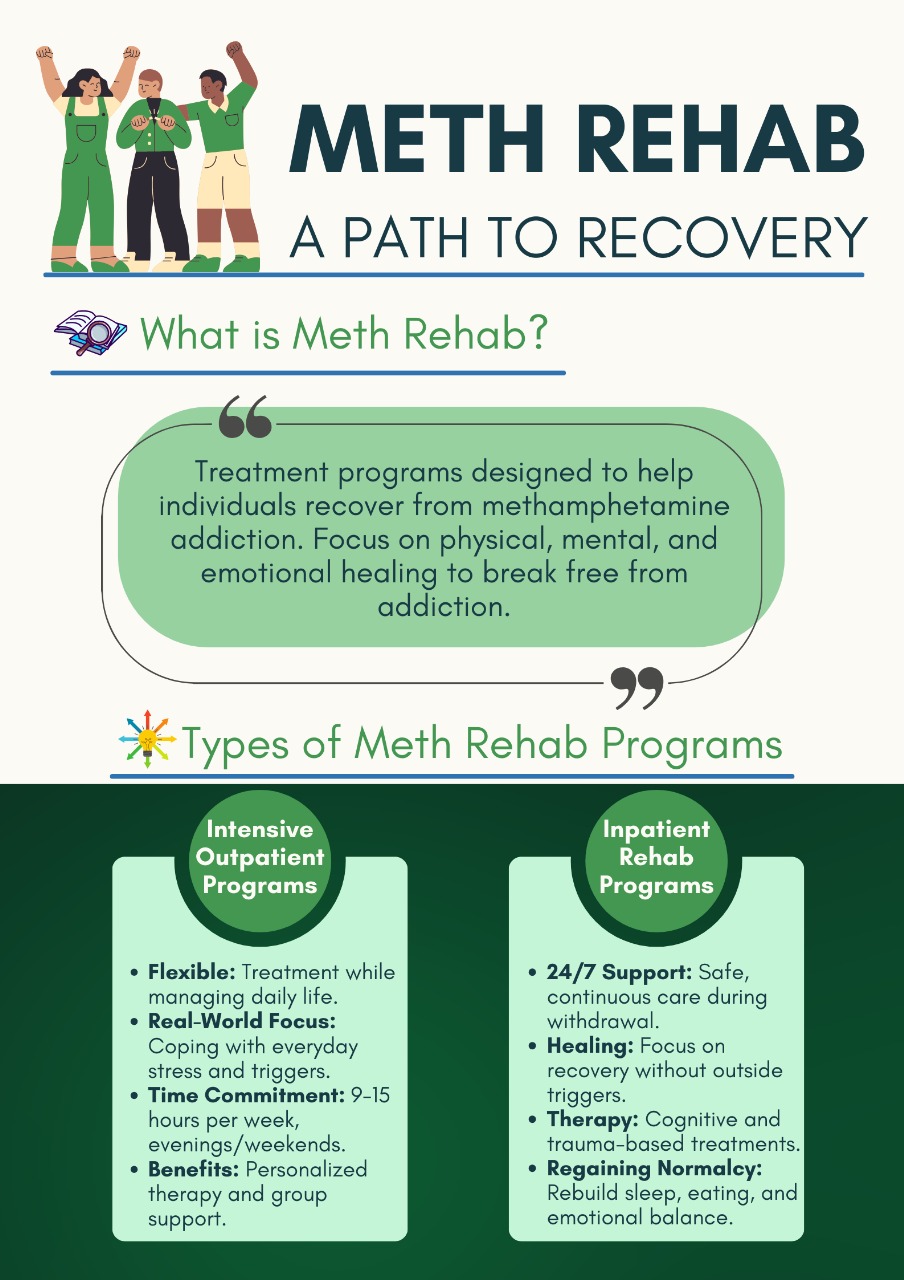
When the noise in your head is too much, you need a safe place to land. Our inpatient residential program gives you that space. It is a place stripped of temptation, where therapy and monitoring fill the hours that used to be lost to cravings. You relearn what it feels like to rest, to sit in silence without reaching for another hit. Here, the outside world is kept at bay just long enough for you to gather strength.
4. Day Treatment and Partial Hospitalization—Learning to Walk Again
Once detox and inpatient are behind you, the work is not finished. The next stage is day treatment or partial hospitalization, in which you receive the benefits of inpatient care without round-the-clock hospitalization.
During the day, you are in therapy and in groups, slowly putting pieces of routine back together. At night, you go home. That part can feel strange. The quiet of your own room is different when you are not using. It can feel uneasy, even heavy. But you are not doing it without support. The program is still there the next morning, ready to keep you moving forward.
5. Intensive Outpatient and Outpatient Programs—Carrying Recovery into Reality
This is the step that cuts deepest. Outpatient and intensive outpatient care mean you are back in the middle of your life.
You still attend therapy and groups, but you also work, study, or parent.
Meth cravings might hit when you are alone, not in a clinic.
This is why IOP is critical.
It is accountability woven into your daily life. Our therapists and peers help you face triggers as they come.
It is the grind of learning to function in your world without falling back into the cycle.
6. Dual Diagnosis—Treating the Wounds Underneath
Meth is rarely the only problem. Depression, anxiety, trauma, or bipolar disorder often feed the addiction. Ignoring these is a setup for relapse. Clover tackles them head-on with dual diagnosis care. Therapies like CBT and DBT help you confront distorted thinking and emotional chaos.
Psychiatric support stabilizes what meth destabilized. This is not about talking for the sake of talking. It is about digging up what drove you to use and treating it so you are not fighting blind against cravings.
7. Aftercare—Refusing to Fall Back
The end of a formal rehab program is dangerous. Too many people relapse once the structure is gone. We do not leave you standing at the door. Aftercare keeps the thread of accountability alive with continued therapy, peer groups, alumni support, and referrals to resources like housing and community programs. This step is the guardrail that keeps you from sliding back when the program is over. Recovery is not a finish line. It keeps going, and aftercare is there so you are not left on your own.
Final Words
Beating meth addiction is never a neat story. It can be ugly. It can break you down. But it can also be the start of something real. Clover Behavioral Health in Massachusetts lays out a path that begins with detox and inpatient care, moves through day programs and outpatient support, digs into underlying mental health, brings family into the healing, and ends with long-term aftercare. Each step is a fight, but each step matters. If meth has taken too much from you already, do not wait for it to take more.
Call us at 978-216-7765 or visit our website. Begin your healing journey now!