
Some symptoms need reassessment after intoxication or withdrawal ends. Dangerous withdrawal, psychosis, or immediate safety concerns may require a higher care level before outpatient treatment begins.
Therapy Used in Integrated Dual Diagnosis Care
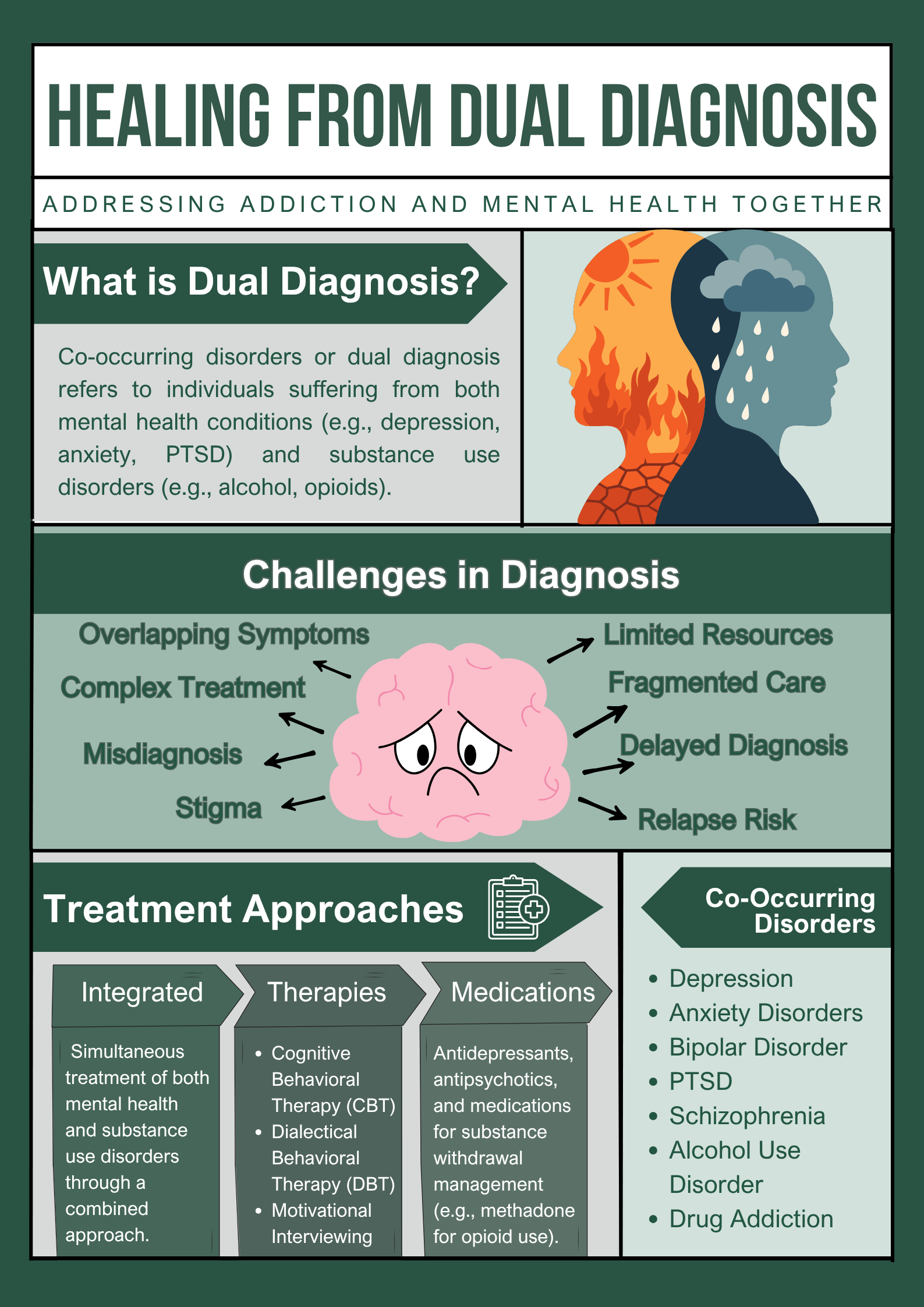
Co-occurring mental health and substance use treatment may include cognitive behavioral therapy, dialectical behavior therapy, motivational interviewing, individual counseling, and group sessions.
Family education can also improve communication at home. Meanwhile, relapse planning helps you recognize warning signs before pressure reaches boiling point.
Clover’s intensive half-day treatment provides structured support while many clients continue managing work, school or family duties. Clover also identifies CBT and DBT among its approaches for dual-diagnosis care.
Medication Support, Recovery Planning and Aftercare
Medication may support certain mental health conditions, alcohol use disorder or opioid use disorder. A qualified prescriber reviews each person’s symptoms, medications, medical history and possible risks.
Therapy serves another purpose. It helps you build coping skills, manage triggers and change harmful patterns.
Treatment for co-occurring disorders may also include peer support, medication visits, relapse planning and continued counseling. As stability grows, treatment frequency may decrease gradually rather than stopping overnight.
 Also Read: Prescription Drug Abuse Treatment in Salem, NH
Which Level of Co-Occurring Disorder Care May Fit?
The right level depends on safety, withdrawal risk, symptom severity, home support, and daily functioning. Outpatient co-occurring disorders treatment Salem NH services won’t fit every situation.
Care Level | Main Purpose | Possible Fit |
Inpatient or residential | Round-the-clock structure | Severe instability or unsafe housing |
Day treatment | Frequent daytime care | Higher support without overnight residence |
Intensive outpatient | Several weekly sessions | Stable housing with ongoing symptoms |
Standard outpatient | Lower-frequency visits | Continued progress and aftercare |
A clinical assessment should guide placement. Program names alone don’t show how much support someone currently needs.
Case Study: New Hampshire’s Long-Term Dual Diagnosis Research
The New Hampshire Dual Diagnosis Study followed 130 people with schizophrenia or schizoaffective disorder and a substance use disorder for ten years. Participants received integrated treatment through community mental health centers during the study’s first three years.
At the ten-year follow-up:
- 62.5% were actively attaining substance use remission
- 56.8% lived independently
- 41.4% held competitive employment
Participants also improved across symptoms, substance use, institutional care, functioning, and life satisfaction.
These numbers don’t predict every person’s outcome. The study involved a specific population with serious mental illness. Still, it offers a hopeful lesson: recovery may continue for years rather than arriving all at once.
Reference: Drake, R. E., et al. “Ten-Year Recovery Outcomes for Clients With Co-Occurring Schizophrenia and Substance Use Disorders.” Schizophrenia Bulletin, 2006.
How to Choose Co-Occurring Disorders Treatment in Salem, NH
Treatment pages can sound nearly identical. Look beyond slogans and ask direct questions about clinical fit.
Ask each provider:
- How does the program assess both conditions?
- Which diagnoses and substances does it treat?
- How do therapists and prescribers communicate?
- What happens if symptoms worsen or relapse occurs?
- Can family members join parts of treatment?
- Which services fall outside the program?
- Which insurance rules apply before admission?
Explore Clover’s dual-diagnosis treatment program to learn about its connected care approach. You can also verify your insurance benefits before scheduling treatment. Clover works with many major insurance plans, though individual coverage varies.
FAQs
What is a Co-Occurring Disorder?
A co-occurring disorder means a mental health condition and a substance use disorder happen during the same period. The conditions may influence each other, though one doesn’t always directly cause the other.
Should Addiction or Mental Health Treatment Come First?
Both usually need care within one coordinated plan. Immediate withdrawal, psychosis, overdose risk, or suicidal thoughts may take priority during early treatment.
Can Co-Occurring Disorders Receive Outpatient Treatment?
Yes, when symptoms are medically stable and enough support exists outside treatment hours. A clinician should decide whether outpatient care matches the person’s current safety needs.
Does Insurance Cover Dual Diagnosis Treatment?
Many insurance plans cover behavioral healthcare. However, networks, deductibles, authorization rules and covered services differ. A private benefits review can clarify coverage before admission.
Begin With One Honest Conversation
Co-occurring mental health and substance use conditions can make daily life feel like two battles at once. The right care treats both problems together rather than asking you to fix one first. Have symptoms begun affecting work, relationships, safety or your ability to stop using substances? Now is a good time to seek support.
Clover Behavioral Health offers co-occurring disorders treatment in Salem, NH, through personalized assessment, connected therapies, and recovery planning.
Call 603-207-8696 today to discuss your needs, review possible program options, and check insurance coverage. One private conversation can open a clearer path toward stability and recovery.