
Anxiety Treatment In Salem, NH: IOP or Outpatient?
Anxiety is the 9th most common mental disorder in the world. If we talk about the US, 6.8 million adults are affected by it, yet only 43.2% receive treatment for it, according to the ADAA.
And that’s because when people look for treatment options, they come across various terms that sound similar and are difficult to tell apart, leaving them confused. The two common options are traditional outpatient therapy and an Intensive Outpatient Program (IOP).
Since both are outpatient treatments, it’s easy to assume they’re basically the same! Many people aren’t sure what the real difference is or which option is right for them.
The main difference between the two programs is the level of support they offer. Both programs are effective, but they serve different needs and situations.
In this guide, we’ll explain the differences between IOP and outpatient treatment, who may benefit from each option, and how Clover Behavioral Health can help you take the next step toward managing anxiety.
What Is Outpatient Treatment?
Outpatient treatment is one of the most common forms of mental health care.
People attend scheduled therapy appointments and then return home afterward. Many individuals meet with their therapist once a week, although the schedule can vary depending on their needs.
Outpatient treatment allows people to continue working, attending school, and managing their daily responsibilities while receiving weekly support.
It can be a good option for people whose anxiety is manageable but who would benefit from regular guidance and coping strategies.
What Is an Intensive Outpatient Program (IOP)?
An Intensive Outpatient Program provides care that is one step above traditional outpatient therapy.
Instead of attending one session each week, individuals typically receive treatment several days a week for a few hours at a time.
Like outpatient therapy, participants return home after each session.
However, they receive more frequent support and have more opportunities to build coping skills, handle challenges, and work toward their recovery goals.
Depending on individual needs, an IOP may include:
- Individual therapy
- Group therapy
- Family therapy
- Mental health education
- Coping skills training
- Medication management
How Do You Know Which Option Is Right for You?
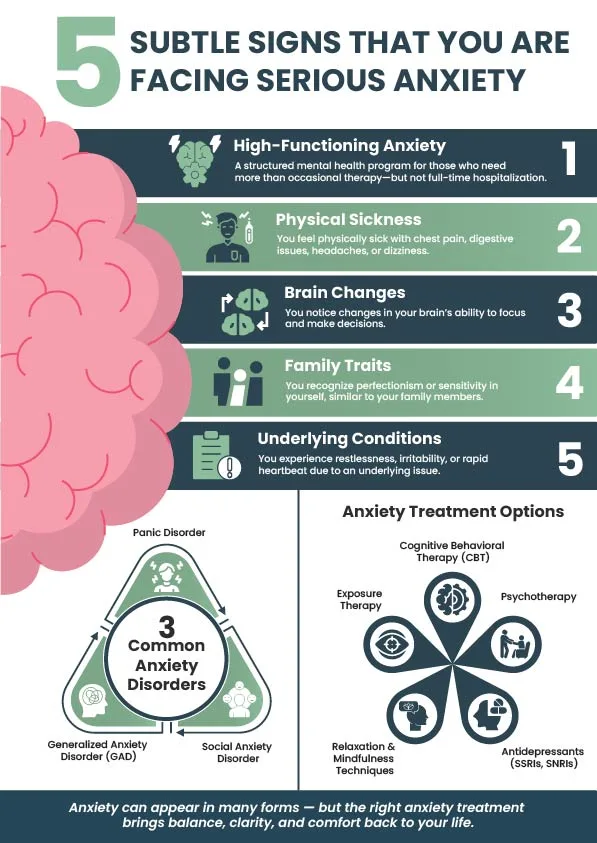
Well, this totally depends on how anxiety is affecting your daily life!
Some people find that weekly therapy provides all the support they need.
Others may benefit from a more structured program that offers extra guidance throughout the week.
In short, there is no one-size-fits-all answer for which option is right for you. The goal is to find the level of care that gives you the best opportunity to make meaningful progress.
If you’re still wondering which option might be the better fit, here’s a closer look at who can benefit most from each type of treatment.
Outpatient Treatment May Be a Good Fit If…
- Your anxiety is generally manageable
- You are able to handle daily responsibilities
- You are looking for ongoing support and guidance
- You want to learn healthy coping strategies
- Your symptoms are not significantly interfering with everyday life
For many people, outpatient therapy helps them understand their anxiety and improve their overall well-being.
IOP May Be a Better Fit If…
- Anxiety is making daily life difficult
- Weekly therapy no longer feels like enough
- Symptoms are affecting work, school, or relationships
- You need more support while continuing to live at home
- You are transitioning from a higher level of care
An Intensive Outpatient Program provides more frequent treatment while allowing people to continue with many of their daily activities.
Can You Start with Outpatient and Later Move to IOP?
Yes, you can!
Mental health needs can change over time. Some people begin with weekly therapy and later decide they need additional support.
Others complete an IOP and then transition back to traditional outpatient therapy as they continue making progress.
Treatment is flexible and can be adjusted as your needs change.
The goal is always to provide the right level of care at the right time.
What Happens During Anxiety Treatment?
Whether you opt for outpatient therapy or an IOP, treatment is designed to help you better understand your anxiety and develop practical tools for managing it.
Depending on your treatment plan, you may learn how to:
- Find out what causes your anxiety
- Handle stress in healthier ways
- Question negative thoughts
- Create healthy coping skills
- Improve how you communicate
- Make a routine that supports your emotional health
Over time, these skills can help people feel more confident in handling situations that once felt overwhelming.
Is IOP More Effective Than Outpatient Therapy?
Not necessarily. One type of treatment is not better than the other; they simply serve different needs.
For someone with mild or well-managed anxiety, weekly outpatient therapy may provide all the support they need.
For someone experiencing more severe symptoms or struggling despite regular therapy, an IOP may offer the additional structure and support needed to make progress.
The most effective treatment is the one that matches your individual situation.
Anxiety Treatment at Clover Behavioral Health
Everyone experiences anxiety differently, which is why there is no single treatment plan that works for everyone.
At Clover Behavioral Health, we offer both Intensive Outpatient Programs and outpatient treatment for individuals living with anxiety. Our team takes the time to understand your symptoms, challenges, and goals before recommending treatment that best fits your needs.
We offer support to help you build healthy coping skills, manage anxiety, and achieve lasting emotional wellness. Whether you need weekly therapy or a more structured program like an Intensive Outpatient Program (IOP), we are here to assist you.
Finding the Right Anxiety Treatment in Salem, NH
Choosing between outpatient therapy and an Intensive Outpatient Program doesn’t have to feel overwhelming. Both options can be effective, and the right choice depends on your unique needs and circumstances.
If you’re looking for anxiety treatment in Salem, NH, Clover Behavioral Health is here to help.
Call us, visit us, email us, or reach out via live chat, and we will help resolve your issue within 24 hours!