
Inside a Trauma & PTSD Treatment Program Near New Salem, NH: How Healing Happens Step by Step
PTSD affects 4% of adults and 8% of kids aged 13 to 18 in the USA. It can shape how people move through their lives, often without them realizing it.
Trauma can affect how safe you feel, how you deal with stress, and how connected you feel to others. For some people, these effects can last long after the event is over, appearing in small but draining ways.
When people begin looking into trauma or PTSD treatment, they’re often not searching for quick fixes. They’re looking for relief that doesn’t feel overwhelming, and support that respects their pace. Many want to understand how healing actually happens before committing to care.
At Clover Behavioral Health, our trauma & PTSD treatment near New Salem, NH, helps people through a gradual process. Our treatment focuses on helping individuals regain a sense of safety and control over time. We build care around trust, stability, and each person’s readiness for change.
Below is a look inside how a trauma and PTSD treatment program typically works, and how healing often unfolds over time.
Step 1: Creating a Sense of Safety First
The first and most important step in trauma treatment is safety. Without making the patient feel safe, healing can’t happen.
In the beginning, treatment usually focuses on helping people feel:
- Emotionally supported
- Physically safe
- Respected and heard
- In control of their own process
At Clover Behavioral Health, we believe in trauma-informed care. This means we will not pressure anyone to share their experiences until they feel ready. Our main goal is to help reduce immediate distress and support the nervous system in settling down.
For many people, just feeling safe enough to show up consistently is a meaningful first step.
Step 2: Building Trust and Stability
Trauma often makes it harder for people to trust, both in others and in themselves. Because of this, early treatment focuses on being consistent and reliable.
This stage focuses on:
- Building regular routines
- Building trust with therapists
- Understanding personal boundaries
- Learning what support feels helpful
Healing doesn’t require rushing. At this point, stability matters more than digging into the past.
Step 3: Understanding How Trauma Affects the Mind and Body
Education is a powerful part of healing, because many people blame themselves for trauma responses they don’t fully understand.
In trauma and PTSD treatment, people begin to learn:
- Why certain triggers cause strong reactions
- How trauma affects the nervous system
- Why do symptoms like hypervigilance, numbness, or avoidance happen
Understanding that these reactions are normal and protective can help reduce feelings of shame. The realization that they are not personal failures often brings relief.
Step 4: Learning Skills to Manage Trauma Responses
Before processing trauma, people need skills to handle difficult emotions and reactions.
This phase focuses on skill-building, such as:
- Grounding techniques
- Emotional regulation strategies
- Managing anxiety or panic symptoms
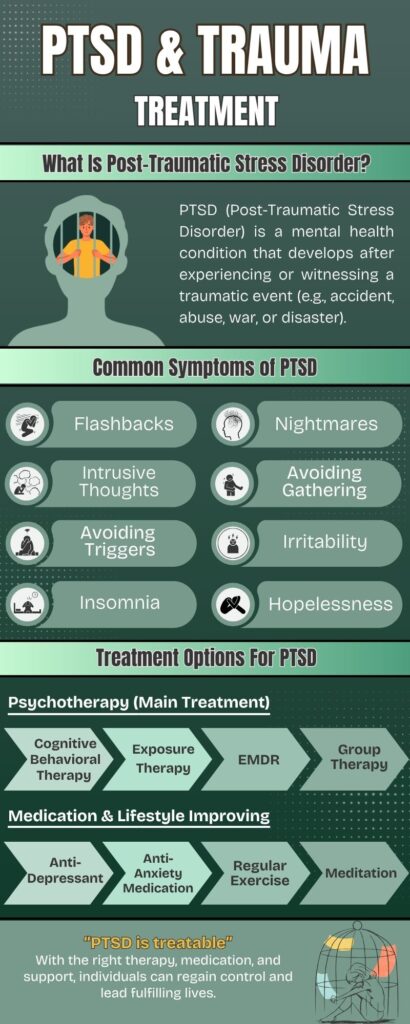
- Coping with flashbacks or intrusive thoughts
At Clover Behavioral Health, we help our patients practice these skills gradually and apply them over time, so they can be used in real-life situations.
Step 5: Gently Processing Trauma at a Safe Pace
Trauma treatment does not involve going through all your painful experiences at once.
When and if trauma processing begins, it happens:
- At the individual’s pace
- With strong emotional support
- Without pressure to share more than feels safe
Some people process specific experiences. Others focus more on how trauma affects their present-day life. Both approaches are valid.
The goal is not to erase the past, but to reduce how much it controls the present.
Step 6: Rebuilding a Sense of Control and Confidence
As treatment progresses, many people begin to feel more grounded and capable.
This stage often includes:
- Strengthening coping skills
- Practicing boundaries and communication
- Rebuilding confidence in daily decisions
- Facing things instead of avoiding them
People often notice that reactions feel less intense and more manageable, and life begins to feel less overwhelming.
Step 7: Reconnecting With Daily Life and Relationships
Trauma & PTSD can cause people to distance themselves from relationships, work, or activities they once enjoyed.
As healing continues, treatment supports:
- Getting back into daily routines
- Improving relationships and communication
- Exploring interests and goals
- Building a life that feels meaningful again
This stage is about moving forward, not just managing symptoms.
Step 8: Preparing for Long-Term Stability
Treating trauma and PTSD near New Salem, NH, is not about being perfect. It focuses on building a strong foundation for long-term well-being.
Toward the later stages of treatment, the focus often shifts to:
- Planning for ongoing support
- Recognizing early signs of stress
- Using skills independently
- Knowing when and how to ask for help
Healing doesn’t mean you’ll never struggle again. It means feeling more prepared when challenges arise.
Why Choose Clover BH for Trauma & PTSD Treatment Near New Salem, NH?
At Clover Behavioral Health, our approach focuses on making sure everyone feels safe, has choices, and is treated with respect.
Here’s why Clover is the best choice for trauma and PTSD treatment:
Treatment That Moves at Your Pace
We never rush treatment. Progress happens step by step, at a steady pace, based on what feels manageable.
Focus on Stability Before Processing
Our treatment emphasizes grounding and coping skills before taking a walk down the memory lane of traumatic experiences.
Support That Feels Human
Our licensed therapists meet clients with compassion and understanding, without being judgmental.
Treatment Built Around the Individual
And most importantly, our PTSD and trauma treatment plans are adjusted to reflect each person’s needs, history, and goals.
Moving Forward With Support That Respects Your Experience
Healing from trauma takes patience, support, and the right environment. With trauma-informed care, progress happens gradually and in ways that support long-term healing.
If you’re looking for trauma & PTSD treatment near New Salem, NH, Clover Behavioral Health offers care that focuses on safety and helping you move forward with more confidence.
Contact us to learn more about our trauma and PTSD treatment program. Take the next step toward feeling safer, steadier, and more supported in daily life!