

IOP vs. PHP vs. Weekly Therapy: Which Level of Care Do You Really Need?
You know something isn’t right. Maybe you feel anxious all the time. Maybe you’ve felt low for weeks, or you’re leaning on alcohol or drugs to get through the day. You’ve thought about getting help.
Then the questions start!
Do I need weekly therapy? Something stronger? What even is IOP or PHP?
If you’re asking these questions, you’re not alone. This guide explains IOP vs. PHP vs. weekly therapy, so your next step feels clearer.
The Three Levels at a Glance
Weekly Therapy | IOP | PHP | |
Time | About 1 hour a week | A few hours per day, 3 to 5 times a week | Almost all day, about 5 times a week |
Best For | Mild to moderate symptoms | Symptoms that are getting in the way of daily life | Severe symptoms, but safe enough to live at home |
Go Home at Night? | Yes | Yes | Yes |
The exact hours depend on the program. Think of these as three steps on a staircase. You start on the step that matches your needs, and you can move up or down as things change.
What Is Weekly Therapy?
Weekly therapy is the most common kind of care. You meet with a therapist, usually once a week, for about an hour. You talk about what’s going on, learn new coping skills, and practice them between visits.
Weekly therapy often works well if you feel stressed, sad, or stuck but can still manage work, school, and home life. It’s also a good fit if you’re doing better and want steady support to stay that way.
However, meeting with a therapist once a week may not be enough if your symptoms are getting worse, or if you’ve been going for a few months and don’t feel any better.
This doesn’t mean therapy failed; it means you probably need more support right now.
What Is an Intensive Outpatient Program (IOP)?
An intensive outpatient program, or IOP, gives you more help than one hour a week. You go to the program for a few hours at a time, 2 to 3 times a week, and later, you go home. This means you often keep working or going to school alongside the program.
What Does it Include?
A typical week may include group therapy, one-on-one sessions, and coping skills like handling stress, calming anxiety, or avoiding relapse. Being around others who understand what you’re going through can also make you feel less alone.
IOP often fits if weekly therapy hasn’t been enough, or if you’re stepping down from a higher level of care, like a Day Treatment Program, and aren’t ready to go back to once-a-week sessions.
What Is a Partial Hospitalization Program (PHP)?
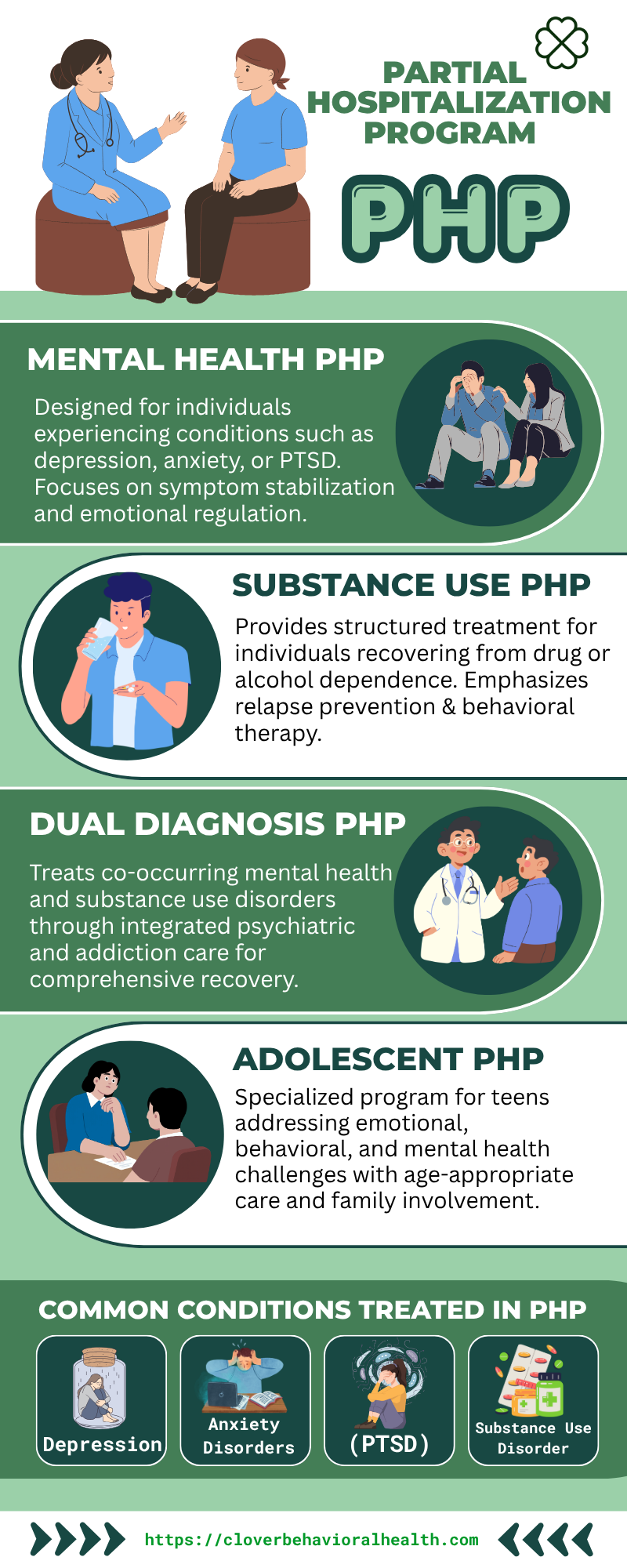
A partial Hospitalization Program (PHP), or Day Treatment Program, is the highest level of care you can get while still sleeping at home.
Despite the name, you are not staying in a hospital!
Think of it as a full-time job. You attend treatment for most of the day, most days of the week, then go home at night.
What Does it Include?
PHP often includes daily therapy, group sessions, and regular check-ins about medication if you need them.
It can help when symptoms feel too heavy to manage with less support, or after a crisis, as long as you’re safe enough to be at home.
How to Choose: 5 Questions to Ask Yourself
There’s no perfect test, but these questions can point you in the right direction.
Answer them honestly, and remember that a care team makes the final call with you.
Q1. Can I Still Do My Daily Tasks?
If work, school, and basic self-care feel doable, weekly therapy may be enough. If they’re slipping, think about IOP or PHP.
Q2. Have My Symptoms Gotten Worse in Recent Weeks?
A steady decline is a sign you may need more support.
Q3. Is Weekly Therapy Helping Enough?
If you’ve given it time and still feel stuck, a higher level of care may help.
Q4. Do I Feel Unsafe, or Have Thoughts of Hurting Myself?
This needs help right away! Call 988 or 911 for instant help.
Q5. Am I Coming Out of a Hospital Stay or a Crisis?
PHP or IOP can be a safe bridge back to everyday life.
If you’re still not sure, that’s okay. Many people can’t tell which level they need, and that’s why a short assessment exists. You don’t have to pick alone.
Your Level of Care Can Change
Choosing a level of care isn’t a lifelong decision! Many people start in one place and move as they heal.
Someone might begin in PHP after a rough stretch, step down to IOP as they feel steadier, and then move to weekly therapy to keep their progress.
Others start with weekly therapy and add more support when life gets harder. Needing more help at one point doesn’t mean you’ve failed, and needing less later means the work is paying off.
Your treatment team will check in with you often and adjust the plan, so the support you get always matches where you are today.
Find the Level of Care That Fits You
Weekly therapy, IOP, and PHP each have a purpose. The right one isn’t the strongest or the easiest. It’s the one that matches what you need today.
Not sure where you fit? That’s the most common reason people call us!
A member of our team will ask a few simple questions about how you’ve been feeling, listen without judgment, and explain which option could work best for you. There’s no pressure to decide on the spot.
Ready to talk? Reach us the way that’s easiest for you. Call us now! Prefer not to call? Send us a message, and we’ll reach out to you privately.
Your next step is one conversation away. Reach out to us and let’s find the care that fits you!