
What Therapies Are Used in a Mental Health IOP? CBT, DBT, and Beyond
The human brain adapts to whatever pattern we repeat, a quality known as neuroplasticity. Now this pattern-building is incredible for positive habits, but for those who face conditions like depression, anxiety, or trauma, it’s a problem. Their brains repeat those fearful thoughts or stress reactions that originally stem from a mental health challenge until they become automatic.
If this person tries to come out of that negative loop without proper help, it’ll be nearly impossible because the patterns are set deep. Therefore, a mental health intensive outpatient treatment (IOP) uses a combination of evidence-based therapies so you can benefit the most from a limited number of treatment hours.
This guide explains the main therapies used in mental health IOP and how each one focuses on a distinct aspect. Keep reading to end the confusion and start IOP with full confidence.
What is Mental Health IOP?
An intensive outpatient program is essentially a step up from an outpatient model and step down from a hospital stay. Mental health experts prefer this model when a patient needs regular support and check-ins, but either doesn’t want to stay in the hospital or doesn’t need to because of a relatively stable condition.
That said, a mental health IOP ideally requires 9-15 weekly hours divided into 3-5 hours, depending on the treatment center. For instance, you might have three-hour sessions on three days, such as Monday, Wednesday, and Friday, so you’re regularly in touch with the treatment center.
Also, these IOP sessions can run in the morning, afternoon, or evening, and a busy person can manage their treatment without having to compromise a lot. Your expert-led IOP treatment hours mix group therapy, skills training, and one-on-one counseling. Then, medication management is added to the mix when needed, so your mental health is always given enough support.
Read More: How Long Does an IOP Program Last for Depression and Anxiety?
Therapies Used in Mental Health IOP
Most mental health treatment centers use the IOP model to treat multiple conditions, including depression, anxiety, trauma, bipolar disorder, PTSD, and co-occurring substance abuse. To treat these serious conditions, the center depends on multiple evidence-based therapies that go way beyond standard therapy and help one work on their deep-seated issues.
Here are some proven mental health therapies used during IOP:
Cognitive Behavioral Therapy
CBT is a short-term and goal-focused therapy used to link one’s thoughts, emotions, and behaviors. Its core idea is that unhelpful thinking patterns cause distress and result in unhealthy actions, i.e., depressive thoughts. Therefore, therapists teach clients to spot those thoughts during mental health IOP and replace them with more balanced ones.
Also, during CBT, patients practice behavioral skills like scheduling positive activities and facing avoided situations gradually. Surely, these new skills give them more control over their actions and bring them out of the hard phase. Notably, this therapy’s sessions use worksheets and thought records so you can carry them over into daily life. It’s also worth mentioning that CBT is among the most researched therapies for depression, anxiety, panic, and PTSD.
Dialectical Behavior Therapy
Dialectical Behavior Therapy (DBT) is another skills-based therapy to help people manage their intense emotions. While Dr. Marsha Linehan initially developed DBT for borderline personality disorder, it is now used for multiple conditions.
At its core, dialectical refers to balancing two ideas: accepting yourself and working to change harmful patterns. Therefore, to help a patient accept themself and change their negative patterns, this proven therapy teaches you 4 skill sets, which are as follows:
- Mindfulness to build present-moment awareness
- Distress tolerance to get a person through crises without making them worse
- Emotion regulation to reduce how often and how strongly emotions take over
- Interpersonal effectiveness to improve your communication and boundaries
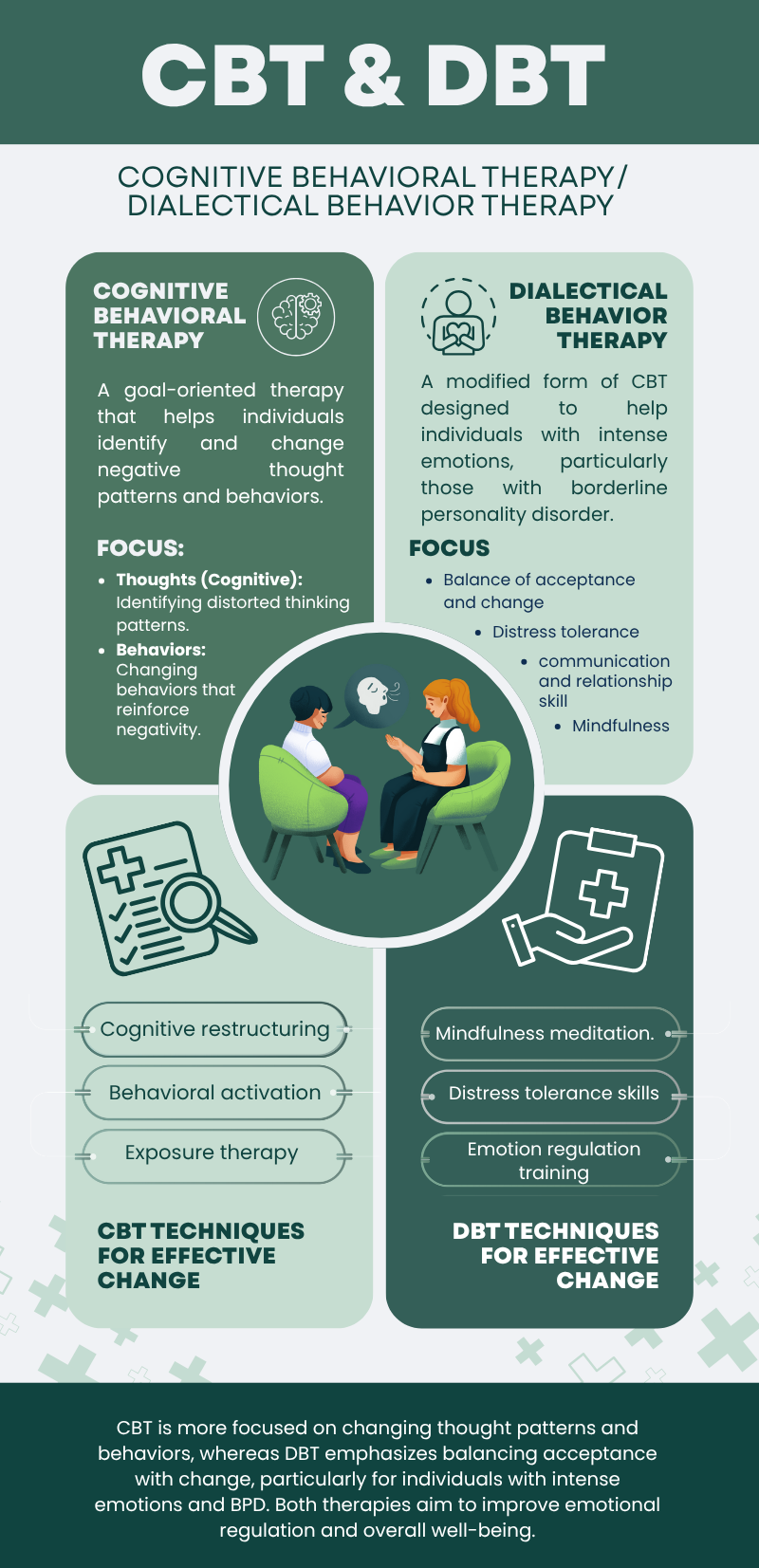
During mental health IOP, a patient can learn these incredible skills during group sessions and practice them whenever feasible. Needless to say, the result is fewer impulsive reactions and a steadier mood.
Motivational Interviewing
Motivational Interviewing (MI) is a collaborative counseling style that helps people find their own reasons to change. Most people feel mixed about change, wanting it and resisting it at the same time. MI treats that mixed feeling as normal and works with it.
Therapists ask open questions, reflect back what the client says, and highlight the gap between current behavior and personal goals. They do not argue, lecture, or push the client toward a decision. The client leads, and the therapist guides.
MI is widely used in substance use and co-occurring programs, and it also supports treatment engagement in depression, anxiety, and eating disorders. It helps by building commitment to treatment, reducing defensiveness, and strengthening the client’s confidence to follow through.
Acceptance and Commitment Therapy
Acceptance and Commitment Therapy (ACT) teaches people to change their relationship with difficult thoughts and feelings instead of fighting them. Trying to suppress painful thoughts often makes them stronger, so ACT focuses on making room for them while moving toward what matters.
Like DBT, this therapy teaches you the following 6 core skills:
- Accepting emotions
- Stepping back from thoughts (called defusion)
- Staying present
- Seeing yourself beyond your struggles
- Clarifying personal values
- Taking committed action
Clients choose values such as family, health, or work, then set small, concrete goals that match them. ACT helps your situation by reducing avoidance and increasing psychological flexibility, which is the ability to act on your values even when you feel uncomfortable.
Trauma-Focused Therapies
Trauma-focused therapies are treatments meant to help people process traumatic memories and the symptoms that follow, such as flashbacks, nightmares, and constant alertness. Its common types include:
- Cognitive Processing Therapy, or CPT, helps clients examine and change beliefs formed by the trauma, such as self-blame.
- Prolonged Exposure has a person gradually face trauma memories and avoided situations until they cause less fear.
- EMDR uses eye movements while the patient recalls a memory to help the brain reprocess it.
Therapists build coping skills and stability first, then move into trauma work at a safe pace. These therapies lower one’s symptom intensity and let their memories feel like the past instead of the present.
When There is a Will, There is a Way
Mental health IOP proves that when someone wants to overcome their troubles, they can make it work even with a busy life. If you don’t want to avoid your problems anymore, Clover Behavioral Health is a call away. Our helpful staff and proven treatment programs ensure you never feel alone. Let’s talk about what’s bothering you and find a way out.
Lorem ipsum dolor sit amet, consectetur adipiscing elit. Ut elit tellus, luctus nec ullamcorper mattis, pulvinar dapibus leo.